At high corporate levels, it is more likely to choose a local candidate
· Radoslav Stavrev
Nowadays, Americans are looking for the so-called 'Work-Life balance'. They realized that work and money are not everything, and as a result, large companies began trying to create better and more social working conditions!
Introduce yourself with a few sentences What does your work as daily commitments consist of?
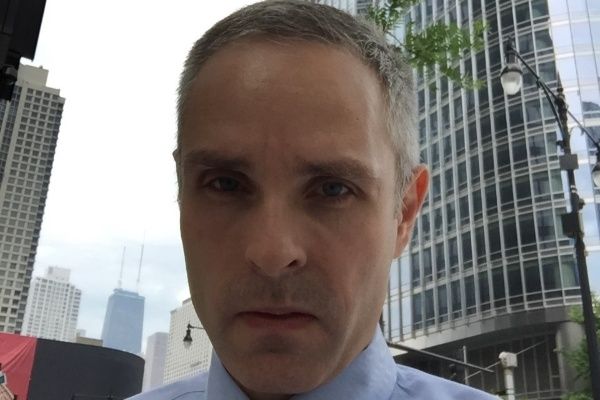
My name is Radoslav Stavrev. I work as a Financial Risk Manager for Aon Investments in the USA, where our company manages assets of about 240 billion dollars. These are the pension plans of some of the largest companies.
In which country
and city do you currently live and how did you end up there?
I have been living in Chicago for 20 years, and before that, I lived and studied in London for 3 years. My wife and I ended up in the USA because we won a green card in the lottery. I must say that we played for a green card for many years in a row and really wanted to come to the USA.
What were
the biggest challenges you faced at the beginning of your stay?
The inability to express yourself. For a number of reasons. Language barrier, lack of education, etc. My first job in London was as a cook, and until then, I had cooked nothing but eggs in my life. I worked as a waiter, porter, and what else not. It was interesting.
How
did you overcome the language barrier (if there was one)?
The language barrier was strongly felt in London. I had studied English before, but it was very difficult for me to start understanding what exactly the English were saying because of their peculiar pronunciation. Many of them sound like they are talking through their noses and have a cold. It takes time to start understanding them. Here I will even tell you an interesting story related to this. At first, my mother asked me if I understood the English. I told her, 'Well, I can't hear them very clearly.' and she reassured me. She said, 'Don't worry, it's like that at first.' A few months passed, and it was the same thing again. About half a year passed, and I shared again that I couldn't hear and understand them well, and my mother said: 'Radoslav, are you deaf, dear? Go get yourself checked.' What a joke! I overcame the language barrier by speaking with an Irishman. This allowed me to relax and become more confident.
What resources or networks (local communities, colleagues,
organizations) helped you
adapt?
Although Chicago is full of Bulgarians, I didn't have anyone to help me much with advice or contacts, mainly because most Bulgarians worked as drivers, construction workers, cleaners, babysitters, and there were no people in the financial environment. However, I had the support of my friend Petar Botusharov from London, who encouraged me all the time, as well as the support of Misho Dobrinov from Iowa, for which I am very grateful to both of them. This was the hardest stage because you appear as a foreigner to the system. You haven't studied in the USA, nor do you have local experience, your name is strange, and they find it hard to pronounce it, and on top of that, the English you speak sounds strange to them. So, I had a tough time then. I would wake up early in the morning and send out CVs (here they call it a resume) and cover letters all day long. You give your all, and nothing. And so day after day, week after week, month after month. The stress was very high. And everyone asks you, 'Did you find a job?' I just wanted to cry. However, after 11 months, I started working for a trading company that traded corporate bonds, so-called Bonds. They took me in their 'Back Office' and things started happening. Then I became a Risk Analyst, and after that, I headed the Market Risk Management desk, with the main responsibility being to protect the company from financial losses through risk hedging.
What are
the main differences between the work culture in your current country and that in Bulgaria?
The main difference 20 years ago was that Americans were still workaholics and proud of it, while we in Eastern Europe had a different attitude towards work. Not only did they work long hours, but they also didn't have much vacation. My wife had the right to only one week of vacation in the first year. I was 'lucky' with a whole two weeks of vacation. I will never forget when the first time we were leaving for Bulgaria, one of my colleagues, a big boss, came excited with wide-open eyes and said to me: 'Rad, this is great! This is incredible!' I wondered what was so incredible. It turned out that she had only used two weeks of vacation once in her life, and that was for her honeymoon years ago. I had nothing to say to her.
However, nowadays things have changed quite a bit, and people are looking for the so-called 'Work-Life balance'. Americans realized that work and money are not everything, and as a result, large companies began trying to create better and more social working conditions. At the same time, the opening of Eastern Europe to the world led to many foreign investments and foreign experience adopted on Bulgarian soil. Thus, the work culture has become quite similar.
What values and workplace practices impressed you the most?
A very interesting difference is how positive Americans are and how they present things. For example, if a Bulgarian or Eastern European works on a project and has completed 90% of the work and only has 10% left, we will talk about those 10% and what we haven't done. While if it is an American, he will talk all the time about how much has been done and what progress has been made, even though 90% of the work is still left. I believe this is a weak point for us Bulgarians as a nation. We do not know how to present ourselves well. We all need to work and emphasize more on the positive, both on a personal level, and on a corporate level, and on a state level.
Have there been situations where cultural differences havehindered you?
Yes, there have been. We Bulgarians are more direct, more open, we call things by their real names, while in Western culture, people are very careful about what they say and how they say it. They always want things to look good, even when they are not. They are very diplomatic and in no way want to create a sense of discomfort for their superiors.
How does finding a job differ in your currentcountry compared to your homeland?
This is more of a question for a Human Resources specialist. However, I believe that in the USA, there are indeed more opportunities, and from that perspective, a person, even without a large network of contacts, has a greater chance of starting a job. Naturally, connections are of enormous importance here as well.
Did you have to
go through any additional qualification courses?
Of course. To be objective, every successful person in the corporate sphere who has come from another country most often enrolls to study at some local college or university. After that, in every field, there are licenses or courses that serve for certification and proving that the person has the necessary knowledge and skills. Over the years, all these courses, certificates, and licenses become increasingly difficult and complex. Personally, I had to take licenses for trading securities, the so-called Series 7 and Series 63. Then I studied and obtained the FRM-Financial Risk Manager certificate. This exam involves quite a bit of mathematics, statistics, financial calculations; it is certainly not the most entertaining reading.
Have you encountered prejudices or obstacles due to your foreign origin?
There are such moments when, as a foreigner, someone may treat you with a bit of disdain or joke with you, but that is normal and natural. This happens in every country. An obstacle is more likely to occur at high corporate levels, where it is more likely to choose a local candidate. They feel more comfortable with someone who is like them.
What would you advise people who want to take
such a step?
I want to encourage them to boldly pursue their dreams. Nowadays, there is information, the world has become global, there are countless social networks where they can find support, so go ahead and upward!
If you could go back, would you choose the same
path?
Yes, absolutely! I always wanted to come to the USA and work in the financial markets. I had the opportunity to feel the incredible feeling of Wall Street, how every little change in stock quotes leads to profit or loss. Most of all, I am satisfied with the knowledge and experience I have gained over the years.
What do you miss the most from your homeland in a professional and
personal sense?
Relatives,
friends, the beauty of Bulgaria.
Have you considered returning and under what conditions
would you do it?
Yes, I have considered it. I would return to lead a bank, a financial institution, or an international company. I am also very interested in politics. Even from afar, I closely follow the socio-political life in Bulgaria. It weighs on me to see our politicians, who are a symbol of corruption and dependencies. I believe the time has come for a general change. Bulgaria deserves something much better. Bulgaria needs new people with high morals. I want to take this opportunity to urge people to be more politically engaged, to vote, to stand up for their rights, so that this change can become a reality.