Be guided by principles and values and provide value
· Georgi Malchev
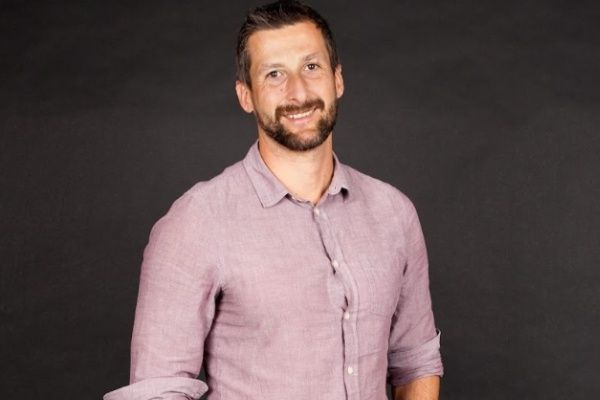
Extreme responsibility. Apply it. In whatever role you are. This is felt by others and they would definitely 'hire' or recommend you because of it!
Introduce yourself with a few sentences..
I assume I am one of the few people who are not politicians or football players and you will get a Google Knowledge panel in Bulgaria 🙂 There are so many searches for my name, in various combinations - marketing, parenting, teaching - that there is a panel that Google gives me to manage as links.
My personal blog is among the top results in search engines for words like personal profile, leader, positive emotions, habits.
For years I have been conducting training on personal branding and branding. The audience is always impressed by how logical it is for people to search for brands, including personal ones. They are also impressed by how logical the steps for developing a personal brand are.
As for me - I have been involved in marketing, communications, and management for over 27 years. The funny thing is that over the years, besides branding in these areas, I developed my brand in the direction of mentoring, parenting, good deeds, and teaching. When I conduct training - I show about 10 areas and people are impressed by how easy it is to discover both the connection between them based on personality and how they complement and build on each other.
I am a managing partner at
Recently, my wife and I wrote a book on parenting - "Be an example as a successful parent". The feedback on the 17 principles we derived - with examples and stories - is excellent.
I actively help for a better world with many volunteer initiatives, most significantly - through
What did you dream of becoming in your childhood years?
Like many boys - I dreamed of being a general. To be able to see the big picture, to plan resources correctly, to inspire people, and to make the team's mission successful. Without knowing - it turned out that you can be a “general” in many areas. If you have the right mindset. And if you make efforts for your development. If your main goal is the success of the team. And - if you make that success visible.
At what age did you earn your first money? Tell us an interesting story?
I taught math to a girl who was older than me. I was a student in the math class at NPMG. My aunt was giving lessons and “overflowing” with requests for training.
I agreed to teach a few lessons. The lessons didn’t go well, or at least not as I now understand success. Besides the part with the money for the math lesson - I wanted to teach her a lot of “tricks” in math in the shortest time. I didn’t realize that for her math was not a passion, but she just wanted to have a good grade in math. I still remember how that girl, one year older than me, was kicking annoyed with her foot 10 minutes before the end of the lesson. After that, over the years, I learned during trainings, lectures, and mentoring - always to be guided first by the audience and to set “intermediate” successes. This includes the person feeling their progress, but also controlling what is coming next. And to use a repertoire of tested and gradually validated approaches for successful training.
I think this lesson was useful. Every week I meet people in the real world or they write to me - I have conducted training for them that they still remember and that has been useful to them - they are confident to apply what they have learned.
What are the main factors and examples that shape us as individuals at an early age and form our interests? What is your recipe for curiosity, sources, and wells of information and inspiration at this stage of our human development?
I admit - people have always been interesting to me. And more specifically - why they do something and what changes their behavior.
This helps me a lot in choosing sources of knowledge and inspiration. Some books on marketing, leadership, and personal potential development I have listened to over 10 times each. I really like detailed case studies - with a starting situation, strategy, steps, and results. In this style, of course, we also write
Has there been any significant change in your perceptions in more mature age about what motivates you to do or not do something?
If I see any change - it is that I have gotten to know myself better. And I know why some things come easily to me. And why people recognize me as a brand in different areas and are inclined to “hire” or recommend me for them.
Whose decision was it where to pursue higher education and what to study? Was that decision correct, looking at today?
I have two stories - one for my bachelor's degree, and one for my master's.
I had the opportunity as a bachelor to become a road construction engineer, an electrical engineer, or to study International Economic Relations with French. I chose the latter and I do not regret it. As we joked with my colleagues - they teach you to be a general. Which has its pros and cons if you are not in such a role later. I built a lot on the knowledge and skills I acquired over 25 years ago.
Later I had the opportunity to pursue a master's degree at INSEAD - one of the best universities in the world. I chose to stay in Bulgaria. Back then - to be close to my parents, and because I couldn’t imagine how I would be able to repay the amount for the education. I do not regret that decision. In Bulgaria, I developed my potential, I was in the first class of the eMBA program at the American University. And now they lead an Elective course on digital marketing in this program.
Share more about your interests, knowledge, skills, and hobbies?
My personal profile suggests that I do things that are related to values and changing people and society for the better. Over the years I have been a journalist, management consultant, director of a department in the Ministry of Economy, operations director, member of the board of directors.
Over the years I learned how to build on my skills acquired in one area to be scalable and applicable in others.
So now it’s easy for me:
-
to create marketing and business strategies - from startups to large corporations
-
to be a mentor and trainer - in the team of Xplora, in mentoring programs, in corporate training
-
to create and develop campaigns that engage people - volunteer initiatives for homes for the elderly, cleaning or watering in the park
-
to have a balance between personal and professional life - to have time for everything important, including personal development and family
-
to be an example of physical health and strength - I am already 50 years old, but I can easily do 5 sets of 12 pull-ups, or 7 sets of 20 push-ups. All clean, without cheating, i.e. without helping myself in any way, while it looks like I am barely managing.
Would you change your profession today and which fields of activity capture your interest?
I would not - I define my profession as “changing people's behavior in the direction they desire, in a profitable way for the company”.
I would not give that up. Just over the years, besides marketing, I added leadership, management, parenting, volunteering.
They say that personal branding is everything that people say about you when you are not in the same room with them. What would you like to hear today?
I have an augmented definition - for what people would recommend or “hire” you for in the broadest sense of the word. And personal branding is most authentically formed based on real experiences, not just expectations. So - I would like people to have experienced or heard from others about the responsibility I take on. To develop the marketing of a company. Or the potential of young people. Or to explain complex concepts and approaches in an applicable way. Or to motivate people to develop their potential.
Emotional intelligence, adaptability, and flexibility, as well as our soft skills are key conditions for success in recent years. How do you deal with the daily challenges of life to stay in good shape and mood?
I have a wonderful habit - to track and manage my habits. And to know my personality profile, and recently - to have trained AI in detail about it. This allows me to know and use my strengths, as well as to manage my specifics and “white spots”.
I will use from Marketing 5.0, by Philip Kotler - a book for which I wrote the afterword for the Bulgarian edition. In my opinion, what he described as essential for successful marketing is applicable in life:
-
two principles: flexible marketing and data-driven marketing. It’s the same in life. We must be flexible. And collect data and change our behavior when needed.
-
three approaches: first - predictive marketing, i.e. to understand what predictions we are making and to improve them. Second - contextual marketing, i.e. as in life, context determines everything. And we are still better than artificial intelligence at collecting both context and making sense of it and using it. And finally - marketing with enhanced interaction, i.e. using all the resources and skills that the digital environment gives us.
What are the most important conclusions you have made so far for maintaining the right communication considering the different characters of the people you meet daily - colleagues, friends, relatives?
We live on ... Earth of people. This is my favorite book by Exupery - like The Little Prince, but for grown-up people.
In
What do you think about money? What is their influence on your life? What is your advice to people who often ask themselves questions related to money and how sufficient they are?
First - get to know your personality profile. Type personality profile in the search engine and my blog will come up first. You will also find my newsletter on personal and work productivity. In both places you will see - people are different, but we all have our specifics. And these specifics in combination are our strengths and challenges. You will see how I have learned to manage them in my favor. And towards a strong personal brand.
My profile is guided by principles and values. In this regard, I am not motivated by goals, nor by money. I believe it is more important to understand what resources are and how to manage them. My personal opinion is that money is a consequence of providing real value to specific people.
The more value - the more opportunity for more money. For you and your family, for your team, for good deeds. Money is also a natural measure in people's minds - if they see that you give up part of your money in favor of a specific person or donate - this strengthens the message of your brand. For me, the key word is responsibility towards others, and this is part of my personal brand. A part that I am glad many people have experienced in reality.
And let me not forget - an example is the Foundation Pass It On, a foundation. Together with Vanya Ananieva, we are co-founders and together with a team of volunteers and many individual and corporate donors - we help municipal homes for the elderly across Bulgaria. People can help with personal time, personal attitude, items, and money.
What is the most valuable career advice you would give to people?
Extreme responsibility. Apply it. In whatever role you are. This is felt by others and they would definitely “hire” or recommend you for it. Besides, this way you shape your brand - you also accumulate experience. Based on the only things you control - your attitude and actions.
I wrote an afterword, as well as read about
Storytel, on the Bulgarian edition of
In my opinion, you will find it interesting to read