Be prepared, but also open to the unknown
· Zheni Konstantinova
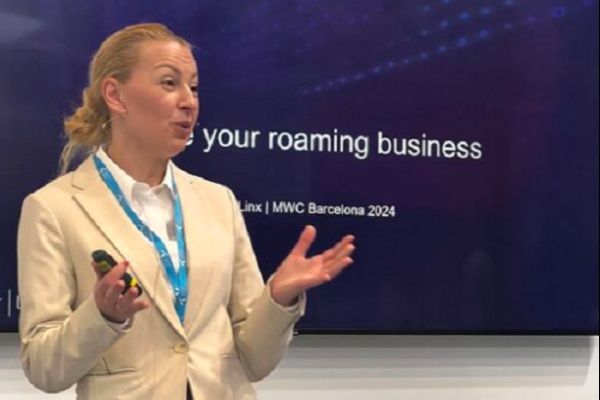
The greatest support I received was from the Bulgarian community in Sweden and from my colleagues. Communicating with people who have gone through the same path was extremely valuable, and the professional environment gave me confidence and a sense of belonging!
Introduce yourself
in a few sentences. What does your work as daily
commitments consist of?
My name is Zheni Konstantinova and
I work in the telecommunications industry. I am involved in managing
commercial operations as the head of the "Sales Operations" department at the
company Aduna, in the field of network APIs (Network APIs). My work is extremely
dynamic and innovative – related to coordinating commercial processes, data
analysis, structuring internal processes, and collaborating with various teams
to achieve sustainable growth. This is a rapidly developing area with huge
potential, combining technological innovations and new business models, and it
gives me the opportunity to contribute strategically to expanding the ecosystem of
partners and clients.
In which country
and city do you currently live and how did you end up there?
I live in Sweden, in
the city of Stockholm. We moved here with my family six years ago, due
to a professional opportunity within my previous job at Telenor
Group. This was a natural step in my development, allowing me
to work in an international environment and gain valuable experience.
What were the
biggest challenges you faced at the beginning of your stay?
The challenges
were many – both professionally and personally. Sweden is quite
different from Bulgaria, especially when we talk about climate, food, and the mentality of
people. Additionally, the children had to adapt very quickly and start
learning a new language from day one, which was also not easy. The whole
transition required patience, flexibility, and strong family support.
How did you
overcome the language barrier (if there was one)?
Most Swedes speak English and are very kind and
empathetic, which significantly eased my adaptation. My colleagues also actively
supported me in the process of learning Swedish. After six years, I can
say that although I am not perfect in Swedish, I handle daily conversations and
situations calmly.
What resources
or networks (local communities, colleagues, organizations) helped you to adapt?
The greatest support I received was from the Bulgarian community in Sweden
and from my colleagues. Communicating with people who have gone through the same path was extremely
valuable, and the professional environment gave me confidence and a sense of belonging.
What are the
main differences between the work culture in your current country and that in
Bulgaria?
There are several significant differences. In Bulgaria,
the work process is often associated with a higher level of stress, and the focus on
the person as an individual is minimized. Although there is flexible working hours in
theory, in practice things are quite different. In Sweden, the environment is much
more balanced. There is a culture of respect for everyone – regardless of their position.
One of my favorite Swedish elements is "Fika" – a short break with coffee
and conversation that encourages human contact. The most important thing, however, is that here everyone
has a voice – you can freely express your opinion without fear of
consequences.
What values
and workplace practices impressed you the most?
I am most impressed by the focus on personal development
for each individual. You are given opportunities to try new things, to take
initiative, and even to make mistakes – without it being perceived negatively. Creativity and
independence are encouraged, while real responsibility and trust are also assigned. This culture builds confident and motivated
professionals.
Have there been
situations where cultural differences have challenged you?
Oh, yes. In Sweden, the culture, holidays, and traditions differ
significantly from those in Bulgaria. I am still trying to understand and
accept some of them. For example, Swedes celebrate the beginning of summer with the holiday
Midsommar – something like a "national ritual". They gather with
friends and family, decorate a maypole (midsommarstång), wear flower crowns,
sing traditional songs, and eat the mandatory herring with potatoes.
The holiday is filled with symbolism and is one of the most important for them –
almost as much as Christmas.
How does finding
a job differ in your current country compared to your homeland?
Finding a job in Sweden is not easier than in
any other country. It largely depends on what experience you show in
your resume – it is good to have internships in known and reputable companies, as
reputation matters. The hiring process here is long and usually
involves several stages, but once an employer likes someone – and here it is
crucial, people hire people they really like – then usually
the relationship is long-term. Loyalty and trust are highly valued in Swedish professional
culture.
In Bulgaria, I have encountered the rule "someone knows
someone" – it often happens that people are hired not so much based on experience and
competencies, but due to personal connections. Sometimes this leads to the hiring of people
who do not even meet the basic requirements for the given position.
Did you have to
go through any additional qualification
courses?
In this industry, learning never stops. It is necessary to constantly
stay informed and improve, especially when working with new
technologies and innovations like network APIs. Even if I have not gone through
mandatory formal courses, I am constantly learning – reading, listening to webinars, following
trends, and exchanging experiences with colleagues. This is part of the professional daily routine.
Have you faced
prejudices or obstacles due to your foreign origin?
I wouldn't say that I have encountered overt prejudices, but
in some situations, it is felt that you are not "local". Sometimes it takes
more time to earn trust or to be perceived as an equal – especially
if you do not have local experience or do not speak the language perfectly. However, when
you demonstrate professionalism, dedication, and good results, the barriers gradually
disappear. In Sweden, there is a culture of respect and equality, which certainly helps.
What would you
advise people who want to take a similar step?
My advice is: be prepared, but also open to
the unknown. Change is not easy, especially when it involves moving to a new
country, but it is worth it. Build a clear vision of what you are looking for – professionally and
personally. Be prepared to learn new things every day, including language and culture.
Seek support – from colleagues, communities, or mentors. The most important thing is to remain
authentic and not be afraid to express yourself. Every challenge
is an opportunity for growth.
If you could go
back, would you choose the same path?
Yes, I would definitely choose the same path. The change was
challenging but also extremely enriching – both professionally and
personally. Living abroad gave me a new perspective, taught me patience,
adaptability, and the value of cultural diversity. Thanks to this experience,
I have grown not only in my career but also as a person.
What do you
miss most about your homeland in professional and personal terms?
Professionally, I sometimes miss the more immediate
and energetic communication that I was used to in Bulgaria. Often things happened
faster and with more personal interaction. Personally – without a doubt,
I miss my close ones, friends, and the warmth of my native culture.
And Bulgarian cuisine and traditions always bring nostalgia, especially around holidays.
Have you considered
returning and under what conditions would you do it?
No, I have not considered returning so far. A lot needs
to change in Bulgaria for me to see it as a real option – all the
uncertainty and chaos in the political situation, financial instability,
lack of sustainable social policy, and often hostile attitudes towards
"different" people. All of this creates an environment that does not make me feel
safe or inspired. In Sweden, I feel stability, respect, and the opportunity for
personal and professional growth – things that are key for me at this stage of my life.
What do you think
about money? What is their influence on your life?
Money is certainly important – they provide security, freedom
of choice, and the ability to create a better life for yourself and your loved ones. But
for me, money is not a goal, but a means. True satisfaction comes from how
you live, who you are surrounded by, and whether what you do makes sense. The most valuable is
the feeling that you control your own path – and if money helps with that,
then it is welcome. But they should never dictate everything.
What is your
advice to people who often ask themselves questions related to money and how
sufficient they are?
My advice is to first answer the question: "What does
sufficient mean for me personally?" –
because for everyone this is different. The true value of money comes from what
it allows us to experience and achieve, not just from their
quantity. Therefore, it is important to have clear priorities and not to constantly compare
ourselves with others. Financial security is important, but if we only pursue
more and more, we risk losing balance. Money should work for us,
and not we for them.