Build a career that brings you not only income but also dignity
· Nikolay Rusev
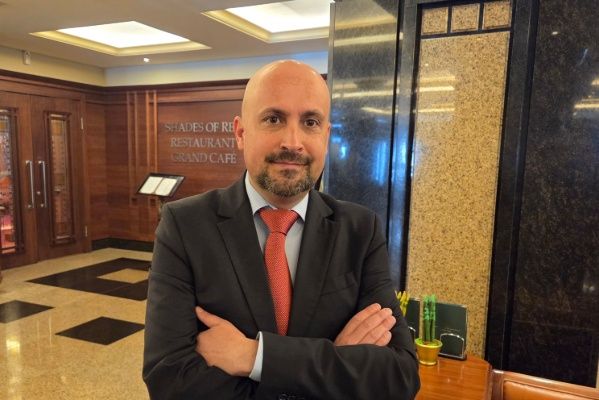
I have seen all kinds of people around the world. Those who do humble work with immense passion and put their soul into it, and others who do prestigious work but are so fake and devoid of substance that they inspire no respect at all!
Introduce yourself in a few words..
Nikolay Rusev -
general manager of Grand Hotel Sofia and chairman of the board of
BAHE (Bulgarian Association of Hotel Executives) with nearly 30 years of experience in
the hospitality industry. An avid fisherman, traveler, nature lover, and
a writer. Author of the humorous novels “Kozidor”, “Sotir Pazvanski”, as well as
the collections of stories “Zhivarnik” and “Chronicles of the Experimental Mouse”.
What does traveling the world mean to you?
One of
those strong emotions that
inspire and fill our existence with meaning. Travels can even heal
the mind, can be purifying and play various roles as a catalyst that triggers a whole chain reaction. It is not only a way to broaden your horizons, but also a means to tune
your own goals and
values. In times of dynamic changes,
the journey remains one of the few stable means for personal and
professional renewal.
How many different countries have you seen so far? Tell us a
curious incident or highlights from your travels?
I definitely
haven't been to all the places I wanted to go, but I've always
tried to end up where it's worth it. Over the years, and especially with the development of the internet, popular destinations,
where there is mass tourism, ceased to be of interest to me and I started
to seek travels in their purest form. There is a significant difference between
the concepts of “travel” and “journey”. One thing is to book a hotel in Dubai, to
get on the “Burj Khalifa” with an elevator, to tour the malls and take a
selfie with a camel in the desert, quite another is to get stuck in Ajman, eat
donairs with the guest workers, and indulge in fishing with a boat in the
Persian Gulf. In both cases, you have visited the UAE, but in two different
ways.
Do you like to repeat destinations? Give examples and
motivation “for” or “against”?
Someone once
said that if a book is not worth reading a second time, it means it was not
worth reading at all. I think that to a large extent the same applies to
destinations. For better or worse, we have a finite resource and very often
our decisions are governed by it. I am talking about His Majesty
“Time”...
What was your first trip that truly changed you as a professional and can be said to have changed your thinking?
It seems to me that this was an exchange of experience in “Saint
Petersburg” many years ago. The specific place is called “Taleon Imperial”
- an extremely well-preserved building,
once belonging to the Eliseev dynasty, turned into something much more than
a hotel. This was one of those experiences that seriously and conceptually
influenced my professional
development.
What do you learn about yourself and your professional skills,
when you are in a new cultural environment?
To
answer most easily, I would turn the question around. A different cultural environment
first and foremost enriches. It brings new experiences and new worldviews, through which
a person gets to know themselves and their identity even better. Additionally,
cultural diversity, outside the context of politically correct clichés,
knowledge of different cultures, civilizational codes and peculiarities, are actually fundamental to the business of
hospitality. In this aspect, we are talking about invaluable professional
accumulations and skills.
Have you met people or ideas during your
travels that have influenced your career path?
I immediately think
of the numerous international conferences I have attended over the years.
I have met incredible hoteliers and extremely successful managers at a very
high level. Their enthusiasm and energy are truly contagious, and many of
the shared ideas have proven to be quite useful. If something has influenced my career
path, it is my firm belief that my place is not in large
corporations and international chains. I have turned down dozens of offers to
stay true to the independent brand.
Do you think
that your travels help you expand your professional network? How?
Of course.
Every single contact, every new acquaintance could have the potential
to generate the expansion of anyone's professional network. Whether
it is about new partners, suppliers, clients, or future colleagues.
What skills
do you develop the most when you travel, and how do they reflect on your work?
This question
made me think that practically the attitude I have towards travels
largely overlaps with the attitude I have towards my daily
work. Starting with careful checking of the basic details, assessing
the risks, patience, self-control when things go wrong, and ending
with accepting the different and imprinting the positive in the mind. Here I would
add trust in the companions one chooses, as well as communication with
completely strangers that we meet by chance.
In hospitality, every new day is different from the previous one and often,
when you think you have seen everything, there will always be something to
surprise you.
Is there a city
or country that inspired you to start a new business or project?
Rather it is
a place. The Astrakhan
steppes and semi-deserts in the lower reaches of the Volga River. After thousands of kilometers on
the dusty roads and after a few toasts by the campfire, the idea for
my first novel was born. I have not stopped writing since I can remember, but it was at that moment that I
gained the courage and firm decision to publish and leave something behind.
Are there
destinations that act as a “restart” for your creativity and ambition?
It is
somewhat like fishing with an artificial
fly. You have to make the bait yourself, which at a certain time of the year,
at a certain place, under certain weather conditions will make the fish
show interest.
In
other words, just as you choose the destination, it somehow chooses you.
This “restart” seems to have a metaphysical origin and is something extremely
individual.
How do you
manage the balance between work and pleasure when you travel?
I am one of
those who like to distinguish between things. I think that in general this is
characteristic of my generation. A person travels either for work or for pleasure.
Attempts to find a balance are most often associated with compromises in one direction or
the other. The funny thing is that we, people from the industry, introduced
the concepts like “long
weekend” and we impose business concepts like “stay longer”. The younger ones are
much more mobile, have a different mindset, and I suppose that some of
them find this so-called balance. At the very least, the topic provides an endless field for
expression for all kinds of trainers and
life coaches who will teach you how to achieve it:)
How
have travels changed the way you perceive the value of money?
The value of money mainly depends on where you are and what exactly
is missing. At the airport – 10 euros are not enough even for a sandwich. On a deserted island – one sandwich costs as much as gold. And
when you are wading in some river in Tian Shan and just caught the most beautiful trout, you discover that what
is worth the most cannot be bought.
Over time you understand, that it is not important how
much you spend, but what you get in return. You can spend a fortune on a penthouse in Cannes or pay two
leva for a beer in some mountain
village and hear a conversation that you will remember for a lifetime. Travels taught me, that even the most valuable moments in life are usually outside the budget.
Do you travel with the aim of finding new ways to make money?
I still haven't had that happen.
What lessons
about financial independence have you learned from different economies and cultures?
Even as a student in London in the 90s, I learned a quick and
important lesson: financial independence starts with the ability to survive on a weekly
budget. There I realized that
cultures may be different, but the need to know when to save and when to treat yourself
is universal. Back
then the locals respected labor – both their own and others'. In some economies people save
for a lifetime without truly living. In others – they live on credit, as if there will be
no tomorrow. It seems to me that financial independence does not mean having everything, but rather being able to say 'no' to a job you don't like, or 'yes' to an experience you'll remember.
How do you see
the future of digital nomadic life?
At this stage it seems bright – as long as there is power and the battery doesn't
run out. Digital nomads are something like modern shepherds – they roam the mountains, but instead of staying there, they hold Zoom meetings. I see
the future of this way of life as a dose of freedom, garnished with a new form
of solitude. No wonder, changing many places, at
some point nomads may realize that they do not belong to any of them. And I think that some of them over time will head not to a new airport, but to something different – perhaps to some remote
village, where there is no internet, but there is someone to talk to at least one real word.
If you could
choose one place in the world to develop your next big idea,
what would it be and why?
For me, it is unlikely to be a megacity and an open space office. Most of my ideas do not like noise. It will probably be a place that makes you listen – the river, the wind and yourself.
What are the destinations that you would definitely recommend
visiting and why?
Many
of the destinations worth visiting are not even
on the map. They are where you sleep deeply and wake up reborn. For me, these are those places, where there are no emails, traffic, and Wi-Fi. Or
at least where the bills do not find me:)
What is the career advice you would give based on
what you have seen around the world?
My advice would
sound like this: build a career that brings you not only income but also dignity. I have seen all kinds of people around the world. Such, who do humble work with great passion and put their soul into it, and others who do prestigious work, but are so fake and empty of content that they evoke no respect. True success is not in the position held, but in knowing why you do what you do — and doing it with character, with honor and a desire to leave a mark. Do not
just follow the market — follow your mission. Money will come, but value
is what remains.