Develop a career that does not exhaust you to maintain, but inspires you to build upon
· Madlen Zhekova
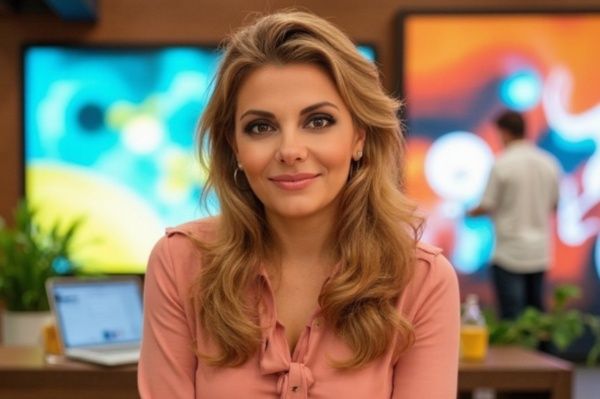
Never build a career solely on what you can do. Build it on what you are willing to understand!
Introduce
yourself in a few words..
I
am Madlen Zheko - a researcher
of potential – of people, organizations, and the environment. I create solutions that
connect data with humanity, vision with action, and ideas with real value.
I work at the intersection of wellbeing, business strategies, and cultural
transformation and moral ambitions.
I believe in intelligent leadership and in the role of the conscious person as
the greatest asset of the future.
What
is your journey around the world?
Traveling
is rebirth and return to oneself,
beyond the banalities of everyday life and
tasks. Every journey is a restart, an exit from the daily routine that sometimes
pulls us in so much that we forget ourselves, what we love, what ignites our mind and heart.
How
many different countries have you seen so far? Share an interesting story or
highlights from your travels?
Over
30 countries — each with a unique message. One of the most impressive moments was
in Greece last September, at a
monastery near Mystras, where I met a Bulgarian nun who had lived there since
1998. She hadn't seen Bulgarians for years. The way her eyes lit up
reminded me that sometimes the deepest connection comes not from geography, but from
belonging and authenticity.
Another such atypical journey and experience was in Bali... it was more than a journey –
it was a meeting with myself after a loss, after a silence where words simply have no
place. I left shortly after my father's death at the end of 2024. I carried within me not
sadness, but silence. The kind that doesn't make you cry immediately, but stays in
your chest – heavy and light at the same time. On the third day, I found myself in a small village near
Ubud, at a purification ceremony. The woman leading it looked at me without
saying anything and placed water on my forehead. In that moment... something was unleashed – not
crying, not relief, but a feeling of infinity. My body understood it before my mind:
nothing has ended, just the form has changed. Bali gave me not answers,
but space. There I realized that pain can be beautiful when you allow it to be part of you, not an enemy.
Do
you like to repeat destinations?
Yes,
when a place is a source of inspiration or reminds me of a new version of myself.
I repeat Bali, Ibiza (not
the popular party part😊), Greece (the area of Mystras and some islands), Spain, London – for the culture, balance, and sense of aesthetics.
What
was your first trip that truly changed you as a professional?
A trip
to Asia – specifically to Thailand and Japan – was like a meeting with another dimension of
time. At first, it was strange. I was waiting for "something important" to happen,
as we are used to in the Western world – a business meeting or a strategic resolution.
Instead, in Thailand, I saw people doing everything slowly, but with presence.
They weren't in a hurry, they didn't "plan the time" – they lived it. The market opened
"when the sun is right," and an elderly woman selling
tea told me: "We don't count the minutes, we listen to the rhythm." In Japan, everything was organized – but
without tension. I worked with a small group of innovators in Kyoto and was shocked by how
they could achieve so much while it seemed they were doing little. One
day I asked one of them: "How do you not fall into burnout?" He replied: "We don't try to control
the flow, but to merge with it. If the rhythm speeds up – we speed up. If it
slows down – we breathe." Then
I realized that one of the reasons for our professional "crises" is not
lack of time or resources, but lack of internal order. In Bulgaria, we live in a reactive mode we refuse to plan, we run on
schedule, without hearing our own rhythm. After
that trip, I started organizing my work not by calendar, but by
energy waves. I began to recognize when I am in a "thinking peak",
when I am in "intuitive silence," and to build strategies according to
my internal clock, not just according to KPI. This transformed not only the way I work – but also the way I
live and work with people.
What
do you learn about yourself and your professional skills when you are in a new cultural
environment?
I learn
how important it is to be an observer, not just an expert. In a familiar environment, we often go
on autopilot – we talk, advise, plan. But in a new cultural reality –
especially one where your professional habits do not apply automatically – something much more valuable is unlocked: the ability to let go of knowing. In Asia, Africa, even in small villages in
the Balkans, I have experienced moments where I feel that if I "insist"
on my expertise, I miss the essence. When
you are in a foreign cultural environment, you start to hear people with a different type of attention – not to
respond, but to understand where exactly their point of truth is. There is no
need to demonstrate competence – there is a need to be present. This taught me the most valuable
leadership skill: to hold back the ego in the name of context. Because a true
leader is not the one who has all the answers, but the one who can hold
space while the answers manifest – through the team, through the environment, through
the dialogue. I also realized that the cultural
environment exposes you – shows how you react when you are "nobody," when you have no
title, status, or prior respect. There, in that "zero moment,"
you appear – not your CV, but with
your approach, respect, and moral ambitions.
Have
you met people or ideas that have influenced your career path?
Yes,
especially people who don't talk much but do things with extraordinary precision.
A Japanese ceramicist in Kyoto told me: "Create things that can be
used, even when you are absent." This shaped my philosophy for sustainable
projects and platforms.
Do
you think your travels help you expand your professional network?
Absolutely.
But not just as new contacts in the phone book or LinkedIn. My travels
help me create mutual recognition – a different type of connections. There is
something magnetic about meeting someone from a completely different cultural reality –
whether in Israel, Portugal, Japan, or Egypt – and within minutes discovering that you think at the same pace,
have a shared vision and understanding, and share a similar ethics and moral ambition. This is not planned. In
Asia, for example, I have built partnerships, not because I presented
a perfect business presentation, but because I shared an idea for a human approach in
leadership that resonated on a deeply personal level. In Greece, during a
retreat, I connected with people from different industries that I would never have
met in offices or conferences, but who in that authentic context saw
my true role – not as a title, but as a vision. When you travel, you step out of the beaten corporate script and
find yourself in an environment where your strongest "presentation" is your presence.
There is no script. There is frequency. And often, it is these meetings that lead to
the most valuable collaborations – platforms we build together from scratch,
joint initiatives, cross-border projects, mutual mentoring.
What
skills do you develop the most when you travel?
Intuition,
improvisation, and the ability to navigate in "unclear waters" – all
qualities that make the difference between strategy and vision in business.
Is
there a city or country that inspired you to start a new business?
In Paris, walking among
art and chaos, I realized that aesthetics is not a luxury, but a message – and that the environment in
which we work directly influences the way we think and create. These experiences did not give me a business
plan. They gave me an internal compass. A compass by which I build projects,
companies, and experiences that are both refined, deep, and functional.
Businesses that you enter like a beautifully organized space – with respect for the person, time, and idea.
In Bali... Not as an exotic place, but as an experience of
inner order. Bali is a place where
every action is a ritual – the morning smile, leaving a flower, lighting
incense, food served with gratitude. There, wellbeing is not a concept –
it is a way of life, of attention, of rhythm. After
my father's death, at the end of 2024, I found myself there not by plan, but by an inner
call. I was quiet. As if I wanted the world to be silent for a while. There I realized something deep
about wellbeing – that it is not
just a state of balance
between work and rest, nor just mental health. Wellbeing is the way you
communicate with yourself while the world around you moves. It is the rhythm that does not hurry. Inhale, silence, intention. That’s why many of the platforms I create – from Stellium
Wellbeing Index to retreats for leaders – carry a piece of that Balinese rhythm.
From that softness that brings you back to yourself, even when you are in a world that
constantly demands. Bali taught me
that wellbeing does not come when "everything is fine." It comes when
you are fine with yourself, even when the world is not.
When
you are in an unfamiliar country, do you feel more motivated or more distracted?
More motivated.
Uncertainty stimulates my creativity. In such moments, concepts
like Wellbeing Index or Wellbeing
Interior Concept are born, precisely because far from the familiar, logic and intuition
start to communicate in a new way.
Are
there destinations that act as a "restart" for your creativity?
Yes
– places where nature is strong, but human presence is aesthetic –
the lakes of Switzerland, Peloponnese, southern France, Sinai. They are like an inner
therapy.
How do
you manage the balance between work and pleasure when you travel?
For
me, balance is not a fixed ratio between "work" and "rest," but a flowing and mutually complementary
state of presence. When you are in a place that inspires your senses, work can become pleasure – and pleasure can give birth to ideas
that carry value. I do not divide
my days into "working" and "free". In Greece – I slow down,
think deeper, unfold strategies. In Switzerland – I structure, write
documents, make decisions. In Bali – I open up to new concepts, often in a nice location with a beautiful natural
view. Over time, I realized that
my best ideas do not come in an office environment, but in motion – in a conversation with a local
person, in a long lunch with a view, in a market with unfamiliar aromas. And because I work with
concepts of wellbeing, experience architecture, and inner transformation,
I allow the world to give me hints. Thus, every coffee with a sunset view can become the first
slide of a presentation; the name of a new product; or just a moment that brings me back to
myself – and that is also an investment in my work. The key is not to "divide" – but to transform.
The work I do is alive. And when you do it with pleasure, it no longer
exhausts you – it nourishes you.
How
did your travels change your perception of the value of money?
They showed
me that money does not buy value, but opportunity. And that the value of
experience depends on the people you meet along the way and that the value of every journey often has
longer-term returns than any object.
Do
you travel to find new ways to make money?
I travel
to find new ways to create value I would say more accurately. Every journey offers new opportunities, ideas, and
contacts. If it is authentic, the income comes as a natural
consequence.
What
lessons about financial independence have you learned?
That
true independence is not in the numbers in the bank, but in your ability to
adapt your thinking to any economic reality and to generate value
without fear, but also to find
like-minded and valuable people along the way. Money is not a guarantee of success, because there is often
a chance to lose it, but the contacts and network of people you create
along your path and the mark you leave on them after each business contact or
just as a person, are the true value of independence, because even with little
if you have the right contacts and creativity, you can do much more,
much faster.
Is it
better to spend on experiences?
Absolutely.
Experience is an investment in sensory memory, in perspective, in deep personal
codes. Objects rarely do that,
you can lose them, but the memories and lessons learned during experiences and
travels, no one can take from you.
How
do you see the future of digital nomadic life?
Towards
a hybrid model – with elements of local engagement and global flexibility.
The successful "nomad" of the future will be the one who creates value and
connections, not just content. Therefore,
the future will belong not to
those who know how to generate visibility, but to those who can generate meaning.
It is they who will create new forms of work, based not just on
productivity, but on ethical value, moral ambition, mutuality, and energy hygiene – all elements that cannot be automated.
Are there
specific countries that are more favorable for work and investments?
In
the context of increasing geopolitical instability and the exponential
influx of AI, the question is no longer "where is cheap and easy," but "where can you
build sustainably, with predictability and moral infrastructure." The most favorable countries are no longer
those with low taxes, but those with: stable cybersecurity, well-regulated AI
policies, a culture of digital ethics, and humane technological progress. Currently, the most intelligent investments
are happening in countries that recognize the upcoming need for “trust infrastructure”
– not just blockchain and digital identity, but also systems for protecting personal
data, emotional authenticity, and human capacity. Examples:
·
Estonia – for its technological transparency and
digital statehood.
·
Switzerland – for its stability, but also because
it is already building regulations around “AI with integrity”.
·
Japan and South Korea – for their culture of
discipline and long-term thinking in technological advancement.
·
Portugal – as a creative hub with global
openness, but a strong local character.
Paradoxically,
I see potential in smaller, "peripheral" countries that are just beginning to build
their digital identity – because they can implement meaningful, sustainable
systems from scratch, without the burden of outdated structures. In conditions of AI uncertainty and global content overload,
the most favorable places will be those where you can still hear your thoughts
clearly. Where the future is not just a matter of scale, but of morality.
If
you could choose one place for your next big idea?
I would
choose a place with contrast. Probably not a metropolis, but an environment that has
a rhythm, cleanliness, and a solid foundation.
Stara building in Kyoto, where every movement is conscious, and ideas
ripen in silence, not in noise. Or –
quite realistically – an old revival house in Bulgaria, where the past and
future can shake hands with respect. Because
the next big idea does not need more platforms, but new levels of well-being, consciousness and moral ambition. And for such an idea to be born,
it needs a space where you can think not just
productively, but deeply, integrally, meta. I believe,
that the next big thing will not come out of a brainstorming room, but from a place
that makes you turn off the noise and turn on your inner resonance. Big ideas are not thought. They are
channeled. And that’s why I first choose
the place, and then – the project.
What are
the destinations you would definitely recommend?
- Japan – for precision.
- Iceland – for silence.
- Greece – for ritual and
spirit.
- Portugal – for soft
creativity.
- Morocco – for contrast and
sensuality.
Career
advice based on what you've seen around the world?
Never
build a career solely on what you can do. Build it on what you are
willing to understand. Around the world, I saw
something very clear: success is not a matter of title, rapid growth, or a perfect CV. Truly respected professionals – in
Japan, Switzerland, Israel, Indonesia – do not shine. They act with clarity.
They know how to listen before they speak. They know
how to move through different cultures with ease and respect. And most importantly – they are not afraid to change when the world gives them
new contexts. In one country they
are valued for adaptability. In another – for precision. In a third – for the energy you
carry. But everywhere one thing is valued: your authentic ability to carry
value without wearing a mask. That’s why
my advice is:
Develop a career that does not exhaust you to maintain, but inspires you to build.