Do not judge people, everyone makes decisions based on their own experience
· Stoyne Vasilev
Do more than people expect from you. I know it's hard, but the competition is smaller and sooner or later, this will be rewarded!
Introduce yourself
in a few sentences..
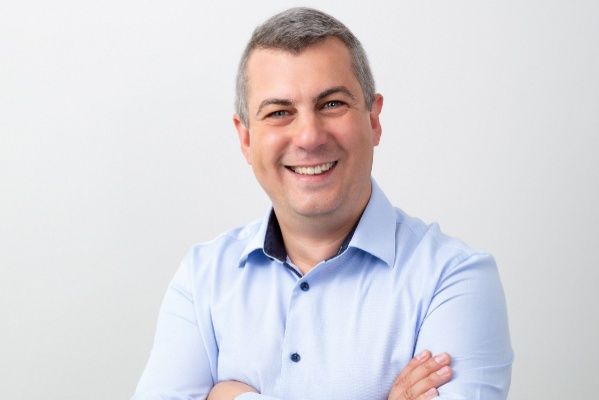
My name is Stoyne
Vasilev and I am an independent personal financial consultant. I am the founder of one of
the most popular personal finance and investing websites in our country SmartMoney.bg
and the author of the bestseller “Smart Money”.
What
did you dream of becoming in your childhood years?
Like every boy,
I was very interested in machines and their structure. I dreamed of working on
one of those big garbage trucks. Later it turned out that this is not a
very promising profession.
At what
age did you earn your first money? Tell us an interesting story?
Until the age of 6,
I lived in the village with my grandmother and grandfather. Almost every Saturday and Sunday, people from Sofia would come to us, who had villas nearby, to ask for homemade eggs. My grandmother felt uncomfortable asking them for money and gave them for free. Once I suggested she sell them for 10 stotinki each, and she could give the money to me.
That summer I earned nearly 50 leva, which was quite a lot of money for a
6-year-old child.
What are
the main factors and examples that shape us as individuals at an early age
and form our interests? What is your recipe for curiosity, sources
and wells of information and inspiration at this stage of our human development?
The first “teachers”
of children are their parents. A large part of our understanding of the world and
our values is received by the age of 5. We have two daughters and
what my wife and I have done for them at the earliest age is to give them
personal examples and show them different things we do. Thus,
unconsciously they acquire our understandings, values, and principles.
It is very important in
this period not to limit their thinking with phrases like “This will not
happen”, “We cannot afford this”, “You cannot do this” and
others. In the fragile child’s brain, a world of limitations is born, in which they
can do nothing. In my opinion, the right way is to give children the opportunity to
dream with the question “How can you do it?”.
Has there
been any significant change in your perceptions in more mature age about what
motivates you to do or not do something?
People are
constantly evolving, but those beliefs formed in our childhood are
difficult to change. I meet elderly people in whom some limitations are “coded”
by their parents and relatives, even while they were children. They can
be overcome, but it requires a lot of mental work.
Whose decision
was it where to pursue higher education and what to study? Was this decision
correct, looking at it from today’s perspective?
My decision to
study an economic specialty at the university was entirely mine, as I continued
my path from secondary education, which was in the same field. Since I was 15,
I have been dealing with money and their management, and this turned out to be one of the best
decisions I have made.
Share with us
more about your interests, knowledge, skills, and hobbies?
Besides finance
and economics, I am interested in history and applied psychology. In my free
time, I love to read books, watch interesting movies, go to the gym, take
walks in the mountains, and meet different people. In recent years,
I have started doing more things with my hands.
Would you
change your profession today and which areas of activity capture your interest?
I would not change
my profession, but if I had to, I would become a handyman.
The income is good, and I would work with my hands. Something that attracts me in this
profession is the transformation of an old and neglected home into a new modern house.
They say that
the personal brand is everything that people say about you when you are not with them
in the same room. What would you like to hear today?
For myself, I would
like to hear that I am honest with people and can explain complex financial
terms and concepts in a clear and understandable language.
Emotional
intelligence, adaptability, and flexibility, as well as our soft skills are
key conditions for success in the last few years. How do you cope with
the daily challenges of life to stay in good shape and
mood?
These skills can
be learned and practiced, just like all others. Every day I try
to step out of my comfort zone by putting myself in different difficult
situations. At the end of the day, I analyze how I reacted and whether I could
have done it better. I have achieved a lot of success in being more patient (I am not like that by nature) and reacting calmly to any crises
around me.
What are
the most important conclusions you have made so far about maintaining the right
communication considering the different characters of the people you meet
daily – colleagues, friends, relatives?
It took me many
years to understand that people are different and others are not like me. Now I
try to see each person's perspective by stepping into their “shoes”. Another
important skill I have acquired is not to judge people – everyone has made the best
decision based on their knowledge, skills, and experience.
What do you think
about money? What is their influence on your life? What is your advice to
people who often ask themselves questions related to money and how sufficient they are?
Money is
a measure of our value to others and we must respect it. If we are
useful to society, we will have more of it. If we do not have it and it is very
difficult to reach us, we are not doing enough and need to change something in our
actions.
What is the
most valuable career advice you would give to people?
I received this advice
from my direct supervisor at my first job and now I share it with
you. He told me “Do more than people expect from you. I know it’s
hard, but the competition is smaller and sooner or later, this will be rewarded”.
I have been following it for over 25 years and the results are evident.