Don't wait for the perfect moment, it never comes
· Vanya Ananieva
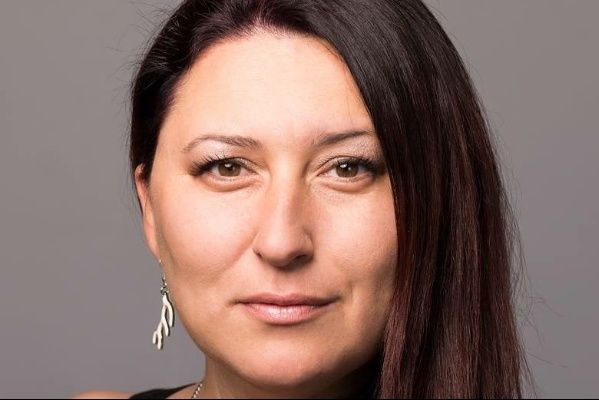
Do not choose the path that seems easy – choose the one that makes you wake up with excitement!
Introduce yourself in a few sentences..
My name is Vanya Ananieva – a visionary,
teacher, entrepreneur, and a person who believes that education is one of the
strongest forces for change. I founded “Intellect” more than 25 years ago with the dream of creating a space where
learning happens with ease, a smile and
humanity. Today, I run several businesses related to education, translations,
technology, social causes, and youth initiatives. I also created the “School for
Future”, together with Zhjustin Toms –
a conference that gathers innovative teachers from all over Bulgaria. At the core of
everything I do is my love for people and my unwavering belief in the power
of knowledge when it is presented with inspiration and care.
What did you dream of becoming in your childhood?
As a child, I dreamed of becoming a teacher. This was not
just a dream, but an inner need. I remember teaching my dolls,
cutting out “workbooks” and imagining that I was in a classroom. The real
catalyst, however, was my English teacher in 8th grade – a person who
spoke with such passion that it made you love not only the language but also
learning itself. And since then I understood that I want
to give that feeling to other people.
At what age did you earn your first money?
Tell us an interesting story?
I earned my first money at 16 when I started giving English lessons to neighbors and younger students. With my money,
I bought books and my first desk lamp – symbolically for me, because I believed that
knowledge comes with light. Very soon after that, at 20, I created “Intellect,” starting with a singletable and six chairs in my grandmother's apartment. There
I held lessons during the day, and in the evening, I was putting up posters with my future husband at
Sofia bus stops. At that moment, I didn’t realize that I had created not just a small
business, but a future that would involve thousands of people.
What are the main factors and examples that shape us as individuals at an earlier age and form our interests? What is
your recipe for curiosity, sources and wells of information and
inspiration at this stage of our human development?
I think our personality is shaped in three main
ways – through the environment, through example, and through experience. My parents always gave me
space to think and feel freely. They didn’t impose on me – they asked me, “What do you want to do?”. This develops independence and an inner
compass. My teachers were the second source – not only with academic knowledge but with
their personality. When you are a child, you don’t remember the history lesson, but how the teacher treated you. My inspiration back then came from the books I read, from the music I listened to (Queen and Depeche Mode), from the theaters I entered with excitement. Today,
my recipe for curiosity includes daily reading, meeting new people,
traveling, art, and most importantly – constantly asking questions. You don’t need
to have all the answers. You need to keep asking.
Has there been any significant difference in your perceptions Inand in
more mature age regarding what motivates you to do or not do something?
Yes, over time, priorities rearrange. In my youth, motivation came from the desire to prove myself, to succeed, to
build something meaningful. Today, motivation comes from the sense of purpose. From the question:
“How will what I do help others?”. More and more, I strive to be
helpful, not just effective. It’s not enough for something to work – I want it to bring
value. Maturity also brings the realization that sometimes “no” is stronger and more constructive
than “yes.” And that you don’t always have to chase more and more.
Whose decision was it where to pursue higher
education and what to study? Was that decision correct, looking back today?
The decision was mine. Right after high school, I knew
that I wanted to study something that combines languages with economics and communications. That’s why
I graduated in International Economic Relations, then English Philology and only after that Communication and Brand
Management. Each of these specialties gave me a specific tool that I
still use today – in teaching, in team management, in creating
strategies, in public speaking. I have never stopped learning – at the moment
I am studying graphic design and photography. I believe that education is a path, not
a destination.
Share more about your interests,
knowledge, skills, and hobbies?
Besides my love for languages, which is at the core
of my professional path, I have a strong passion for visual arts – I paint and experiment with digital collage and. I read several books at the same time – usually in different genres. I am interested in
psychology, brand identity, leadership, and social innovations. Traveling is also
my passion – I believe that every encounter with a new culture changes you. I love to
lead events, inspire with stories, and seek unusual solutions to complex
cases. My ability to unite people around an idea is one of the things I
proudest of.
Would you change your profession today and which
areas of activity capture your interest?
I would not change my profession. I wouldn’t change
even one difficulty from the path, because every obstacle has made me bolder,
more conscious, and better. My work is at the crossroads of knowledge and
inspiration, between communication and creativity – it is extremely energizing.
If I had to point out areas that strongly capture my interest, I would say:
social entrepreneurship, mentoring, art therapy, working with
children with special educational needs, educational technology, innovative
methods of teaching, and any platforms that combine emotional
intelligence with skill development. I strongly believe in the future of ethical business
and the mission to do good things with good people.
They say that personal branding is everything that
people say about Vas, when you
are not in the same room with them. What would you like to hear today?
I would like people to say that I am a person,
who leaves light behind. That I am a person who is capable of inspiring,
but also of listening. That I have brought value without imposing, that I have built
bridges when it was easier to turn my back. I hope that people remember me
as someone who made their lives better – even if just a little. For me,
personal branding is a combination of values, behavior, and the way you make
others feel. I don’t care if they remember me with titles – I want to
be remembered for my attitude.
Emotional intelligence, adaptability, and
flexibility, as well as our soft skills, are key conditions for success over
the past few years. How do you cope with the daily challenges of
life to stay in good shape and mood?
I have a few personal rituals that keep me in
my center. In the morning, I drink coffee in silence, paint, and write in a notebook things I am grateful for. In difficult moments, I return to the basics – why I started, who are
the people I love, what really matters. Besides, I am not afraid
to allow myself a pause. When I feel that something is wrong, I give myself space.
I believe in therapy, in sharing, in organizing thoughts through art.
Sports and nature are also my faithful companions. And most importantly – I do not try
to be "perfect." I try to be true to myself, honest, and aware.
What are the most important conclusions you have drawn
so far about maintaining proper communication considering the different characters
of the people you meet daily – colleagues, friends, relatives?
Before, I spoke to be heard. Now I listen,
to understand. I learned that people do not always want a solution – sometimes they just
want space to be themselves. In communication, I believe in the three "P" –
presence, recognition, and acceptance. You cannot communicate effectively if you are
everywhere and nowhere, if you underestimate the feelings of the other or if you look at them through
the prism of your own expectations. Every person is a different world. My most important
lesson is that true communication does not start with "I think," but with "Tell me
how you see it".
What do you think about money? What is its
influence on your life? What is your advice to people who often ask themselves
questions related to money and how sufficient they are?
Money for me is a consequence, not a goal. They are
result of well-done work, of value you have given, of trust you have built. I believe that when you work with a mission, money finds its way to you. They
are energy – and if we use them wisely, they can support causes, create
opportunities, and improve lives. But when we put them on
a pedestal, we lose our soul. I have learned that "enough" is a personal feeling – it is
not a number, but a question: "Do I have the freedom to be myself?". My advice: do not
measure your worth in banknotes. Measure it in created moments,
gratitude, and the ability to sleep peacefully.
What is the most valuable career advice you
would give to people?
Be brave. Do not choose the path that
seems easy – choose the one that makes you wake up with excitement. Do not
wait for the perfect moment – it never comes. The start is never perfect, but
your will can be. Pay attention to people – they are your most valuable
resource. And do not forget: your career is an extension of your personality. If
you are in sync with yourself, you will be in sync with your professional path.
Work with heart, think with strategy, and live with dignity.