During travels, the brain begins to operate at a new frequency
· Mikaela Tsvetanova
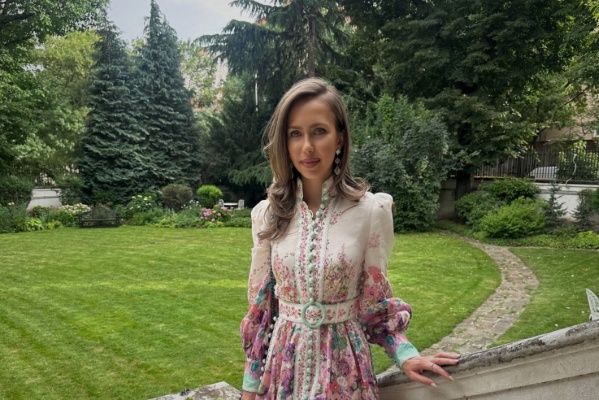
Every market is an opportunity. I see what is missing, what works, and where I can create value. And also to understand in detail how people in the same industry work with clients abroad!
Introduce yourself in a few words..
Michaela Tsvetanova founder of Qalb Communications
Agency and Member of the Board of Vaisman
Investment Group, international investment company, which
operates in Bulgaria.
For you, traveling the world is?
A pleasure, but much more – it is education,
inspiration, and an investment in yourself.
How many different countries have you seen so far? Share
with us an interesting story or highlights from your travels?
I have visited over 20 countries. One of my most vivid memories is from Japan – how at first glance chaotic Tokyo is actually perfectly organized, and the people are incredibly respectful. I learned that discipline and etiquette do not hinder creativity, but enhance it.
Do you like to repeat destinations? Give examples and
motivation “for” or “against”.
Yes, definitely. I have returned several times to London and
Saudi, because there the dynamics of the business environment is constantly changing and
inspiring. Repeat trips often reveal new layers of culture and
economy that are not noticed during the first visit. I lived in London and
Paris, and I like them as destinations.
What was your first trip that truly changed you as a
professional?
My visit to the States. I saw how a country in certain sectors can become an economic giant through vision, order, and strategic planning.
What do you learn about yourself and your professional
skills when you are in a new cultural environment?
I learn how important it is to be adaptable, to listen before speaking, and to understand what “communication” really means when language and culture are different.
Have you met people or ideas during your travels that
have influenced your career path?
Yes – in Holland, I met entrepreneurs who are developing a global business with a mission and sustainability. Their model inspired me to think about the added value beyond profit.
Do you think your travels help you expand your
professional network? How?
Definitely. Many contacts I work with today, I have
met at international forums, investment events, or even casual
conversations during travel. The real network is built face to face.
What skills do you develop the most when you travel, and
how do they reflect on your work?
Strategic thinking, cultural intelligence, and creativity. Encounters with different perspectives make me more flexible in decisions and more innovative in business.
Is there a city or country that has inspired you to
start a new business or project?
Yes, Paris– a dynamic market open to new ideas.
When you are in an unfamiliar country, do you feel
more motivated or more distracted? Why?
More motivated. The new environment activates the senses and thinking – it’s as if the brain starts working at a new frequency.
Are there destinations that act as a “restart” for
your creativity and ambition?
Yes – Hawaii and Portugal.
One is silence and inspiration, the other – energy and entrepreneurial culture.
How do you manage the balance between work and pleasure
when you travel?
With planning. Different outfits for the day. In most cases, Idivide the day – mornings are for work and meetings, afternoons for exploring the place. I do not mix the two – this way both get the needed concentration.
How have travels changed the way you perceive
the value of money?
I learned that the value of money is not only in its purchasing power, but also in where and how you use it. In some places, 100 euros mean much more than in others – and this changes the perspective.
Do you travel to find new ways to earn
money?
Yes. Every market is an opportunity. I see what is missing, what works, and where I can create value. And also to understand in detail how people in the same industry work with clients abroad.
What lessons about financial independence have you learned from
different economies and cultures?
In developing countries, people often have a stronger sense of saving and investing because they know the value of stability. This taught me to be more foresighted and to seek sustainable solutions.
Do you think it is better to spend on experiences
rather than material possessions?
To some extent. I love beautiful things and detail, but also experiences enrich and shape us as individualsand.
How do you see the future of digital nomadic life?
I see it as a standard for many professions. The hybrid model will strengthen, and location independence will be a competitive advantage for companies.
Are there specific countries that are more favorable for
work and investments?
Portugal, Estonia, Serbia, and the UAE – because of the business climate, tax incentives, and openness to foreign capital.
If you could choose one place in the world to
develop your next big idea, where would it be and why?
Singapore – because of its clear vision, fast administration, and its global role as a business hub.
What are the destinations you would recommend
must be visited and why?
Japan – for its culture of respect and perfection in detail. Saudi Arabia – for its innovations. New Zealand – for the art of living beautifully.
What is the career advice you would give based on
what you have seen around the world?
Don’t wait for the “perfect moment”. Travel, step
outside your comfort zone, meet different people – this is the surest path
to growth.