Effective communication goes beyond just hearing words
· Antoniya Bodurova
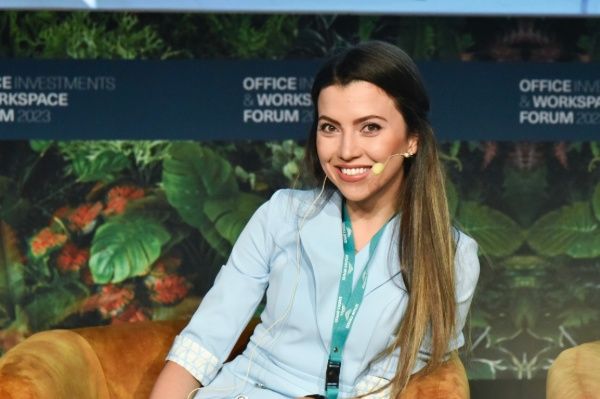
Try not to pay attention to things you have no control over!
Introduce yourself in a few sentences..
My name is Antoniya Bodurova and I have been working in sales for over 10 years. I graduated with a degree in "Economics and Management of Construction" from Varna University of Economics, and then completed two master's degrees - "Business Administration and Communications" at UNSS and "Digital Marketing" at Lund University. Currently, I work as a development engineer in the field of building systems integration at Schneider Electric Bulgaria.
What did you dream of becoming in your childhood?
When I was a child, my dream job changed over time, and each phase was filled with excitement and passion. Initially, I dreamed of becoming a singer. Imagine a 2-year-old child singing with all the confidence in the world. I have never been ashamed to sing in front of people; on the contrary - I thrived when I had an audience. Whether it was a family gathering or an ordinary moment at home, I seized every opportunity to sing. My love for music was so strong that I developed a very good musical memory, and to this day I quickly remember the lyrics of the songs I listen to.
Over time, this dream changed, and I began to imagine how I would become a teacher. As the oldest child in the family, I naturally took on the role of a mentor for my younger brother and cousins, and I was always surrounded by younger children. I loved teaching them new things and skills, whether it was helping with homework or showing them how to ride a bike. The joy of sharing knowledge and seeing the light in their eyes when they understand something new was incredibly satisfying for me.
At what age did you earn your first money? Tell us an interesting story?
I received my first reward when I was just 10 years old. My grandparents had a small workshop for processing meat, and I was always interested in being among them and their customers, helping with whatever I could - either washing dishes or packing products into trays. During this period, I have another interesting memory - I really wanted a new bike, but I didn't have enough saved money for it, so I decided to sell all my old and unnecessary clothes. The experience was half successful - the clothes were sold, but they weren't enough for the new bike, and my parents doubled the amount I had earned.
What are the main factors and examples that shape us as individuals at an early age and form our interests? What is your recipe for curiosity, sources of information, and inspiration at this stage of our human development?
For me, the main factors that shape us as individuals at an early age and form our interests are primarily family and the environment. I was incredibly lucky to be born and raised in a family that encouraged me to develop my interests, allowed me to be independent, and never limited me from trying new things. The trust that my loved ones had in me and their unconditional care and support played a significant role in my development. In my opinion, when a child grows up in a safe and secure environment, they develop the ability to experiment, accumulate personal life experience, and grow.
Another important factor was my connection with nature. As a child, I spent a lot of time outdoors, with summer being my favorite season when I stayed with my grandparents in the village. Now I realize what an impact it left – walking barefoot on the grass or wading through the river, growing a plant from a few small seeds, taking care of animals, catching fireflies, making little houses in the trees... Observing nature and how it is always different and always changing has developed my curiosity. Another recipe for curiosity is exploring new books, discovering different styles of music, and trying out new hobbies. I also believe that we should have people with different views in our surroundings, as they challenge us to look at things from another perspective. Finding role models and studying their lives and achievements can be extremely inspiring and motivating.
Has there been any significant change in your perceptions in adulthood regarding what motivates you to do or not do something?
As I grew older, I noticed a significant change in what motivates me to take action or refrain from something. When I was younger, my main motivation was to gain the approval and recognition of my parents, relatives, and friends. Their validation was extremely important to me, and I often strived to meet their expectations and earn their praise.
However, over time, this changed. Now my motivation comes from a deeper, more personal place. I am motivated by the satisfaction I feel when I achieve something that aligns with my own principles and values. It is no longer about external validation, but about being true to myself and my beliefs. I strive to be better than yesterday, constantly seeking self-improvement and personal development.
This change has been liberating, as it allows me to focus on what truly matters to me and pursue my goals with a sense of purpose and authenticity. It has also taught me the importance of good self-esteem and the value of setting my own standards for success.
Whose decision was it where to pursue higher education and what to study? Was this decision correct in hindsight?
As I mentioned earlier, my parents gave me a lot of freedom in the choices I made, so I chose my education myself. If I had the opportunity to turn back time and make a different choice, I would choose to study engineering. I have always had a strong desire to help people, and I believe that engineering would have allowed me to make a tangible difference in people's lives, which completely aligns with my values and aspirations.
On the other hand, sometimes I think that maybe I wouldn't have pursued degrees and diplomas at all. Instead, I would have used those years to invest time and money in various courses, developing my financial literacy, improving my social skills, and building a network of influential people. This approach could have provided me with practical skills and valuable connections that could have been more directly useful in my career. By focusing on real experience and practical training, I believe I could have achieved a more fulfilling and effective path to success.
Share more about your interests, knowledge, skills, and hobbies?
One of my main interests is psychology and neuroscience. These fields are extremely interesting to me because they explore the complexities of the human mind and behavior. I read many books on these topics, which helps me understand people better and improves my ability to empathize and connect with others. Another passion of mine is mountain trekking. I love the challenges that come with it, from navigating difficult terrains to reaching new heights. The sense of achievement and the stunning views at the top make every climb worthwhile – the added bonus is that I am always in good physical shape.
Gardening is another hobby that I deeply love. I have many plants, and taking care of them brings me immense joy and satisfaction. My dream is to have a house with a beautiful yard full of flowers. Gardening teaches me patience and the importance of care, and provides me with a peaceful refuge from the busy everyday life.
Would you change your profession today and which fields of activity capture your interest?
I am very satisfied with my profession and find it truly fulfilling. I am committed to developing in my field and believe that there is still much to learn and achieve. However, looking ahead to the future, I can imagine myself in a profession focused on children and their development. This interest stems from having had a wonderful childhood, which made me appreciate the importance of a supportive and caring environment for children. I see firsthand how many parents struggle with raising their children and feel a strong desire to contribute positively in this area. The idea of helping to shape the next generation and providing them with the tools and support they need to succeed is something that is very close to my heart and excites me.
They say that personal branding is everything that people say about you when you are not in the same room with them. What would you like to hear today?
I would like to hear that I make them feel important. It would be extremely meaningful to know that others feel seen, heard, and understood when they interact with me. I strive to create an environment where people feel valued and respected, and to hear that I have achieved this would be proof of my efforts. Additionally, I would be very happy to learn that I am making their lives better. Whether through small acts of kindness, meaningful conversations, or simply being a supportive presence, knowing that I have made a positive impact on someone's life would be the greatest compliment.
Emotional intelligence, adaptability, and flexibility, as well as our soft skills, are key conditions for success in recent years. How do you cope with the daily challenges of life to stay in good shape and mood?
I try not to pay attention to things that are beyond my control and to influence those that I can change. I believe that there is a higher power that watches over us and knows what is best for us, and I trust it completely. I keep a gratitude journal and write down everything I am grateful for on the current day, as well as the good deeds I have done.
What are the most important conclusions you have drawn so far about maintaining proper communication considering the different characters of the people you meet daily – colleagues, friends, relatives?
First of all, I have learned to accept people as they are, without trying to change them. Every person has their unique personality, experiences, and perspectives, and it is important to respect and value these differences. Trying to change someone often leads to disappointment and misunderstandings, while acceptance creates a more harmonious and supportive environment. I realized the importance of carefully listening to what people say – both verbally and non-verbally. Effective communication goes beyond just hearing words; it involves paying attention to body language, tone of voice, and other non-verbal signals. This helps us understand the true meaning behind people's words and respond appropriately. I also understood that it is very important to be actively present in conversations and to give my full attention to the person I am speaking with, to show genuine interest in what they are saying, and to avoid distractions.
What do you think about money? What is its influence on your life? What is your advice to people who often ask themselves questions related to money and how sufficient they are?
I see money as a tool that provides opportunities and security, as well as a means to achieve a fulfilling and balanced life. I strive to maintain a healthy relationship with it, not allowing it to dictate my happiness or self-esteem. Instead, I focus on using it wisely to improve my well-being and that of those around me. My advice to people is to strive for financial literacy and to understand at least a little about budgeting, investing, and managing debts – this way they can make more informed decisions. As a next step, it is important to follow a financial goal – I have set a goal to save about 20% of my income every month.
What is the most valuable career advice you would give to people?
The most valuable career advice I would give to people is to be proactive in managing their careers and to strive for continuous development and improvement. To create and maintain professional relationships and to seek feedback from colleagues and supervisors to know what they can improve.