Everyone needs money, but we should not think only about it
· Simona Georgieva
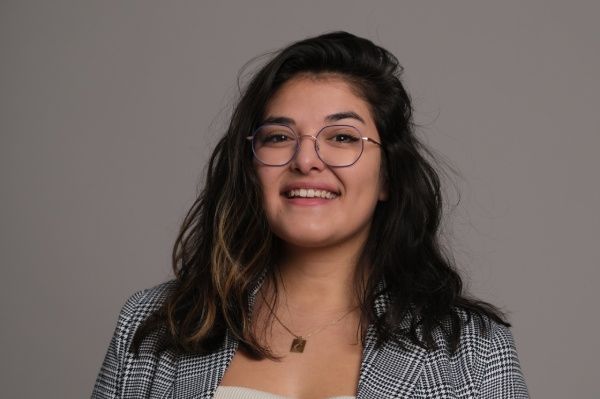
Ask yourself questions – and you will find answers. Perhaps not immediately, perhaps not all, but you will get closer to yourself!
This story is not a CV. It is not a glamorous business card either. This is me – Simona – just as I am when I am not in presentation mode. The story of a girl who dreamed of becoming an astronaut, and today combines technology, communication, and human development. A story of choices, mistakes, victories, deviations, and bold turns.
Because personal branding is not about how you look online, but what remains of you in conversations after you have left the room.
Introduce yourself in a few words..
My name is Simona and I love to stand at the intersection of communication, technology, and human development. I work as a Marketing Wizard at DisruptHR Sofia and AI Evolution & Community Partner at SISTEMMA International. In recent years, I have been creating content, leading training sessions, organizing events, and developing communities – all things that connect me with people, ideas, and change. I believe that artificial intelligence is a means, a tool, not an end – and that the strongest leaders of the future will be those who can present their ideas in an engaging and meaningful way, ask the right questions, and remain adaptive even in chaos.
What did you dream of becoming in your childhood?
As a child, I dreamed of becoming an astronaut, a veterinarian, a famous rhythmic gymnast… all normal professions for a growing girl with a big imagination. The bedtime stories at home were not about princesses, but about space, stars, and where astronauts pee while floating in the dark.
Then I grew up a little more and realized that I adore animals and want to help every creature on the street. Biology and chemistry were my strong subjects, and in the meantime, I trained in rhythmic gymnastics – a sport that turned my life upside down and taught me many important lessons at an early age.
For the last 5 years, since I graduated from high school, I have been on the path of “I don’t know where I’m going, but I’m curious to find out.” And what I am working on now... until recently, it didn’t even exist as a profession or position. My titles are clearly made up with ChatGPT, right? :)
At what age did you earn your first money? Tell us an interesting story?
My first job was at 16 – at the airport in Sofia. I welcomed athletes from all over the world arriving for the World Rowing Championship in Plovdiv. I think I earned about 160 BGN for one week, but at that time it seemed like a fortune. The truth is, I didn’t do it for the money, but for the experience.
You meet people from different cultures, with different languages – not everyone spoke English, so we communicated in Russian, Spanish, and mostly in the universal language of gestures. It was a real adventure to navigate groups of 60–80 people and get them on the right buses to Plovdiv.
The most memorable moment? While waiting for one of the flights, I sat down to watch a series on my phone with headphones. At one point, without realizing what was happening, three police officers lined up around me. They asked me to move, and people started to back away. It turned out that there was a forgotten bag next to me, and it was suspected that it might be something explosive. A person with a safety vest and a German shepherd came to check what was happening. Fortunately, it was just a forgotten bag – but the emotions were like from a movie: confusion, anxiety, adrenaline. Since then – I don’t watch series with headphones at the airport and always look around.
What are the main factors that shape us as individuals at an early age and form our interests?
I increasingly realize how true the phrase “the first seven are the most important” is. The way my parents raised me and the examples I received from them shaped me into the person I am today.
From a young age, I was encouraged to ask “why,” to understand how things work in depth. To listen carefully – after all, we have two ears and one mouth for a reason. Despite that, I talked a lot. In fact – constantly. I was often told to start the story “from the middle,” so we could eventually get to the end.
My curiosity has always been a part of me and has only intensified over time. Where does something come from, how is it created, how can I make my daily life easier… For me, all of this is part of the game. Maybe that’s why I love putting together puzzles – not just on the table, but also in life. This ability to piece things together has helped me dive into the world of AI, marketing, and events. Every campaign and event is a new puzzle waiting to be solved.
My “recipe” for curiosity? I’m not sure there is one formula – 2+2 is not always 4. But I believe that if you don’t stop searching for answers, asking the right questions, and playing with ideas, life becomes more conscious, more creative, and more exciting.
Today I find inspiration in ChatGPT, to be honest, because it’s hard to always start from a blank page and mostly I find it – in my mentors. A handful of people who show me not only what kind of professional I want to be, but also what kind of person and future parent I want to become.
Has there been a significant change in perceptions in your more mature age?
The significant change in my motivation occurred when I started going to therapy. I realized how many things in my life I had done to not disappoint others – not because I really wanted to. I learned how important and healthy it is to be able to say “no” and set boundaries. For some people, this sounds simple, even obvious – but for me it is one of the biggest challenges.
For a long time, I believed that all people are benevolent. That if I approach with kindness and a desire to help, the same will return to me. But life has its way of teaching you that not all interactions are reciprocal. Over time, I began to recognize which people deserve my trust and closeness – and which simply take up space in my life.
Therapy taught me that sometimes letting go of something or someone is a form of self-care. And yet – I decided that I would continue to believe in kindness. I prefer to approach with an open heart and no expectations rather than with doubt and a wall.
Whose decision was it where to pursue higher education and what to study?
The hardest question I asked myself at 14 was: “What will I do with my life? What do I want to study, what will I be good at, which path is for me?”
That’s why I started getting involved in various NGOs – that’s how my journey into the world of personal development, volunteering, and communities began. For 10 years now, these experiences have helped me discover myself.
Like many people, my parents influenced my choice of where and what to study. Looking back, I think that’s normal – especially when you don’t yet know what you want. Initially, I wanted to study abroad. I believed that this was “the path of the successful” and I was determined to follow it. But after many difficult conversations with my parents, I stayed here. At that time it was painful. Today I know that this was actually the right choice for me.
I enrolled in law at UNSS – but since I am a COVID graduate and two of my student years were spent online while I worked full-time. It was in one of the organizations I participated in (AIESEC) that I discovered my interest in marketing. And gradually I began to feel that law was not my path.
I decided to drop out and start over – I enrolled in marketing at the same university. Again, first year. And again I faced disapproval. But I already knew that if something makes sense to me – I will do it.
Now I am at the end of the third year. For me
it was more important not to do anything by force, without desire and interest. I was brave. And the most important thing – I learned that not someone else, but me determines what and
where.
Share
more about your interests, knowledge, skills, and hobbies.
I have been interested in artificial intelligence for several years – not just as a concept, but as a tool. I love to understand how it works, how it can save me time, help me be better and more effective in my work. I enjoy talking to it, seeking answers, playing with the possibilities.
Marketing – both corporate and personal – is my weakness. It is interesting how people perceive information,
what attracts or repels them, what a post, a color, or a word says about a person's or company's brand. The power of personal branding excites me especially
much – because I believe it has a huge impact on our success.
My knowledge is not encyclopedic – yet. But I work on it every day. And the skills that I develop and value in myself are: communication, presentation, adaptability,
creativity, and higher emotional intelligence than a few years ago. I do not compare myself to others, but to myself from before. And this brings me real
progress.
As for hobbies – I love to do puzzles. Maybe because this way I also organize my thoughts. I love series that make me laugh or make me think. And recently – folk dances.
There is something particularly beautiful about feeling rhythm, community, and tradition in one and the same movement.
Would you
change your profession today and which fields Atand attract you?
I am not sure
if I would change my profession – rather, I am not sure what the professions will be in 2 or 5 years. The world is changing so fast that what matters
for me is not what is written on the business card, but whether I will work on something that makes sense to
me.
I know that I want
to continue working with people, for people. To require creativity,
critical thinking, and personal commitment. To see the result of my work not
only in numbers but also in human eyes, understanding, change.
I wouldn't say
that I have a specific area that I look towards – but everything related to artificial
intelligence, learning and teaching, accumulating knowledge and supporting the
development of others definitely attracts me. If tomorrow this is called "AI strategies
trainer" or "mentor for personal growth through technology" – it might sound strange, but maybe I
will be in the right place.
What would you
like people to say about Vas when you are not in the room?
I completely agree
with the expression that personal brand is what people say about you when you
are not in the room. And if I have to be honest – some of the most meaningful things
I have heard about myself are that I am like an "AI guru", a wizard in
presentations and visual content, that I behave maturely for my age and that I
have a lot of potential.
Most of all, I would
like to leave the impression of a person who combines knowledge and emotional
maturity. That I not only handle new technologies well, but I can translate them
into human language and make them useful for others. That I am not afraid
of responsibility and that when I take on something – I do it with all my attention,
idea, and care.
How do you
handle daily challenges to stay in good shape and
mood?
To be honest,
handling daily challenges is not always elegant. Sometimes it is with
a smile and dance, sometimes with a deep breath and "not today, Mercury". But I try
to stay in good shape – mentally and emotionally – because I know that only then
can I be useful for both myself and others.
Therapy helps me
return to myself, recognize when something pulls me in the wrong
direction, and develop my emotional intelligence. Folk dances teach me
presence and synchronization – not only physically, but also with the people around me. Puzzles
train me in patience and attention to detail. And series and short "breaks" remind me
that not everything has to be productive to have value.
I believe that in
a world of ever-faster technological advancement, our most valuable capital remains
soft skills. What makes us irreplaceable is our ability to listen,
feel, communicate, adapt, and create connections. That’s why I
try daily to turn to myself and develop exactly that – not as
an "addition", but as the core of my personal and professional path.
What are the
most important conclusions you have made so far about maintaining the right
communication considering the different characters of the people you meet daily
– colleagues, friends, close ones?
The most important
conclusion I have reached about communication is that it must happen with
thought. Not just to say things, but to ask ourselves why we
say them, what exactly we want to express, and how to
make it so that the person opposite really understands us. We should consider not
only what we want to say, but also how the other person perceives
information.
With my close ones,
I already know how to approach individually – with some people, patience and a
careful choice of words are needed, with others I can be chaotic, spontaneous, and
allow myself not to know exactly how to organize my thoughts. And this is also a
part of authenticity in communication.
I have often
been misunderstood. And over time I realized that this is completely normal –
especially when I myself have not been clear about myself. Communication starts
from us. When we are connected internally, we more easily reach others.
What do
you think about money and its influence on life V?
We all need
money – and yes, the more, the better. Not out of greed, but because when we
get out of the worries of daily life, we give ourselves space for
everything else – ideas, creativity, rest, relationships. If our only thought
is “how will I manage financially,” it will be hard for us to have emotional
capacity for something different.
Regarding the
question “is money enough” – I believe that a person can manage with both 2 and
200. My first salary of 800 BGN seemed a lot to me. Now 1600 BGN is no longer
enough for me. Simply because the more we earn, the more we spend. We cannot
ignore inflation, currency changes, prices – but we can change how we think
about money.
My advice – and
something I try to practice – is to save regularly, find different sources of
income, and think flexibly. There have been periods when I worked as a freelancer
in several places at once – and this not only helped me financially, but also
enriched me professionally. Money is not a taboo. It is a tool.
The question is – how do we use it.
The most valuable
career advice you would give?
Ask.
Ask yourself questions – and you will find answers. Maybe not immediately, maybe
not all, but you will get closer to yourself.
For me,
the volunteer experience was invaluable. Through it, I encountered different people,
issues, and situations that cannot be learned from a textbook. I learned to work
in a team, to think creatively, to take initiative. AIESEC taught me to work for
knowledge, not for salary. To understand what leadership means – and how I can
be a leader without a title and without a “boss's desk”.
Rotaract and
AIESEC together taught me discipline, time management, presenting
ideas, and most importantly – how to make mistakes. How to fail without it being
fatal. How the mistake should not crush me, but make me better. And this, in my
opinion, is one of the most valuable lessons a person can receive at the
beginning of their career path.