Find benefits in every situation, even if it is difficult
· Radosina Yaneva
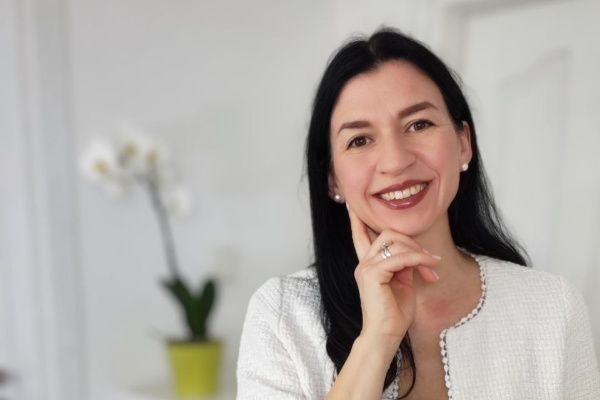
We must know where our boundaries are, clearly show and uphold them, otherwise we risk taking on someone else's emotional baggage to such an extent that in the end it affects our state!
Introduce yourself in a few sentences..
My name is
Radosina Yaneva, I am a lawyer and mediator by profession. I specialize in the field
of labor law and focus on out-of-court resolution of labor
disputes, team disputes, and business disputes.
What did you dream of becoming in your childhood years?
Astronaut,
archaeologist, profiler, diplomat, negotiator, peacemaker, lawyer.
At what age did you earn your first money? Tell us an interesting story?
I don't remember exactly –
I was probably 5-6 years old. We collected paper and metal and took them to a
recycling point. Then we would buy ice cream or seeds. In the summer,
we washed car windows. Later, I started helping a neighbor by walking her
dog, and she paid me well. I saved that money for bigger things, but
I don't remember what I bought.
What are the main factors and examples that shape us as individuals at an early age
and form our interests? What is your recipe for curiosity, sources
and wells of information and inspiration at this stage of our human development?
Undoubtedly,
the family and the environment that surrounds us directly. Then
school.
Books have been for me
since childhood, and remain, a source of entirely unknown and
vast worlds. I loved reading encyclopedias, reading classic novels.
After exhausting everything available at home, I went to the nearby library and
registered. During vacations, I went every afternoon to the library to read the books
that were not allowed to be taken home. Later, I was a regular visitor to
the school library. As a student, I loved going to the library in
the rectorate of Sofia University. To this day, I maintain a card for
the city library, and my love for books only grows.
Has there been
any significant change in your perceptions in a more mature age regarding what
motivates you to do or not do something?
I increasingly
understand that it seems I am returning to what was important in my early years
and which subsequently was hidden.
Whose decision was it where to pursue higher education and what to study? Was it the right
decision, looking back today?
I had hesitations
between psychology and law. In the end, law prevailed due to parental
opinion, and I was OK with that because it contained part of the things I was looking for in
psychology, but there was also something else – there were negotiations and reconciliation of disputing
parties. It was the right choice, yes, thanks to that decision today I am who I
am.
Share with us
more about your interests, knowledge, skills, and hobbies?
I love to
travel, read books, listen to classical music. I love to do things with
my hands – to sew tapestries, to arrange and bring calmness and coziness around me.
I can cook well. I am a good organizer and executor, a good listener. I seek
and find benefits in every situation, even if it is difficult.
Would you
change your profession today and which fields of activity capture your interest?
At this stage, no.
However, I have started to incorporate into my profession things that are important to me and are,
of course, in accordance with it. I would like to develop mediation more as
a procedure that employers incorporate as part of their internal
policies for resolving conflicts, as well as to be recognized as a quick and
effective way to resolve disputes in the field of business – whether between
partners or between commercial counterparts.
They say that
the personal brand is everything that people say about you when you are not with them
in a room. What would you like to hear today?
Hmm, interesting
question… That I am a peaceful lawyer-mediator who helps ensure
compliance with labor legislation on one hand, and on the other - assists people in resolving their
win-win disputes quickly and effectively. With the important clarification that peaceful does not mean
quickly yielding and compliant, but seeking understanding and mutual benefit.
Emotional
intelligence, adaptability, and flexibility, as well as our soft skills are
key conditions for success in recent years. How do you cope with
the daily challenges of life to stay in good shape and
mood?
I try to
create a gap between the challenge and the reaction, to make sense and to
assess whether it is necessary at all and if so - what resource to engage in this situation.
Sometimes I fail and I am reactive. I do not blame myself, but I take responsibility if
I have made a mistake. And I move forward. In difficult moments, I try to be
good to myself, to give myself the necessary care and support, to do things that bring me
pleasure, calmness, to take a break if necessary.
What are the
most important conclusions you have drawn so far about maintaining the right
communication considering the different characters of the people you meet
daily – colleagues, friends, close ones?
It is always
beneficial to hear, see, and truly accept the person as they are in
the moment, what they really want and what they are capable of giving/doing, that is, to listen to them
actively and with empathy. This does not mean agreeing with a given behavior,
but simply accepting that it exists and clearly showing that you agree to
continue communication with that person if they change their behavior. It does not
mean agreeing to give what is asked of you. However, when a person
feels heard, seen, and understood, even the most stubborn cooperation increases,
and communication improves, which in turn raises the likelihood of achieving
the desired final result. Well, of course, we need to know where our boundaries are,
clearly show and uphold them, otherwise we risk taking on someone else's
emotional baggage to such an extent that in the end it affects our state.
What do you think
about money? What is their influence on your life? What is your advice to
people who often ask themselves questions related to money and how sufficient they are?
Money is important,
undoubtedly, because you definitely live more comfortably with money than without.
The question here is what is a comfortable level of living for us. However, money is not everything
and cannot replace other, purely human things. Therefore, we must be clear about
our needs and seek effective ways to satisfy them, because
we will not fill them with money, no matter how hard we try and whatever quantities we
have.
What is the
most valuable career advice you would give to people?
To listen to themselves
– whether it will be the heart, soul, intuition, sixth sense, or whatever each of us
calls it. Because "that thing" knows what is right and what is not for
us.