Happiness is not proportional to the number in the bank account
· Gyulay Baadi
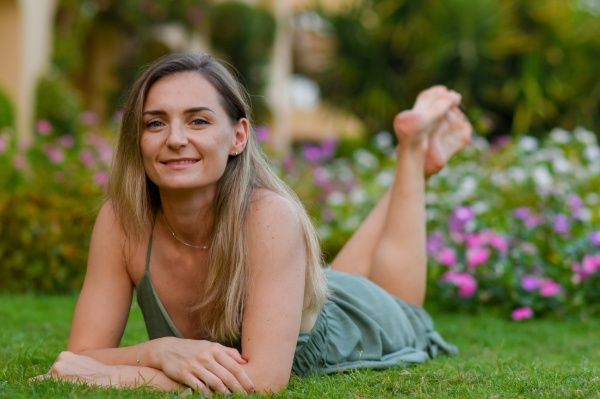
In the UAE, waking up at 6:00 AM and going to the office between 7-8 AM is completely normal!
Introduce yourself
in a few sentences. What does your work as daily
commitments consist of?
Hello! My name
is Gyulay Baadi, I am 38 years old and a mother of two boys. I have over 12 years of experience in the field of software
testing. I currently work as a QA engineer in an international technology
company. My main tasks include designing and executing test
scenarios, identifying and analyzing defects to track the quality of
software, both during and after its implementation at the client.
I work closely with both the end user and various
teams in the organization I work for.
In which country
and city do you currently live and how did you end up there?
I currently live in
Abu Dhabi, United Arab Emirates. I moved here 8 years ago after
receiving a job offer, which I then saw as a great opportunity,
both for professional and personal development. I mainly work in the client's office, which allows me to develop not only my technical skills but also
so-called “soft” skills, especially in the area of communication.
What were the
biggest challenges you faced at the beginning of your stay?
At the beginning,
the biggest difficulties were mainly related to the climate. The heat for
most of the year (especially June – September) makes it almost impossible
to walk. Additionally,
here a person is completely dependent on their car, as the infrastructure is not
built for pedestrians due to the hot climate and long distances. Another challenge was the early start
of the day. Here, waking up at 6:00 AM and going to the office between 7-8 AM
is completely normal, while the working day in most IT companies in Bulgaria starts
around 10:00 AM.
How did you overcome the language barrier (if there was one)?
Fortunately, I did not
have a language barrier, as English is the main language for
communication here – both professionally and in everyday life. Of course, over
time I managed to improve my skills by understanding all its dialectal forms.
What resources
or networks (local communities, colleagues, organizations) helped you adapt?
My adaptation
was relatively easy thanks to our kum, who had moved to
live in Abu Dhabi 2 years before us. From day one, we were already part of
his friendly community. Later, I expanded my circle of friends with
colleagues, foreigners from different groups, and of course Bulgarians, who are becoming more
and more in recent years.
What are the
main differences between the work culture in your current country and that in
Bulgaria?
The differences are
noticeable and affect many aspects – from the way of communication to attitudes.
For example, communication in the work environment in the UAE is much more diplomatic and
indirect. The environment is extremely culturally diverse – people from Asia,
Europe, Africa, the Middle East, North and South America, Australia, and New Zealand create a need for high
cultural sensitivity, delicacy, and diplomacy. In the UAE, the hierarchy is strongly
expressed. Decisions are often made top-down, and initiative from
lower levels is not always encouraged. Another main difference is the existence of
a visa regime, meaning that life and work are completely tied to a visa. In the UAE the pay is high, but in return,
there is no pension insurance. Working hours and pace vary according to
the position, the company's activity, etc. In my case, I have a great balance
between work and personal life. I work from 8:00 to 15:00, and on Fridays until 12:00.
What values
and practices in the workplace impressed you the most?
I was very impressed
by the respect for differences – religion, nationality, culture. There is a built habit
of tolerance and acceptance – towards cultures, religions, clothing, accents, customs, and
beliefs. This teaches you to be respectful, tolerant, and accepting of differences.
Have there been situations where cultural differences have challenged you?
Of course! Even
after 8 wonderful years here, I still sometimes experience difficulties.
One of the
noticeable cultural differences is the concept of understanding time and punctuality – for
some cultures, a 20-30 minute delay for a meeting is completely normal, which at
first frustrated me because punctuality is important to me. But over time, I started
adapting and changing my approach. Another example was when during the month
of Ramadan, as a sign of respect for those fasting, we must consume
food and drinks only in the kitchen behind closed doors.
How does finding
work differ in your current country compared to your homeland?
The process of
finding a job in the UAE is long and a much more formal process. Searching for a new
job can take a year, even two. Most positions are open to
people from all over the world, which means you have to stand out among candidates with
very different experiences and backgrounds. Thousands of applications are received for one
open position, making it quite difficult to review them, even with the presence
of automated systems (ATS). For your resume to be seen in the UAE, it entirely relies on personal
contacts or recommendations. Another important factor
is that here the employer takes responsibility for sponsoring your visa –
which means that you not only have to be a good candidate, but also be 'valuable' enough
to justify the administrative efforts and costs of hiring.
Did you have to
go through any additional qualification courses?
Yes, internal company
trainings that helped me adapt to the new technologies and standards
in the company. Regarding certification courses, there were no specific requirements.
The certificates I have obtained over the years were entirely my
own initiative.
Have you faced
prejudices or obstacles because of your foreign origin?
No, I personally never!
Here, foreigners make up over 85-90%, which
somewhat reduces the risk of overt prejudices. The UAE promotes tolerance and
intercultural understanding, there is even a Ministry of Tolerance. Racism
in this aggressive or overt way that we know does not exist here.
What would you
advise people who want to take a similar step?
I would advise them
to thoroughly research the place, culture, and living conditions. Not to be afraid of
the unknown, but also to be realistic. Flexibility, patience, and curiosity
are key.
If you could
go back, would you choose the same path?
Yes, definitely! This
was one of the best decisions I have made in the long term. This
change gave me a lot, a tremendous amount – both
as a professional and as a person.
What do you
miss the most from your homeland in professional and personal terms?
On a personal level,
I miss the mountains the most – the opportunity to escape for a day or even for
several hours into nature, to recharge with a walk in the forest. In Bulgaria,
you have almost unlimited access to greenery, to clean air, to small and quiet
places. I miss the street musicians, hand-made and jazz festivals, those small
cultural events with soul – in the park, on the corner, in some old hall with history. This
sense of authenticity and artistry is not often found in the UAE, where everything is
more grandiose but more commercial.
And in professional
terms – the more informal work environment, the typical IT office spaces that
are created with great attention to comfort and creativity. I also miss
the clearer opportunities for vertical growth – in Bulgaria, there are more
natural paths to leadership roles, while in the UAE, progress often depends on
more complex factors.
And although there are
many advantages here as well, one cannot help but sometimes dream of a nice
homegrown tomato, of summer in the Rhodopes, and of a Friday evening with live jazz in
some Sofia bar.
Have you considered
returning and under what conditions would you do it?
When I moved to Abu Dhabi, the plan was very clear – two years until my
visa expires, and then back. But life has a habit of not adhering to plans – I am now in my eighth year here, the visa is being renewed, the children are growing, and I seem to
have put down roots, even if in foreign soil.
I have not seriously thought
about returning, mainly because I am currently at a stage in my life where I do not
think only of myself. I have two wonderful boys who have their own friends,
access to creative and interactive education, which gives them many
opportunities for development. We live in a safe and clean environment, with good infrastructure
and stability – things I would not want to take away from them.
Yes, Bulgaria misses me – mainly as a feeling. I miss the seasons, I miss the taste of
Bulgarian food, the freedom to get in the car and be in the
mountains in an hour, the atmosphere of Sofia streets. But returning means giving up
one thing for the sake of another. And sometimes, as a mother, you have to choose your battles.
For now, mine is chosen – for the children to have a stable, developing environment.
Of course, I do not
rule out the possibility of returning one day – perhaps when the feeling of 'home'
weighs more than anything else. But that will only happen if I am sure that I am not
exchanging security and perspective for nostalgia.
What do you think
about money? What is its influence on your life? What is your advice to
people who often ask themselves questions related to money and how sufficient they are?
Money is an
instrument – neither good nor bad in itself. They are not an end, but a means – for
security, for choice, for peace of mind. Their influence on my life is significant,
because they gave me the opportunity to make the change – to move to
a foreign country, to provide a stable foundation for my children, to travel, to
develop professionally.
Happiness is not
proportional to the number in the bank account. Money is earned and spent, what matters
is what remains – experiences, relationships, inner peace. If money is at
the core of every decision, you start living on external drive, not
from within.