Here people do not have experience with raised voices, emphasized sentences, or sarcastic remarks
· Neli Nedyalkova
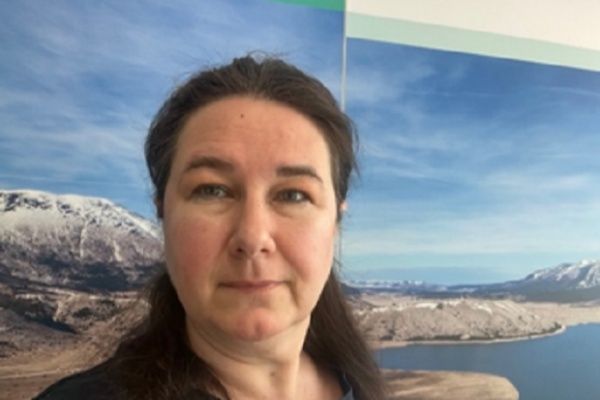
When you are on vacation in France, no one will look for you and this is expected at all levels from everyone!
Introduce yourself
with a few sentences. What does your work as daily
commitments consist of?
Hello, my name
is Neli Nedyalkova and I currently work as Deputy Director of Marketing and
Sales at BNP Paribas Personal Finance, which covers the following countries:
Poland, Turkey, Ukraine, Morocco, and South Africa.
The work is extremely
varied, on one hand covering standard topics from sales and marketing
such as budgeting, monthly tracking of results, by products, partners, business
lines, and channels. Analyzing deviations and proposing products/initiatives
to compensate for the differences.
Regularly analyzing
the market: competition, innovations, and the effect of regulations.
But on the other
hand, the perimeter covers countries that are very different in terms of business
structure, team skills, business models, and cultures.
In addition,
Ukraine is not functioning at full capacity and this requires increased attention when
setting goals and ways to achieve them.
And all of this
makes the work interesting, dynamic, and motivating.
In which country
and city do you currently live and how did you end up there?
I currently live
in France, having been here for almost 5 years now.
My arrival in
France was not planned, but turned out to be a result of internal reorganizations in
the company.
My departure from
Bulgaria happened as a result of an offer to join the Regional
team of Central Europe (Romania, Czech Republic, Slovakia, Hungary, and Bulgaria), which
came at a time when I was ready for such a step. My work in Bulgaria had rather
turned into a routine, of course with daily challenges, but always
within the familiar.
I decided to accept and
this required moving to Slovakia. I worked there for about a year and a half,
a period coinciding with the beginning of the Covid pandemic.
During Covid,
everything changed drastically and I had to decide, move to France, but with a different
team and different responsibilities or back to Bulgaria, to what is still relatively
safer and more familiar.
I chose to accept
the move to France, without being able to travel beforehand and choose where
we would live, how we would settle, where the child would study, etc. I had to make
all choices online.
What were
the biggest challenges you faced at the beginning of your stay?
I had an incredible
amount of difficulties at the beginning, for example, getting internet took about 2
months.
I did not speak
the language, and with English, it is almost impossible to meet daily needs. Still, the younger
population speaks English and there was always someone to help with signing an
insurance contract, internet, buying a car, etc.
My colleagues in the office
also tried to help me, especially those with whom we were together in
Bratislava.
In France, for any
situations, it is known what to do, it is not the most optimal and there is a chance that it will require
going through many steps and can lead to confusion.
For example, I am still
learning how to reimburse certain expenses for medical needs, for which in
Bulgaria, if there is additional health insurance, reimbursement happens extremely
quickly and easily.
One of my biggest
concerns turned out to be unnecessary, namely visiting a doctor. For all
of France, there is an application that allows you to choose a specialist, by address, language,
that they speak, booking an appointment, exchanging documents, and consultation.
How
did you overcome the language barrier (if there was one)?
I am still overcoming it...
Of course with
lessons, listening to colleagues, trying to speak...but it is a real
challenge to talk with French people on everyday topics...
They speak quickly,
have an accent depending on which region of France they come from, and use slang, as
not everyone tries to make the conversation easier.
What resources or networks (local communities, colleagues, organizations) helped you adapt?
Given
my arrival during the Covid period, I had no opportunity for standard socializing,
even work in the office was minimized.
I relied on
Bulgarian colleagues, although there are very few of us.
There is a much
larger group of Romanian colleagues.
Still, whenever I
sought help from Bulgarians, they always responded willingly. Even if we did not
know each other, I created contacts on LinkedIn and later, when life resumed,
I received invitations for various meetings.
What are
the main differences between the work culture in your current country and that in
Bulgaria?
The differences are
serious, but it seems that the attitude towards vacations seriously impresses me. For
me, contacting “for work” during vacation has always been normal and
happens in both directions, both as a manager and as an employee.
When you are on
vacation in France, no one will look for you and this is expected at all levels from
everyone.
Observing the
workday and lunch break is also time that is respected.
What values
and practices in the workplace impressed you the most?
Respectful
attitude towards all employees is the norm.
Have there been
situations where cultural differences have hindered you?
I had such situations
in Bulgaria as well, since we are more direct both in our expression and in giving
feedback, and in setting tasks, and in presenting a problem.
Here, such an approach is considered rude and is more likely to hinder overall work or unblock a more complex
situation. It can even completely freeze
the discussion because people do not have experience with raised voices, emphasized sentences, or
sarcastic remarks.
It happens, but very
rarely and is accepted only if it is from someone higher in the hierarchy.
Hierarchy is
important and if the manager requires it, then it
is done, without being questioned and almost no further
explanation is sought.
How does finding
work differ in your current country compared to your homeland?
I don’t think it differs
much, recommendations, presentation on LinkedIn, experience, free
use of English, but also another language play a role.
Recent graduates
attend career fairs. It often happens that interns are hired directly after their internship.
They often send
requests on LinkedIn to introduce themselves and seek work.
Large companies
organize career days to stimulate internal career mobility.
They invite
representatives from Human Resources who explain what profiles are being sought and what
positions are or will be open. They also describe the specific duties, team, and workplace.
Did you have to
go through any additional qualification courses?
I have not had
to go through courses for my actual job.
But it is practiced and
it is possible to apply entirely for a retraining program.
Have you encountered
prejudices or obstacles because of your foreign origin?
Not really. In the company
there are many initiatives focused on diversifying teams. When I started in
my current team, we were from eight different countries.
What would you
advise people who want to take a similar step?
I will always advise
people to try, to take risks, especially the younger generation, I believe that for
them it is essential to work abroad.
They will touch upon
cultural differences, will accept them more easily, and will learn to overcome them without
taking them as personal.
Young employees
here are very open to working abroad for a few years. They strive for
this and there is also government support for companies that hire people aged 18-28
for work abroad.
If you could go
back, would you choose the same path?
Not for a moment
have I regretted taking this path.
What do you
miss most from your homeland in professional and personal terms?
Dedication and
commitment to work.
The pace and
pragmatism sometimes miss me.
Celebrating
birthdays in the office.
Warmer relationships
and perhaps a bit more sincere relationships.
Longtime
friends and Bulgaria I miss. That’s why we
regularly go back.
Have you considered
returning and under what conditions would you do it?
Yes, I would
return, but rather hypothetically, because the positions that would interest me at this stage are limited.
What do you think
about money? What is their influence on your life? What is your advice to
people who often ask themselves questions related to money and how sufficient they are?
Money is important and
necessary, and for a large part of Bulgarians, they are still at the level of a hygiene factor,
especially for people outside the capital.
It is a fact that there are
people who do not like their job and it is only a source of income and does not bring them
satisfaction.
If I were in a similar
situation, I would change my job.