How to return from the ocean, mild climate, incredible nature, and delicious food?
· Pasha Georgieva
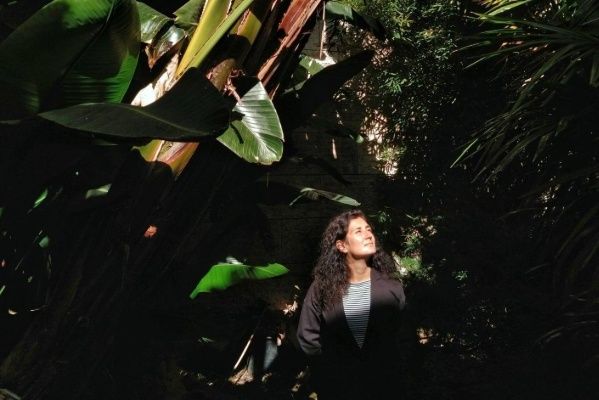
The Portuguese are quite similar to Bulgarians in mentality – professionals dedicated to their work. I wouldn't say that I observe a 'more laid-back' attitude that some expect from a southern nation. On the contrary!
Introduce yourself in a few sentences. What does your work express as daily commitments?
My name is Pasha Georgieva and I am currently the Launch Manager at Zonia. Zonia is an American company that produces and distributes documentary series on health topics, as well as maintains a platform where various materials on health topics can be found - shows, films, yoga, etc. The work of a Launch Manager is quite complex. As the name suggests, its essence is to ensure that absolutely everything related to the launch of a series is available on time and is fully completed for presentation to the audience. This includes both the episodes themselves (as content, graphic elements, music, etc.), as well as all web pages, emails, and integrations related to promotion. On a daily basis, I communicate and manage a team of editors, designers, motion graphics designers, animators, copywriters, and a composer, as we refine every single part of the puzzle together. I also work with the IT manager and the Affiliate manager of the company, as well as with the CEO and COO.
In which country and city do you currently live and how did you end up there?
I currently live in Portugal, in Algarve. I moved here after years of living in Lisbon, after my boyfriend and I decided that we wanted to live by the ocean. I ended up in Lisbon after a year and a half in Melbourne, Australia, where I went to pursue my master's degree. After a while, I decided that I missed Europe and transferred to Lisbon to finish it. After successfully completing my education, I decided to settle in Portugal.
What were the biggest challenges you faced at the beginning of your stay?
The challenges when moving to a completely new country are countless. When you are alone in a new place, without friends and support, you literally have to build your life from scratch – from searching for a job and housing to purely bureaucratic procedures and building an environment and friendships. At first, it was definitely not easy for me – I changed quite a few homes and jobs, and I was unemployed for a while. All of this – alongside university and the efforts to present yourself at a high level – is a real challenge.
How did you overcome the language barrier (if there was one)?
To this day, I wouldn't say that my Portuguese is at a good enough level. I mainly communicate in English. Fortunately (or not), most Portuguese speak excellent English, so you can always communicate with them. However, this doesn't help much with learning the language because it's always a convenient excuse to postpone it. But I promised myself to take it more seriously soon.
What resources or networks (local communities, colleagues, organizations) helped you adapt?
At first, my environment was mainly made up of colleagues from university – a combination of very educated and pleasant people from all over Europe and the world. The master's program was in English and had a very good rating, which attracts such types of individuals. I hardly interacted with Bulgarians, except for some random meetings. I was lucky with one of my first roommates – a Portuguese from the artistic circles, in which I was also trying to fit in. Thanks to his responsiveness, I quickly felt at home. Otherwise, in Lisbon, there is a developed network of expats, so-called digital nomads, who connect through a Facebook group and have regular meetings. I have attended a few such meetings, and it is interesting to exchange experiences with people you have something in common with.
What are the main differences between the work culture in your current country and that in Bulgaria?
I have always worked in international companies with people from all over the world, so my environment is quite multicultural – and I like that. The Portuguese are quite similar to Bulgarians in mentality – professionals dedicated to their work. I wouldn't say that I observe a 'more laid-back' attitude that some expect from a southern nation. On the contrary. I would say that Bulgarians are the ones who would rather 'slack off' from work, if possible, than the Portuguese.
What values and practices in the workplace impressed you the most?
The values of a company come from the 'head' – from the CEO and the way management perceives work ethics. I am fortunate to be in a company that cares for its people, supports them, and listens to their opinions. I have also worked in companies where this was not the case, and the difference is huge. When you love what you do and feel that your colleagues are 'on your wavelength' – you give your best.
Have there been situations where cultural differences have troubled you?
For me, it's not about cultural differences, but rather about the type of people you work with. I have always felt at home among art and creative circles, regardless of the people's backgrounds. I have had difficulties more with people whose motivation is entirely profit-oriented and do not look beyond the financial report. Of course, revenues are important – I do not underestimate this in any way – but there needs to be a balance. People should not be left behind.
How does finding a job differ in your current country compared to your homeland?
For five years, I have been working remotely – I started during Covid and naturally continued. I don't think I would return to an office. Remote work gives you so much freedom – to work from wherever you want, saves you the commute to the office, and much more. But finding remote work is harder – the positions are much fewer, and the competition is from all over Europe (at least). You have to be active, constantly apply, and be ready for rejections. Also – to maintain an active professional profile, communicate with HRs, and build a network. You shouldn't be afraid to reach out directly to people, be ready to network, record video presentations, or perform complex tasks during the selection process. My memory of Bulgaria is that the processes there were shorter, easier, not so complicated – usually 2 interviews and an offer. I don't know, things may have changed.
Did you have to go through any additional qualification courses?
I constantly look to further my education. My main activity is marketing, and this field has changed drastically over the last 6–7 years. It is necessary to stay updated with new platforms, parameters, and terms. Although I am currently engaged more in creative project management than pure marketing, I try not to neglect marketing. This is a field that is constantly evolving, and if you fall behind on some of the new trends, you will suffer later. Right now, I am happy to be working a bit outside of marketing. I have worked for many years in various television stations, and Zonia appeared at the perfect moment.
Have you encountered prejudices or obstacles because of your foreign origin?
From the Portuguese – no. At first, when looking for a job, in some places, proficiency in Portuguese was mandatory – and I did not have it. But in general, the Portuguese are quite open to Europeans, including those from Eastern Europe. In some local companies, Portuguese are preferred, but fortunately, there are many international opportunities where proficiency in English is sufficient.
What would you advise people who want to take a similar step?
To act! If they feel they want to try life outside Bulgaria – let them approach it boldly. 'Life begins where your comfort zone ends.' I'm not saying it will be easy, but there is always a way. It is important to have courage and a desire to experiment.
If you could go back, would you choose the same path?
I have often asked myself this. I do not regret leaving Bulgaria – I just wonder if I should have gone through Australia on my way to Europe. Australia is the place where I felt the greatest cultural differences. It was very interesting and enriching, but also difficult. Despite all the difficulties, I don't think I would change anything. I met amazing people and traveled around. It was an experience full of emotions, and I think I had to go through it to return to Europe and truly appreciate it.
What do you miss most about your homeland in professional and personal terms?
Professionally – nothing. As I mentioned – the environment is important, not the location. Personally – my friends and family, of course.
Have you considered returning and under what conditions would you do it?
No, at least not for now. I have settled here and I like it. How to return from the ocean, mild climate, incredible nature, and delicious food?
I love Bulgaria, but I think it still has a long way to go before it becomes a desirable place to live.
What do you think about money? What is their influence on your life? What is your advice to people who often ask themselves questions related to money and how sufficient they are?
Money, of course, is a factor. If you have it – things happen more easily. If it is lacking – the struggle is harder. I don't want to be a millionaire, but I want to have enough to live comfortably and be able to travel. For me, freedom is a core value. That would be my advice to people – don't think about accumulating wealth, but rather think of money as a means to achieve your dreams.