If a person really wants to make some change in their life, they should at least try
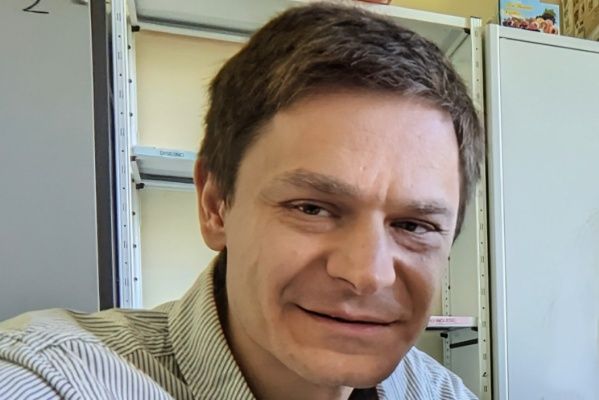
· Tsvetomir Bozhinov
Italians are known for their frugality, almost everyone has savings and often invests in various forms!
Introduce yourself in a few sentences. What does your work as daily commitments consist of?
My name is
Tsvetomir Bozhinov and I have been working in IT for almost my entire professional life. At
this moment I work for Telit Cinterion www.telit.com , a global company that develops innovative IoT modules and services as a Technical Support Engineer focusing on cybersecurity.
In which country
and city do you currently live and how did you end up there?
Since 2003, I
have been living in the city of Trieste, Italy. I came here for the first time as a student under the
Erasmus program, then I returned to Bulgaria for a short time
and then transferred my studies to the University of Trieste.
Subsequently, due to circumstances, I stayed to live here.
What were
the biggest challenges you faced at the beginning of your stay?
At first,
as an Erasmus student, the biggest challenge was the bureaucracy and
non-compliance with the Erasmus program by Sofia
University, including delayed and partial payment of the financial subsidy,
as well as the non-recognition of the exams taken here by SU. This was in
2002/2003, when the program was not well known and developed in
Bulgarian universities. I hope, or rather I am sure, that over time these discrepancies
have been overcome.
On the other hand,
especially from the perspective of a foreign student or even a tourist, Trieste is
a very interesting city where different cultures and historical
layers intertwine, and in a way this helped me a lot to view difficulties
more as challenges and with a great deal of enthusiasm.
How
did you overcome the language barrier (if there was one)?
My answer
again leads to the university – I was in an environment where everyone speaks several
languages, and the fact that I didn't know Italian at first was not a major
obstacle. On the other hand, this also provided me with a good opportunity to learn Italian quite
quickly from people with a good linguistic culture.
What resources or networks (local communities, colleagues, organizations) helped you adapt?
I didn't have
any particular difficulties with adaptation; at 23, a person is much more inclined and even
curious to try and accept the new or different. I admit that right from the start
I was lucky to meet people with whom I am still friends today, and this
helps a lot.
At that
moment, I also met my great love right here in Trieste, where we are still today.
What are
the main differences between the work culture in your current country and that in Bulgaria?
It is difficult for me to
answer this question. My last experience in Bulgaria dates back to 2005, and
since then the business climate in Bulgaria has changed drastically.
From my conversations with
friends and relatives working in Bulgaria, I think that the size of the salary has much more significance. In my opinion, it should
be viewed a bit more globally; the amount of the salary is one of the decisive components,
along with flexible working hours, the possibility of working from home,
additional packages, and last but not least, a good working environment. I prefer
to work in a place where I feel good and have more personal freedom,
rather than taking a higher salary.
What values
and practices in the workplace impressed you the most?
I would say that here
job stability is very important, i.e., the stability of the employment
relationship. Legal norms and national framework agreements usually
provide much greater protection for the worker. Companies also try to
build a policy that emotionally connects workers to their jobs.
Have there been
situations where cultural differences have troubled you?
Cultural
differences can sometimes be a difficulty, but they are often also an opportunity. For the most part, my
professional life has taken place in multinational companies. Working
in a multicultural environment is a challenge, but the benefits are enormous.
How does finding
work differ in your current country compared to your homeland?
As far as I am
aware, the processes of finding work are quite similar – job postings, LinkedIn, friends and acquaintances. In the IT sector, job postings online or social networks certainly
have much more weight. It is increasingly common for companies to seek first contact with candidates.
Did you have to
go through any additional qualification courses?
I am still
continuing to learn, although I manage to set aside a little time for that.
Have you faced
prejudices or obstacles because of your foreign origin?
Prejudices
are part of human nature. One of my theses is related to
stereotypes and prejudices in our relationships. When I encounter
such, I try to remain calm and not take offense. It is also interesting to see
the context, to understand what they are due to and how exactly the person opposite
sees (or does not see) things.
In a professional
sense, I am sure that many companies do not even consider applications from
foreigners. There are various forms of
discrimination, and one of them is undoubtedly origin.
What would you
advise people who want to take a similar step?
My advice could
be quite general – if a person really wants to make some
change in their life, they should at least try.
If you could go
back, would you choose the same path?
Here the question
implies a very philosophical view on things. Surely everyone would
change at least something small in their life.
Overall, I feel
satisfied with the choices and the course of circumstances I have
gone through. I am also aware of the things I have missed, sometimes even
refused or underestimated.
What do you
miss most from your homeland in professional and personal terms?
On a personal level,
of course, I miss my relatives and friends, but also the places. In
professional terms, I couldn't say that I miss anything, but I also realize
that in Bulgaria my path might have been different.
Have you considered
returning and under what conditions would you do it?
I have answered this question
many times; many people have asked me – relatives, colleagues,
friends. Jokingly, I always reply that I can pack my bags and after no
more than a few days I will have “returned.” However, the serious answer is much
more difficult and ambiguous. In fact, for now, I feel good here, where I am,
my life is organized around family and children, home, work, and
daily commitments, but I do not rule out returning to Bulgaria one day,
or moving somewhere else.
What do you think
about money? What is their influence on your life? What is your advice to
people who often ask themselves questions related to money and how sufficient they are?
Money is the
necessary evil of the modern world. We can live with both a lot and a
little. However, true evil occurs when there is too little – when it is not enough
for basic needs. The topic is quite broad, as much financial as it is
philosophical, and it is not easy to give advice, i.e., I cannot tell someone who
cannot afford to pay for the treatment of a loved one that it is not important – in such
moments even 1000 leva can matter. Conversely, if someone lives with
5000 leva today, then tomorrow with 6000 they would live in the same way.
Here I can say
that I find a serious difference between the financial behavior of people in Bulgaria and
here in Italy. Italians are known for their frugality; almost everyone has
savings and often invests in various forms. Similarly,
the issue of insurance stands – most people have home insurance, additional health insurance,
life insurance, etc. In Bulgaria,
I think there is not enough financial culture and discipline in this regard.