If something no longer inspires you, it is a clear sign that it is time for a change
· Simona Belcheva
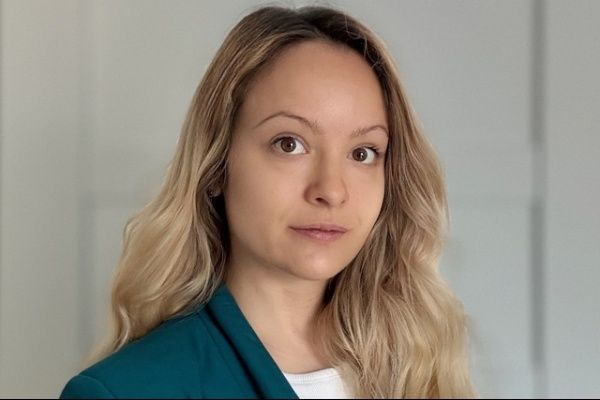
Do not settle for the routine that does not bring satisfaction, break it, even small changes yield great results!
Introduce yourself in a few sentences...
My name is Simona Belcheva and I am a lawyer in the Sofia Bar Association. My practice is mainly focused on immigration and labor law.
To date, I have successfully consulted various Bulgarian and foreign companies on issues related to relocations, residence regimes, residence permits, labor employment, and labor law for over 10 years.
In addition to my legal practice, I also contribute to improving the regulatory framework by participating in initiatives and working groups aimed at better regulation of labor and migration processes in the country and improving the business environment.
At what age did you earn your first money? Tell us an interesting story?
I earned my first money somewhere around 13-14 by helping my parents during the summer vacation: I did translations into English and helped with processing and organizing documents. The earnings were symbolic, but the satisfaction was immense. Even before that, from an early age, I have always been passionate about budgeting and planning money - I loved keeping notebooks with expenses, making lists, and planning, even when it came to my pocket money.
Only after the first year of my university education did I go to the USA, where I worked two jobs during the summer. That was when I truly understood what it means to work many hours a day and realized how much effort, motivation, and discipline are needed.
What are the main factors and examples that shape us as individuals at an early age and form our interests? What is your recipe for curiosity, sources of information, and inspiration at this stage of our human development?
Certainly, the strongest influence comes from family and the environment outside the family – they exist in a natural symbiosis, and personality is built somewhere in between, in search of one's own “self”. The recipe, in my opinion, is quite simple: to be allowed to search, to ask, to discover, while someone supports you by providing enough space for independent thinking and development. I try to apply the same approach in raising my children – to encourage them to explore the world and themselves with courage and imagination and, of course, with many books.
Has there been any significant change in your perceptions in more mature age regarding what motivates you to do or not do something?
I have always loved doing many things at once – that’s how I feel active and most productive. However, over time I realized that I cannot (and do not need to) do everything. I started to prioritize more clearly – not only tasks but also people, commitments, causes. I always try to ask myself: does it make sense to me, does it bring value to me, to a given cause, is it worth the time and resources spent? Thus, instead of the constant feeling that I am overwhelmed and buried in tasks, I now have a clearer focus and a sense that I am investing my energy in things that truly matter to me.
Whose decision was it where to pursue higher education and what to study? Was that decision correct, looking back today?
The decision was entirely mine. There are no lawyers in my family, so the choice to study law came from internal motivation. My parents supported me, but they were also honest with me – they warned me that it would be difficult and would require a lot of perseverance. Today I believe I made the right choice. Of course, I also believe that a person can always change their direction or develop in a new field – what matters is to keep their internal compass and beliefs.
Share more about your interests, knowledge, skills, and hobbies?
Outside my professional commitments, I currently dedicate almost all my time to my children – and although it is intense, it is the most meaningful and enriching “hobby” I have ever had. I love to travel – for the change of scenery, the restart, and the inspiration. Soon I plan to return to sports – running has always been my way of disconnecting and organizing my thoughts. And when I have those few quiet minutes a day just for myself, I love to learn languages.
Would you change your profession today and which fields of activity capture your interest?
For now, I have no such plans. My profession brings me satisfaction, dynamics, and a sense of purpose. But if at some point it stops inspiring me or I feel that it is no longer “mine,” I would not hesitate to seek a new direction. If I ever take such a step, the fields of human resources and business development seem closest to me.
They say that personal branding is everything that people say about you when you are not in the same room with them. What would you like to hear today?
Most of all, I would like to hear that I have helped – that I have been useful, that someone has made a good decision by choosing to rely on me. Whether it is a professional case or a personal situation, the feeling that I have been a support or contributed something meaningful is the most valuable “feedback” for me.
Emotional intelligence, adaptability, and flexibility, as well as our soft skills, are key conditions for success in recent years. How do you cope with the daily challenges of life to stay in good shape and mood?
I believe that a person needs a “restart” and it is important to find their way to achieve it. It can be something small, like silence with a cup of coffee in the morning before everyone else has woken up, or a trip from which to draw inspiration. When we manage to achieve a good balance between professional and personal life, it undoubtedly positively reflects on both spheres.
What are the most important conclusions you have drawn so far about maintaining the right communication considering the different characters of the people you meet daily – colleagues, friends, close ones?
It is quite simple: the most valuable communication skill is knowing when to speak and when to just listen. Sometimes it is better to be delicate, other times direct. We should aim to be empathetic but also flexible, sensing the context of the situation.
What is the most valuable career advice you would give to people?
I can give several pieces of advice that I try to follow in my daily life. Stepping out of the comfort zone is not scary. Do not settle for the routine that does not bring satisfaction, break it, even small changes yield great results. If something no longer inspires you, it is a clear sign that it is time for a change and development in a new direction.