It is completely possible to achieve high results without losing our humanity along the way
· Ivanina Parvanova-Stefanova
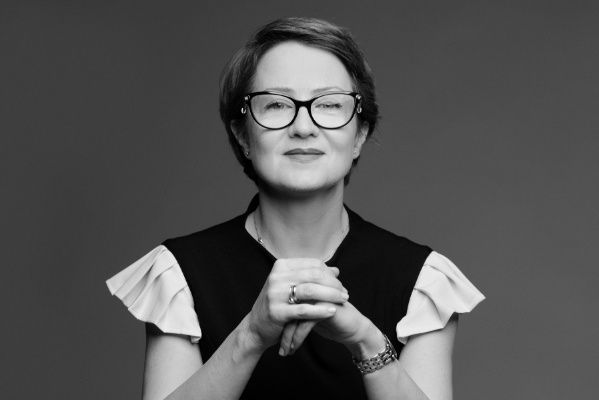
Career is not a competition, but a personal path – filled with choices, resilience, growth!
Introduce yourself in a few words..
My name is Ivanina Parvanova-Stefanova and I am a leader with over 25 years of experience in international corporations, where I have held managerial and strategic positions. Throughout my professional journey, I have managed sales teams, key business areas, transformational projects, and operational processes – always driven by the desire to create value and long-term results in a dynamic and competitive business environment.
How would you describe your career in a few words?
Challenges. Conscious choices. Sustainable journey. Constant growth marked by work, learning, and transformation – step by step.
What was the most important choice that shaped your path?
I chose development – fueled by learning, ambitious goals, and consciously stepping outside my comfort zone. For me, this is not a one-time effort, but a mindset that drives everything forward.
What would you have liked to know at the beginning of your career that no one told you?
Building a career does not only mean accumulating experience – it also means building trust, interacting with respect, and investing time in relationships that have long-term value. This is one of the strongest assets a person can build.
How did you choose your profession and what advice would you give to people who are now heading in that direction?
My first education is a bachelor's degree in accounting and control. Even during my studies, I realized that accounting is not my passion.
My advice to people who are now orienting themselves is not to be afraid to change course if they feel that the path does not inspire them. Allow yourself to search, to experiment, and to follow your inner compass. Career choice is not a one-time decision – it is a process. And the courage to redirect at the right moment is often what distinguishes a satisfied person from just a busy one.
What skills do you think will be key in the next 10 years?
The most valuable will be the skills that cannot be automated - critical thinking, emotional intelligence, digital culture, and communication maturity will be the foundation of professional resilience. But our most essential capital will remain our humanity – it will distinguish us in a world driven by technology.
How to build a network of useful contacts without appearing interested?
Contacts are valuable when they are meaningful for both parties. To build a network of professional relationships that truly works for us, we must also work for it. This means being active, consistent, and above all – sincere in our intention to be helpful. When a person approaches with respect, dedication, and a willingness to contribute, trust is built naturally.
What is the biggest mistake you have made in your career, and what did you learn from it?
A mistake is the refusal to choose – the moments when we hesitated and let others decide for us. Because when we do not choose for ourselves, someone else does it for us – and often this is not in our favor.
How to recognize a toxic work environment and when is it time to leave?
There are numerous articles and studies that describe specific signs of a toxic work environment: lack of trust, favoritism, sabotage, lack of recognition, excessive control, fear of mistakes, and outright disrespect. But beyond the facts, a toxic environment often feels deeply personal – based on our sensitivity, values, and emotional intelligence.
It’s a cliché, but true – that feeling on Sunday evening that your stomach tightens at the thought of tomorrow's workday is often the most accurate indicator. Our body speaks before our mind rationalizes it.
A toxic work environment is a silent killer – it does not always scream, but slowly erodes trust, motivation, and created value. The most affected are often the quality people – those who work with ethics, consistency, and dedication. For them, an environment that encourages contrary behaviors is not just demotivating – it makes them withdraw.
When is it time to leave? When compromises with oneself become a daily routine. When the feeling of “surviving” outweighs the desire to contribute. And when you realize that your potential can flourish elsewhere – in an environment that does not suppress it, but supports it.
What would you do differently if you could start over?
If I could start over, I would take every opportunity to pat myself on the back and say “Well done, you did great!”, I would rush more slowly. I would stop more often to celebrate even the small successes.
How to keep our motivation in times of stagnation?
There are always periods when things do not develop as we imagined. Being able to maintain motivation precisely then is one of the most valuable qualities you can develop. Because the career path is not a sprint – it is a marathon. It requires resilience, patience, and consistency.
Personally, in such moments, it has always helped me to turn to a new challenge - this can be additional training, participating in a different project, consulting another team, or an initiative outside the usual role.
How to achieve a balance between professional and personal life?
My advice is simple: strive to engage in something that makes sense to you, and do not forget to spend time with the people and things that recharge you. Like what you do. And do things you like. Balance will come naturally – not as a goal, but as a natural result of your inner harmony.
When is it time to change our career, not just the job?
When the feeling of stagnation becomes permanent. When day after day we lack a perspective for development, and what we do no longer brings us meaning, satisfaction, or energy. When we are more often exhausted than inspired.
In such moments, it is worth asking ourselves: is the problem in the specific environment, or in the direction itself? If the answer is in the latter, it is probably not just a need for a new job, but a necessity for a deeper transformation.
If you had to give just one piece of advice to people seeking success, what would it be?
My advice is: seek success that brings you inner satisfaction. One that allows you to look in the mirror at the end of the day with the feeling that you have remained true to yourself – and that what you do makes sense.
What is your definition of a “successful career”?
A truly successful career is one in which not only we, but also the people around us grow. When our work energizes, inspires, and is in sync with our values – then it is not just a profession, but a mission.
What would you like people to remember from this article?
That career is not a competition, but a personal path – filled with choices, resilience, growth.
That success is not a universal formula, but a state in which we are in sync with ourselves and with what we create.
That it is completely possible to achieve high results without losing our humanity along the way.
#Ivanina_Parvanova_Stefanova #Sustainable_Growth #Career_Meaning_Direction