It is important for people to see that you are also learning and growing
· Rosen Rashkov
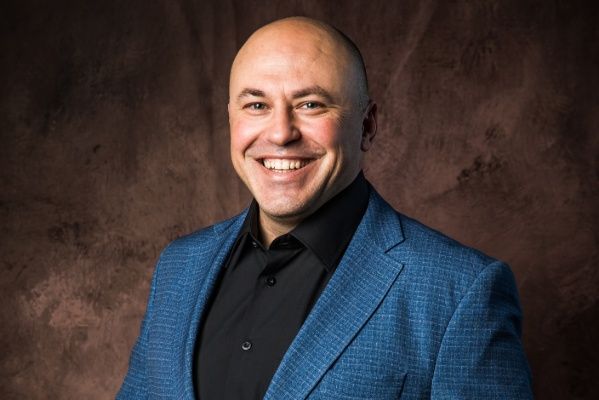
Make sure that what you intend to do will happen consistently and continuously, with discipline and good preparation!
Introduce yourself
in a few words..
My name is Rosen
Rashkov and for some of you, I am that person who builds metaphors for leadership
on LinkedIn and tells stories that provoke thought. For others, I am probably the trainer who has
immersed them deeply in the various layers of the skill of being a successful leader
– practices, attitudes, emotions. I am also a person who loves sports,
reading, and traveling – around the world and within myself
How would you define personal branding and why is it so important
today?
Personal branding is
everything that people think of when they hear your name. It is the
story that other people tell about you and it is the sum of the impressions,
that you leave about yourself, consciously or not.
And personal branding is
important because it helps you moderate the conversation about who you are as
a professional and a person.
How did you start building your personal brand? What motivates you?
Recently LinkedIn
congratulated me on my 12th year in
the network and I realized that at the beginning I didn't even think about personal branding.
I worked in a large company and sometimes I gathered thoughts about culture, about
leadership, about the feeling of being a middle manager, caught between
the demands of management and the needs of people. And I started sharing them on LinkedIn, and because I wrote relatively regularly,
I received feedback from people who follow me for the stories I
tell. But only in 2017, when I started my own company,
did I begin to realize that I am the brand and I need to put effort into
that direction.
What are the
most important elements of a successful personal brand?
In my opinion – and
I emphasize that this is just my experience, not a universal rule, for me
it is most important to be useful with the content I create and I put a lot
of effort into creating it, to ensure that someone will find value in
the things I do. My second rule is consistency – I want to be sure
that I can do what I do regularly. There are so many people who
start projects with a lot of noise, make a few posts, podcast episodes and
then… just disappear. It takes a lot of discipline and good preparation to
ensure consistency.
How to find
your niche and unique value?
Here my answer
is to try different things in the direction of “Your thing,” whatever it may be. In
the beginning, it’s OK not to have all the answers – and it’s important to be aware of that, otherwise
unrealistic expectations for quick success and the pressure from within and without to know
what you are doing will crush you. I won’t lie to you that the Universe will take care of it – you
will have to roll up your sleeves and experiment with the things you love,
learn from mistakes and over time your niche will appear, and after that another one and
another one. And from the experience and skills gathered along the way, your unique
value will come.
Should the personal brand
be built around personality or expertise?
Let me answer you
this way – one of the best car masters I know is a person,
who has learned everything by himself, starting from his father's old “Moskvitch.” But
the real reason people wait for weeks in line with him is not his expertise,
nor the prices, which are close to those in his official service. The man is
always friendly, explains very clearly what the problems are and keeps his
word. If he promised you that the car will be ready in 10 days, it is
ready exactly in 10 days (and sometimes even earlier), not later.
What first steps would you recommend to someone who
is just starting?
To master
his desire for likes and not to publish “cat videos” just to
get attention – because that attention will come, but if there is no value to
hold it, it may never return to you.
To master his desire for easy success. AI will spit out dozens of content ideas in seconds
and you just have to copy them and post them online as your product. And how many
other people will do the same thing with the same content? Start with the mindset that you are playing a looooooong
game, in which those who are themselves, even if imperfect, win.
What platforms are most suitable for developing a personal
brand today?
We live in a time,
where there is a platform for every area of development – general ones like Youtube,
TikTok, LinkedIn – or niche ones, for example
Goodreads. Anyone can
research where their audience is and focus there.
What role does authenticity play in personal branding and how to
maintain it?
Anyone with at least
a few months of experience in social media can recognize “fake” people. Even
if you briefly provoke interest, it quickly evaporates if you are
constantly the greatest, the most successful, never make mistakes and therefore think that
you have the right (and duty!) to admonish and teach other people.
People like
other PEOPLE – imperfect, making mistakes, sometimes weak, sometimes fantastic.
Dare to show your true essence and the world will respond. And by how
large a part of the world responds, you will understand how much you have to grow.
How to create content that engages and builds
trust?
I will repeat
some of the things I have already shared: consistency, value, authenticity.
What are the most common mistakes people make when
building a personal brand?
Besides seeking
shortcuts and cheap popularity, which I mentioned, I would add the unwillingness
to pay attention to details. Some time ago, a young man contacted me, who
wanted to create leadership content and I pointed out to him that he made
many spelling mistakes. He, instead of accepting the feedback, reacted
irritated that he didn’t want to talk about grammar, but about leadership. But he didn’t
even think for a moment about what a poorly written text says about you?
How to deal with negative comments and criticism?
Once you decide to
share your opinion online, you will inevitably encounter people who have
different opinions – and sometimes want to impose them on you very aggressively. Or they simply
don’t like you and will try to show you that.
My approach – if
there are openly offensive comments under my posts or they do not contribute to a meaningful
discussion, I delete them. But if it is a meaningful comment with a perspective different from
mine, I respond, ask questions and take my lessons – I have rewritten my own articles several times,
just because I didn’t consider something, and it was important to
include it.
And there are a few
people who regularly write to me after my posts to point out what mistakes I have
made – spelling, repetitions, missed words – and with them, we became close
precisely because they criticize me qualitatively and consistently, but in a good-natured way.
How to avoid burnout when investing
a lot of effort in your personal brand?
With time for
recharging, whatever that means for you. With time for reflection and
re-evaluation of your efforts. With periods of pause and conscious disconnection.
How can a strong personal brand lead to more
opportunities (jobs, partnerships, clients)?
I think that to
a large extent the question answers itself. If you have a choice between a “giving” brand,
that does interesting, valuable things and has built trust over time or
a brand that relies on commercial aggression to take its share, which would you
choose?
What are the best ways to monetize a personal
brand?
I think this
depends on the goals of each brand and in the field it is developing, but as I mentioned
before, the secret is to create value for people before you start “selling
to them.”
When is the right time to start offering
paid services or products?
When people start to ask you specific questions about your content - in my case "Do you have training for emotionally intelligent
leadership?", for example. And
if this happens repeatedly, there is clearly potential.
Also, for me
it is very valuable to understand that people try my advice on LinkedIn and see that it works in practice for
them.
Recently it happened to me
just a few days ago – I was the host of the BAUH Awards and after the event, a
lady came to me to tell me that she had used the plan from my email-newsletter and it worked out very well. And
she asked how we could expand it to training for part of her team.
How to maintain sustainability and long-term growth of
the personal brand?
Strategy and
discipline, plus constant small course corrections that you take. And it’s
important for people to see that you are also learning and growing.
What habits and discipline are needed to build
authority?
For me - the curiosity
to learn and share new things. Discipline – to make a promise to yourself,
that you will create content at your own pace – once or five times
a week, it doesn’t matter – for as much as you have the desire and capacity to make it quality.
And to stick to it.
Which personalities with a successful personal brand inspire you and why?
There are many,
really, but if I mention just one person, it will be Marshall Goldsmith, one of
the great leadership coaches, who has been creating valuable content for
decades and manages to positively influence thousands of people around the world. And at
the same time remains a humble and down-to-earth person, always smiling, supportive and searching.
I have been following him for nearly 20 years and he never ceases to positively surprise me.
What three specific things can people do today to improve their personal brand?
Choose three
things from this interview that have touched you the most and think about what
they mean personally for you and how they would look in practice. Try them.
Again and again. Analyze them and change whatever is needed. Add something
new and don’t give up, the results will come!