It is nice when we can outpace time with good ideas
· Ruja Babetkova-Acosta
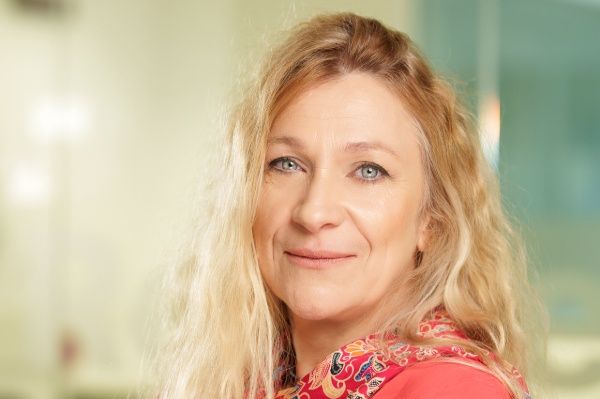
If a person knows what they aim for, they should not stop realizing it, even if that means changing careers!
Introduce yourself in a few words.
My name is Ruja Babetkova - Acosta, by education – biotechnologist, in personal context – daughter, sister, wife, mother of three children, in professional terms – Head of the "Administration of Insurance Policies" department for the EMEA region at "Accenture Bulgaria".
How would you describe your career in a few words?
Successful, as I build it with a lot of persistence and effort, with the support of my family, but without compromising my personal values and priorities.
What was the most important choice that shaped your path?
Whether to engage in science or to enter the world of business operations and shared services centers.
What would you have liked to know at the beginning of your career that no one told you?
I believe that everyone should go through their own path because experience teaches the most and the best. When information is provided at a stage when a person is not yet mature enough to process it, there are no results. It is built gradually and strictly individually according to the possibilities for acquiring knowledge and skills. Certainly, perhaps it would have been useful for me if someone had taught me not to demand/expect from others what I demand/expect from myself. In certain situations, I think I am too demanding, but that is how talents develop, and I am very proud of those I have supported on their way up the hierarchy of the company.
How can a person understand which profession is suitable for them?
A person is naturally seeking, but if you end the day with a smile because of what you have accomplished and a pinch of impatience to tackle the next tasks from the weekly plan, if you manage to keep up with time and even slightly outpace it with good ideas, then this is definitely your profession.
Which skills do you think will be key in the next 10 years?
If I had to answer this question with one word, it would be “adaptability”.
Certainly, digital culture and skills must keep pace with the rapid technological development. In a broader context, especially against the backdrop of what is happening in society, skills for managing people will certainly continue to be important, as modern challenges have a serious impact psychologically. The profile of employees is changing significantly not only in terms of skills but also in behavior, which implies, certainly, a change in the way of leading and developing.
How to build a network of useful contacts without appearing interested?
Being interested is not bad. I would even say that I enjoy sharing professional experience when there is interest, of course, always when normal behavioral norms are not crossed and it does not turn into an aggressive interrogation.
Building a network of useful contacts is based on shared interests. Professional development requires knowledge and skills, and a reputation is built. Based on similar interests, a circle of communication is formed, and in this regard, I do not think that this brings benefits to all involved.
What is the biggest mistake you have made in your career, and what did you learn from it?
There are no fatal mistakes. There are right and wrong moves from which we learn. If I had to point out something that I try to avoid, it would be overtrusting. I always give a lot of credit to trust, but over time I have also learned to be more patient and wait for qualities and abilities to manifest before I “open the door wide”.
How to recognize a toxic work environment and when is it time to leave?
By the feeling we have when going to work.
What would you do differently if you could start over?
I would not change anything.
How to maintain our motivation in times of stagnation?
There is always something worth continuing for. Motivation is within us; it should not depend on external factors!
How to achieve a balance between professional and personal life?
This is a personal choice. The key to maintaining balance is entirely in our hands. I, for example, never discuss work topics at home and I believe this helps me detach from the work context and be fully present at home.
When is it time to change our career, not just the job?
This is a serious turn that I would make if I feel completely drained of energy, inspiration, and ideas. On the other hand, stepping out of the comfort zone can reveal abilities we didn’t even suspect we had. Therefore, I believe we should not make such significant changes without carefully understanding what we want for ourselves in the next period. Let’s not confuse healing redirection with inconsistency. If a person knows what they aim for, they should not stop realizing it, even if that means changing careers.
If you had to give only one piece of advice to people seeking success, what would it be?
Do not stop learning.
What is your definition of a “successful career”?
In my understanding, a successful career is not a type of “at any cost”. A successful career is built with hard work and honesty, with proving skills, with inspiration and motivation to develop yourself and others, to share knowledge and experience.