Keep your shoes clean, your shirt ironed, and your mind healthy
· Dimitar Brayanov
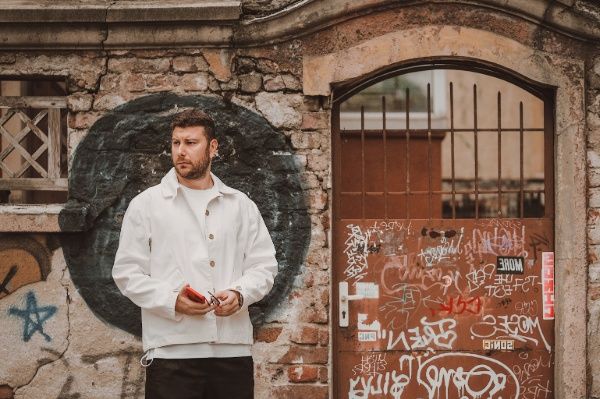
Hasty actions bring the most disappointment and pain!
Introduce yourself in a few sentences..
My name is Dimitar Brayanov and for 38 years I have been pursuing that,
which often remains invisible to others, as I strive to turn it into a good product.
I am lucky to work with people's dreams and transform them into visible
results, which turned out to be a much more responsible task than I imagined,
when I created my advertising agency Idea Factory 12
years ago. I am in love with traveling. You don't always need a plane ticket because
the most valuable journeys are those inward, towards ourselves, when we discover adventures for
which no “Galactic Guide” has prepared us.
What did you dream
of becoming in your childhood years?
I dreamed of becoming the third brother from Karaliychev's fairy tales
or to be the young yankee in King Arthur's courtyard. I wanted to be in the lead role, in
the center of the whirlwind, at the peak of life. I never learned to stay in the shadow of
the supporting role in the matrix, nor to easily agree with difficulties. But
most of all, I wish that one day the child in me sees the man in the mirror and looks at him
with admiration. Then I will accept my life as personal inspiration.
At what
age did you earn your first money? Share an interesting story with us?
At 11 years old, I first stepped through the doors of the basketball
hall of Lokomotiv Sofia and fell in love with the magic of the game. At that time, my parents
couldn't afford to buy me nice basketball sneakers, and for many years
this was a great motivation for me to earn enough personal money to buy
exactly those I wanted. Children do not have existential, huge dreams. They have
specific needs and turn them into action much more easily than
adults, who often change their desires according to the demands of everyday life.
At 16, with an old disc recorder borrowed
from my father for the summer vacation, I started recording discs with games and
programs. I knew that others were doing it too, so I decided to add something
extra. I helped completely for free with the recording and installation of the same
programs on the computers of the people who bought from me. Why did I do it? Because
it’s always good to have something different and personal in the service you offer. This,
what we now call the x-factor. With the money earned from the summer, I went into the store
and bought the sneakers of my dreams. They, poor things, tore right in the middle of
my first game wearing them. Sometimes what you dream of is not exactly
what you imagined. And it is rarely what you actually need. I have
another such story about how I became a mover for a month in New York and we moved
Bill Clinton's house in front of a whole group of federal agents, but that is a story for
another time.
What are the
main factors and examples that shape us as individuals at an earlier age
and form our interests? What is your recipe for curiosity, sources
and wells of information and inspiration at this stage of our human development?
Undoubtedly, one of the strongest factors in our early
development is the personalities we take as mentors. Whether it’s our father,
grandfather, or someone we idealize and put on a pedestal, even with
all their flaws, we often unconsciously copy their words, actions
and beliefs, turning them into our own. I am very lucky in this regard,
because I grew up in front of a library with two or three thousand colorful volumes collected by
my father. My grandfather encouraged me to read and discover on my own. You see, even
if you have a huge desire to push a child in a certain direction, if you don’t
make it so that they find personal meaning in this journey, the cause is
doomed. My journey began with the myths and legends of Ancient Greece and
Scandinavia, continued with the science fiction of Isaac Asimov and Svetoslav Minkov and brought me
back to the classics in my late teenage years when I could understand it. That’s when I fell in love with Hemingway. So for me, the key is the right timing and
natural interest. Never take in information that your mind and heart do not
accept. A wonderful example of this is the moment when the creator stops
creating art precisely when someone
sets boundaries, deadlines, or tries to confine their imagination within the
cold reason.
Has there been
any significant change in your perceptions in a more mature age regarding what
motivates you to do or not do something?
Of course, we live in a material world where we are constantly
rushing to achieve something. We often think that we will be happy tomorrow when
we achieve certain goals, but we forget that true survival and balance come
today, in the present moment. Every day is a new opportunity to find the perfect
balance between commitments and personal needs that we must maintain in order to
function both professionally and personally. What I have
learned over the years is that boundaries are important. We must be able to set
boundaries, both at work and in our personal lives. The moment we learn
to restore this balance when we lose it due to stress, professionalism, or
even love, then we truly begin to live well. When we can manage to
handle ourselves and share that space with our colleagues without feeling
burdened, then we are on the right path.
Whose decision was
it where to pursue higher education and what to study? Was this decision correct,
looking back today?
For me, the choice was spontaneous and quite unconventional.
You could call it a slight whim of fate, although I am not one of those who
idealistly believe in it. I specialized in Semiotics, the science of words and
signs, an extremely interesting approach that makes you view every
process and product as a collection of small details. Before that, I studied
entrepreneurship and business, but even the best lecturer cannot prepare you
for the ethics, sacrifices, and juggling deadlines that are part of having
your own business. At the university, there was no textbook for panic attacks, insomnia,
compromises with yourself, and balance in human relationships. All things I
still learn between the extra systoles and five coffees in my day.
Share more about
your interests, knowledge, skills, and hobbies?
I am an extraordinarily ordinary person who finds
meaning in quality time with my young and nature-loving Vizla, visiting daily museums of contemporary art around the world, as well as
the night ones, which I affectionately call good bars. Frequent workouts are part of
my daily routine because they keep my body in the necessary shape to maintain
my mind healthy. And of course, time for myself, to dream aimlessly,
wandering through the streets of the city.
Would you
change your profession today and which fields of activity capture your interest?
A person carefully guards their name and dresses it in professionalism,
to walk alongside it. I would definitely add new challenges
to the portfolio of my life path. I would open a bar, participate in
the development of any non-governmental sector aimed at securing
the future of children in various fields. I would learn more about genetics and how to
implement artificial intelligence without it erasing our ability to
think quickly and adaptively. Without fear, I would learn and work with the leaders of
tomorrow from the generation we call “Z”.
They say that the personal brand is everything that people say about you when you are not in the same room with them. What would you like to hear today?
I would like to hear that my words match my deeds. I would
like to know that my brand is not for everyone and everyone is not for me. Because it’s easy to
learn to make compromises for quick success, to seek easy paths to financial
streams that often lead to even more spectacular falls. Success is a series of
unpopular actions that someone, someday, will dress in a popular publication with
motivational words. But the fact that a certain path has been successful for someone does not guarantee
anything for your personal or professional success. What I can recommend is
to keep your shoes clean, your shirt ironed, and your mind healthy. If a person is
his best version at least half the time of his life, success will find him.
Whether he will keep it depends only on him and his ability not to
relax and take his victories for granted. As well as, even more importantly for me, to
not make tragedies out of his losses.
Emotional
intelligence, adaptability, and flexibility, as well as our soft skills are
key conditions for success in recent years. How do you deal with
the daily challenges of life to stay in good shape and
mood?
In the 21st century, it is very easy to get lost among the many possible
versions that the online space offers you to be. From a plastic
superhero to a vegan philanthropist with loud messages and false foundations. In my opinion,
the key to survival is to be aware, to know who you are when you see
your reflection in the store window. This means accepting yourself with
your flaws and being able to truly love yourself without it making you
an egocentric narcissist. Only then, as well as when you accept that you will inevitably lose people along the way, can you balance the levels of dopamine and serotonin with those
of cortisol and norepinephrine.
What are the
most important conclusions you have made so far about maintaining the right
communication considering the different characters of the people you meet
every day – colleagues, friends, relatives?
That everyone wants the best for themselves and this is a purely
genetically embedded autoimmune shield of a person towards the world. Only after ensuring
one's own survival can a person think soberly about the good of
others. It took me a long time to comprehend and understand this, both personally
and professionally. After that, it is extremely important not to interrupt people
when they give you information about how they feel. Even if it seems seemingly
unnecessary to you, it actually carries much more useful information than your thesis,
responded upon their own. And last but not least, the art of being
patient. Hasty actions bring the most disappointment and pain. My grandfather
always made me first say to myself the sentence I want the person across
from me to remember most from our conversation, and only if I find meaning in my thoughts,
should I say it out loud. I keep this hygiene of words as much as I can, even to this day.
What do you think
about money? What is their influence on your life? What is your advice to
people who often ask themselves questions related to money and how sufficient they are?
I will never forget a sentence from Emil Zola's book
“Money,” which I will quote from memory: “Money generates all good and all
evil.” They can be a powerful creative tool in the hands of the virtuous and
a terrifying weapon in the hands of the spiritually poor. We all live in an era of a consumptive
society and dress success with a monetary sign, but money does not buy loyalty,
health, love, and soul comfort at night in our sleep. I believe that in Bulgaria
especially we need to learn to pay enough for quality. Only when
we eradicate the mentality of wanting to constantly get by and earn more
on the back of someone else's misfortune will we have a sustainable civil society. The issue of
sufficiency of financial resources among the working class, which is the litmus test
for a good market economy, is quite pressing and we all need to work towards
having no sectors that take significantly higher salaries than others, so as not to
create an oversaturation in one labor sphere at the expense of all
others.
What is the
most valuable career advice you would give to people?
To never stop searching for the right place where their
little piece of Lego will “click” to set in motion processes that visibly make no sense until the middle of
the first instruction booklet. Then, after they assemble their first working machine according to the textbook, to disassemble it and try with
the parts from it to create the work of their life in their own image and dreams.