Management respects our personal time and does not disturb us
· Martin Velev
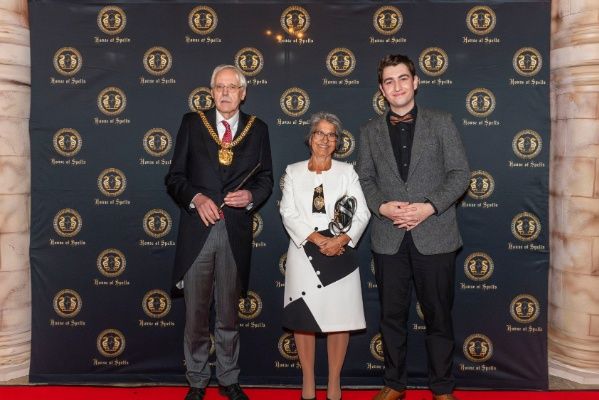
If you think that Bulgaria does not offer you everything you need for your development, leave. If you do so and do not find your place, leave for a second time. Then you will know whether your place is in Bulgaria or not!
What is your name, what do you do?
What does your work express as daily commitments?
I am Martin Velev, a digital marketing specialist and amateur screenwriter. I mainly focus on optimizing the branding aspects in the online space of various businesses in the United Kingdom. This includes online ads and organic campaigns for social networks and online search engines. From time to time, I also work on film projects.
In which country and city do you currently live and how did you end up there?
I live and work in London, after completing my master's in Film Arts at the University of Westminster.
What were the biggest challenges you faced at the beginning of your stay?
I liked everything very much at the very beginning. Both the University and my colleagues, and the fact that almost all administrative and banking matters are handled digitally. I haven't been to a bank since 2019. The main challenge was the pandemic, which destroyed all possible connections between the university and the film industry. Even well-known producers, whose acquaintance in theory would open many doors, told me how their office stands empty and there is no paid work.
Because of this, I had to start looking for work and clients outside the industry. This and the financial support from my mother saved me during this terrible period. Subsequently, from 7-8 small clients, I focused on two larger ones and from there I managed to get back on my feet. Now I work both as an employee of a company and as a freelancer.
How did you overcome the language barrier (if there was one)?
In London, I did not have difficulties with the language barrier, unless I was talking to a Brit with a strong accent like the Edinburgh or Liverpool one. But you get used to that too.
I had similar difficulties during my bachelor's in Munich. I couldn't understand something with the Germans. And I overcame this barrier... by going to London for my master's.
What resources or networks (local communities, colleagues, organizations) helped you adapt?
When it comes to adaptation issues, other Bulgarian students can be a good crutch, but this is only up to a point. Suddenly you will realize that spending too much time in the Bulgarian diaspora does not allow for integration with the local population.
When you are invited to an event, you should always take advantage of it. Even if you are introverted and feel terrified when starting a conversation with an ordinary person, let alone a German, for example, you should not give up. This is very important for your integration in a country like Germany, where most students are Germans.
In London and other parts of the United Kingdom, the situation is quite different. In most universities that I have observed, the majority of students are foreigners. Thus, integration is much easier, as the local population changes its significance and you are part of it.
What are the main differences between the work culture in your current country and that in Bulgaria?
In Bulgaria, I think there has been improvement in recent years from this point of view, but overall I would say the lack of clear quantitative goals. For some reason, in Bulgaria, it does not seem to be a priority in a company to ensure a working system with clearly defined individual responsibilities and numbers to measure success. I believe that the “LinkedIn” culture is inherently something foreign in Bulgaria. By this, I mean that hiring for positions is not done based on clear tasks and quantitative goals, as has been done for many years on the LinkedIn platform when posting job ads. It seems that the descriptions of goals are becoming more professional, but the requirement for quantitative goals is lacking.
A marketing manager cannot only be responsible for organizing some events or insignificant internal activities, as I have seen in some large Bulgarian companies. This person must be able to prove what they do so that the company brand improves every month and every year. And the only way to prove this is with numbers - the number of visits to physical stores or website pages, the number of new clients directly coming from marketing campaigns, the number of new followers on social networks, etc. Almost every marketing element can be measured (even when it comes to marketing campaigns outside the online space) and it is a shame for the marketing manager not to work on any of these elements.
What values and practices in the workplace impressed you the most?
Even managers who are not your favorites generally respect your right to take leave whenever you decide, and do not call or send messages after working hours. “I thought about calling you on Friday, but it got too late” I have heard many times during Monday meetings. This allows you to have a peaceful weekend. Perhaps the reason is that in the United Kingdom, more emphasis is placed on text messages on platforms like Slack, and phone calls are rare. And even if someone sends you a message outside working hours, you will not receive it until the next working day, as you have not installed Slack on your personal phone. While in Bulgaria, my observations are that anyone can call you any day at any time.
Have there been situations where cultural differences have troubled you?
In London, the situation is interesting, as you are surrounded by different cultures, and there is no single conservative culture that does not give wings to others. If you get used to trying different types of cuisine and meeting people from different parts of the world and different accents, you won't even think about possible cultural differences.
How does finding a job differ in your current country compared to your homeland?
I haven't worked in Bulgaria for quite a few years, so the only fair comparison can be the digital paths through which one searches and finds a job. Yes, complex platforms like LinkedIn exist in Bulgaria, but platforms like alo.bg do not exist in the United Kingdom. Although it is not too easy to find a job in London due to high competition, access to various types of websites and applications allows you to quickly research the market and understand what exactly you need to write in your CV.
Did you have to go through any additional qualification courses?
It is different for everyone, but in any case, courses are a plus. Many take additional courses because they look good on the resume, but it is a better move to be honest with yourself and take courses that you are genuinely interested in. It would be quite awkward if during an interview you are asked about a proudly highlighted course in your resume that you cannot say anything about. Interesting courses lead to knowledge that you will remember.
Have you encountered prejudices or obstacles due to your foreign origin?
Foreign origin inevitably stands out during conversations with new clients. For example, for one project, it was necessary to call companies on the phone to become our wholesale clients. During these conversations, I was sometimes asked where the goods were being delivered from. The answer was contextually understood to be the United Kingdom, but I am sure the question was directed at me because I do not have a British accent.
If you are okay with such questions, you will not have problems. Ultimately, the fact is that I was not born in the United Kingdom and do not have a British accent. After such a question, you have about 10 seconds to convince the potential client that you are a representative of a serious British company, and if you are successful, your foreign origin will not matter. You are already part of the British business system, the client trusts you, and where you are from may only come up as a question in conversation at the pub after a few “pints” of beer with the client.
What would you advise people who want to take a similar step?
If you think that Bulgaria does not offer you everything you need for your development, leave. If you do so and do not find your place, leave for a second time. Then you will know whether your place is in Bulgaria or not.
If you could go back, would you choose the same path?
I would not choose the same path, but the destination is the right one... which means that the path was also the right one and the sufferings along the bends were necessary to reach the destination.
What do you miss most from your homeland in a professional and personal sense?
The freedom to speak in your mother tongue and the untranslatable humor with family and friends.
Have you considered returning and under what conditions would you do it?
Returning to my father's house does not feel like a rational decision for me. At the moment, I really enjoy being immersed in classic British and modern multicultural waters. If that changes, I would return. But I do not have a list of conditions that need to be 100 percent secured for the “British lord” to deign to return.
What do you think about money? What is their influence on your life? What is your advice to people who often ask themselves questions related to money and how sufficient they are?
There is a lower limit at which a person thinks only and exclusively about how little money they have. Even if the salary does not seem small in itself, it will not be enough if it does not lead to monthly savings. If every month savings are made, then our financial insecurity decreases, and we start thinking about more positive things. I certainly do not think that our goal in life should be to be rich. But for a person starting their career, it is really important to reach that financial threshold at which they save and feel secure. The way of thinking after reaching that threshold changes. The world is much rosier and the financial cage is not felt. If after reaching that threshold, the main thought remains the exact numbers in the bank account, then I think a person should seriously consider what their real goal in life is.