Money is a good servant, but a bad master
· Borislava Georgieva
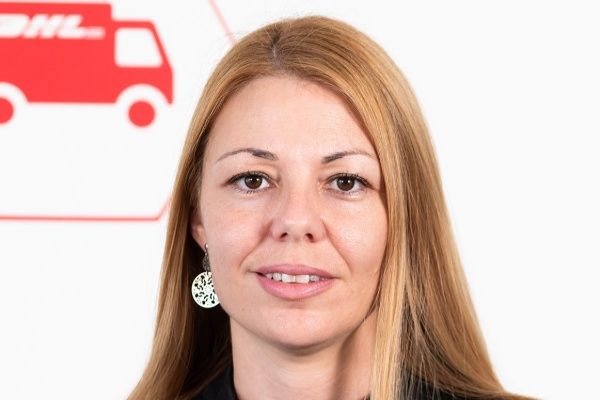
In Germany, people are more direct, more smiling, and work a lot. They are straightforward and expect everyone to follow the established order. Education is extremely important – university graduates find good jobs more easily.
Introduce yourself in a few sentences..
My name is Borislava Georgieva – an HR professional with 18 years of experience, a wife, and a mother of three children.
In which country and city do you currently live and how did you end up there?
I live in Bonn, Germany – that’s where the DHL headquarters is located, as well as an entire district with offices of various divisions. The first time I visited the city, I liked it a lot and strongly wanted to live and work here. I started looking for opportunities at DHL Bonn. A colleague from headquarters, who works on the topic of “talent development,” connected me with a colleague who was looking for a rotation to Bulgaria – to help each other out. He recommended me for the HRBP position at DHL CSI (Customer Solutions & Innovation). After a conversation with her manager, just twenty minutes later, she offered me to become part of her team.
What were the biggest challenges you faced at the beginning of your stay?
The change was much bigger than we expected – different laws, culture, language, environment, and manners. You start from scratch. Everything is new and different. Even 10 months later, we are still adapting.
How did you overcome the language barrier (if there was one)?
In the company, the working language is English, but for everyday life, German is necessary – and I don’t speak it. I hope to learn it one day because just knowing English is not enough.
What resources or networks helped you adapt?
The company provided a relocation package for me and my family – including registrations in systems, searching for accommodation and school, complete moving of our belongings. This made things much easier for us. Additionally, colleagues from the company whom I knew before also helped with advice and support.
What are the main differences between the work culture in Germany and Bulgaria?
Here, people are more direct, more smiling, and work a lot. They are straightforward and expect everyone to follow the established order. Education is extremely important – university graduates find good jobs more easily.
What values and practices in the workplace impressed you the most?
“Keep the house in order” – this is an important principle in the company. Order, honesty, and hard work are fundamental. It’s better to promise less and exceed expectations than the opposite.
Have there been cultural differences that made things difficult for you?
Here, it is not common practice to collect money for gifts for colleagues – gestures are more symbolic. There is also a greater distance and respect for hierarchy.
How does finding a job in Germany differ from Bulgaria?
The competition is much greater. Germany has 85 million people, and candidates come from all over the world. For one position, we receive over 300 applications. For example – for my position, there were over 90 suitable candidates. In skilled trades and technical professions, there is greater demand and less supply – even with basic German, one can find a well-paid job.
Did you have to go through additional qualification courses?
No – because it was an internal transfer within the same company, although with significant differences and a long onboarding process. In Germany, there is a lot of bureaucracy and restrictions due to unions, which makes working in human resources quite complex. My husband and daughter are studying German hard.
Have you encountered prejudices because of your foreign origin?
In my company, the environment is highly international – we have colleagues from all over the world and even more foreigners than locals, so I haven’t felt prejudices in a professional sense.
What would you advise people who want to take a similar step?
Be bold! If there is a place that attracts you – seek a way there, but don’t leave without a job. Life here has a higher standard – but also higher costs. The food is quality, and the air and water are clean. If you are young – the easiest way is through education in Germany.
If you could go back, would you choose the same path?
The path is difficult – especially when you are not 20, but for me and my family, this was our path. DHL was our “yellow elevator” that took us out of an environment where we felt suffocated. The only thing I would change if I could – is to make this step much earlier.
What do you miss from Bulgaria in a professional and personal sense?
I miss my sports group and meetings with the HR#IT community. I miss the familiar environment and predictability.
Have you considered returning and under what conditions would you do it?
Not for now. We are trying to break away from the old to build our new present.
What do you think about money?
Money is a good servant, but a bad master. Use it to serve others – don’t make it a goal. The more you have – the more you want, and it’s never enough. This is an endless game that rarely brings satisfaction.
What is its influence on your life?
Money is a means, not a goal. Spiritual well-being precedes material well-being. It is no coincidence that the most prosperous nations in the world are Christian.
What is your advice to people who wonder if they have “enough”?
Nothing great is achieved without passion. Find what ignites you so much that you would do it even without a salary.
- What do my friends and colleagues seek me for?
- What comes easily to me?
- What do I love to do, even in my free time?
If you find the answer, you will also understand what profession suits you best.