New experiences open many horizons
· Milena Hristova
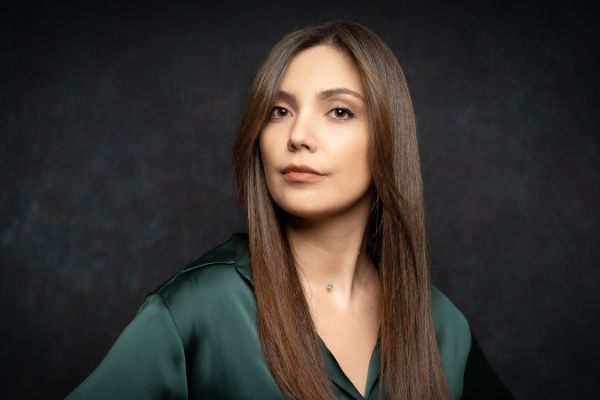
The digital nomadic life is no longer exotic – it is becoming a new norm for people who value freedom, technology, and the balance between work and personal rhythm!
Introduce yourself in a few words..
My name is Milena Hristova and if I had to describe my professional journey in one word, it would be a journey. Not just from point A to point B, but a route filled with twists, challenges and moments that take your breath away.
ImpacT Hire is the stop,
that turned out to be my direction – an agency that not only connects people with positions,
but helps companies and talents meet on the right path. Together with
my team, we walk the fine line between human and business thinking and I am
convinced that in this movement success is not a destination, but an attitude towards the very
journey.
What does traveling the world mean to you?
Inspiration, motivation, and meaning in its purest form. It takes me out of my comfort zone and brings me back to myself in a different way every time.
Traveling opens eyes, but also hearts –
it shows us that the world is both as big as it is full of
similarities.
Traveling fills me with new ideas,
perspectives, and questions that could not arise within four walls. It is a
reminder that there are infinitely many ways to live, to work, and to love
what you do.
How many different countries have you seen so far? Share an interesting story or highlights from your travels?
I have lived in several different countries – Poland, where I was on the “Erasmus” program and immersed myself in the academic environment of a new culture, and Italy, where Milan showed me the pace of business and the Italian lifestyle. Overall, I have been to a large part of countries in Europe, as well as in America, Asia, and Africa. But the most unplanned and impactful trip was my first to Taiwan, at 18, completely alone.
Right upon arrival, the plane broke down,
my debit card was blocked, and for two days I found myself without access to
funds and without food. I was on a huge, completely unfamiliar continent, without acquaintances,
without a language, without a plan. But it was in this extremity – hungry, scared, and alone
that I began to discover my own strength. I managed to cope, step by step,
and left with the feeling that the most important lessons do not come from prosperity, but from
its absence.
Do you like to repeat destinations? Give examples and motivation “for” or “against”?
There have been places that have touched me deeper and to which I wanted to return because the time there was not enough for me to get to know them. And yet, I prefer new destinations. Traveling for me has always been a way not just to expand the geographical map, but also the inner one that guides me to myself.
A new place brings excitement. It invites you
to be more observant, more open, more alive. It’s as if with each new location
you discover a new version of yourself – bolder, more flexible, more inspired.
Sometimes I return, but only when
I want to experience something already familiar in a new way. Because I know that even
the familiar is never the same when you yourself have grown.
What was your first trip that truly changed you as a professional and can be said to have changed your thinking?
Taiwan was not just my first trip; it was the beginning of a new way of thinking. There, for the first time, I realized that coping with chaos is a skill. That you cannot always control the circumstances, but you can choose how you will react.
This trip changed the way I view
challenges in my life, and subsequently, it helped me in my career. Adversity teaches.
I began to act more decisively, to trust myself more, and to believe that even in the most
unfamiliar territory, my inner direction is enough to guide me.
Taiwan was my first lesson in
improvisation and self-confidence, and without knowing it then, it laid the foundation for
the way I make decisions even today.
What do you learn about yourself and your professional skills when you are in a new cultural environment?
In a new cultural environment, I realize how important it is to observe with open eyes and to listen with genuine attention. Sometimes the most valuable lessons come not from what you say, but from what you notice in the rhythm and in the unfamiliar.
These environments remind me how important the skill
of connecting with people from different contexts is, without expecting them to adjust
to you. Communication becomes more meaningful and more human.
Professionally, this gives me
a deeper understanding of differences, which is invaluable when building teams,
mediating between people, or simply wanting to be a better conversationalist.
Every new place reminds me that I am not
just traveling the world, but expanding, which helps me navigate myself
and my work better.
Have you met people or ideas during your travels that have influenced your career path?
Many times I have met people or ideas during my travels that have left a lasting mark on me – usually not because they tried to inspire me, but simply because they were themselves. A casual conversation on a plane, a silent smile in an unfamiliar city, or an observation about how someone lives and works have been small catalysts for great realizations.
Such encounters often and unconsciously change
your course. That’s why I believe that traveling is not just movement in space, but
discovery of the world, of ideas, and most importantly, of yourself.
Do you think that traveling helps you expand your professional network? How?
Definitely. But not in the sense of sharing a business card or a formal meeting, but much more naturally – through authentic conversations, shared interests, and those moments when you are just a person to a person, not a position against a position.
Traveling creates a context in
which barriers fall. People are more open, dialogues are more spontaneous.
It is in such environments that I have often met personalities with whom we have said: “There is
something here… let’s stay connected.” And this turns out to be the beginning of an unexpected
partnership, recommendation, or even a friendship that grows into collaborative
work.
Sometimes you expand your network not
by seeking contacts, but by seeking connection – by meaning, by values, by
energy. And traveling, with its spontaneity and openness, is the ideal ground for
this.
What skills do you develop the most when you travel, and how do they reflect on your work?
Traveling teaches me to cope with the unexpected without losing balance. It teaches me to catch the small nuances in behavior, in culture, in details.
I also develop patience towards myself, towards
differences, towards processes. Traveling reminds you that not everything can (or
should) be under control, but that doesn’t mean it lacks meaning.
Most importantly, however, traveling gives me
perspective. It reminds me that there are many ways to live, to think, to
create. And when you carry this breadth in your thinking, working with people becomes
more meaningful and fulfilling.
When you are in an unfamiliar country, do you feel more motivated or more distracted? Why?
I rather feel more alive. In an unfamiliar country, everything is new – people, streets, scents, rhythm, and this novelty does not distract me, but awakens me. My motivation comes not only from the schedule, but from the feeling that there is so much to discover both outside and inside.
Traveling shifts me from routine and
makes me see things with a new perspective. And this reflects on my work –
I return with ideas, with new energy, with more understanding towards people and the world around
me.
So no, I do not get distracted. I simply
readjust, and from there comes the true motivation.
Are there destinations that act as a “restart” for your creativity and ambition?
Yes, and they are usually not noisy metropolises, but quite the opposite – places where silence speaks. Nature always acts as a deep restart for me. The beaches teach me to breathe more slowly, and the sea – to look further without rushing.
And the small towns in Italy... there
time seems to stretch. Everything is more conscious, more aesthetic, more real.
Conversations, food, even the light – everything brings me back to myself. And it is precisely
when I am “turned off” that the clearest thoughts, the boldest ideas, and
the purest ambition emerge.
These places not only give me
inspiration – they remind me why I do what I do.
How do you manage the balance between work and pleasure when you travel?
The truth is that my laptop almost always travels with me – just in case. Not because I can’t disconnect, but because I carry responsibility towards my team and partners. But at the same time, I believe that traveling is also a chance to step back a little, to look at the bigger picture.
I try not to mix the two
completely – if I work, I do it focused and briefly, to free up space
for what truly recharges me. Time spent in a new environment is
too valuable to be spent only on emails.
How have travels changed the way you perceive the value of money?
Traveling taught me that the value of money is not measured only in numbers, but in experiences. The more places I saw, the clearer I realized that the most valuable moments often do not have a price tag.
I also understood that investing in new
horizons brings me much longer-term returns than any material possession.
Sometimes you spend more than you planned and do not regret it. Other times you spend
little, but you have gained so much that you cannot fit it in your suitcase.
For me, money is no longer just
a means of security – it is also a tool for growth, for connection, for
awareness. The question is not how much something costs, but what it brings you.
Do you travel with the aim of finding new ways to make money?
I wouldn’t say that this is my main goal, but it certainly often becomes a natural continuation of my travels. I have had business trips where I attended large events, conferences, and networking forums and many of them have opened doors for me to new ideas, partnerships, and projects.
Traveling changes the perspective –
you see how business is done in other cultures, which models work, how people think.
This is sometimes far more valuable than any presentation. In that sense -
yes, traveling is sometimes also a form of business growth.
What lessons about financial independence have you learned from different economies and cultures?
Traveling taught me that financial independence does not have a universal formula, but looks different in different parts of the world. In some cultures, freedom comes from minimalism, in others – from stable investments, and in some places – from family support and shared resources. And all these approaches work if they resonate with the person and their value system.
I learned that independence is not just
about how much money you have, but how consciously you manage it and what decisions you can make
with it. Knowing when to invest in business, but also in yourself and in new
experiences that open horizons.
I understood that peace does not always
come from the numbers, but from the confidence that you have the capacity to cope,
no matter where you are. Financial independence begins not with the bank account,
but with your mindset.
Do you think it is better to spend on experiences rather than material possessions?
Yes, I believe that experiences enrich us in a way that no object can. They remain in us as memories, lessons, sights, emotions. But as a person with quite a rational and analytical nature, I also know how important it is to prepare the ground so that you can enjoy the fruits.
We live in a material world and the
freedom to truly experience comes from securing a base that provides
stability and security.
For me, experiences are priceless,
but they do not happen on their own. I approach them as I approach any decision – with
thought, planning, and respect for the work that has provided them to me.
How do you see the future of digital nomadic life?
Digital nomadic life is no longer exotic – it is becoming a new norm for people who value freedom, technology, and the balance between work and personal rhythm. I see its future as even more flexible, but also more structured. I imagine more hubs tailored to this lifestyle, better legal and tax frameworks, and even new forms of digital community.
But I believe it is not for everyone. It
requires strong self-discipline, good organization, and awareness of what this way
of life brings you and what it can take away.
From my position as someone who
works in the field of human capital, I see how companies are starting to adapt to
what you create, not where you are. This is a new direction for the future
of work as a whole.
Are there specific countries that are more favorable for work and investments?
Yes, there are definitely places in the world that offer more favorable conditions – whether due to a stable economic environment, flexible legislation, low taxes, or access to highly qualified personnel. Countries like Estonia, Portugal, Ireland, or the United Arab Emirates often stand out with modern approaches to business and initiatives that encourage entrepreneurship and innovation.
But the best choice depends on what
exactly you are looking for – scaling, tranquility, quick access to markets, or a strong
candidate market.
It is important not to look only at
economic factors, but also at cultural compatibility, quality of life, and
opportunities for long-term development.
What is the career advice you would give based on what you have seen around the world?
I would say: be open to the world, but stay true to yourself.
The more cultures and work
models I have seen, the clearer I understand that there is no one formula for success.
Some places value courage, others – patience. In one place – the result, in
another – the process. And that is the beauty: to take the best from each place and
build your own direction.
Do not rush to fit in, but dare
to stand out. Travels have taught me that a valuable career path is not
the smoothest, but the one where you grow – with people, with experience, with ideas.