People are looking for quick and convenient content to consume
· Georgi Malchev
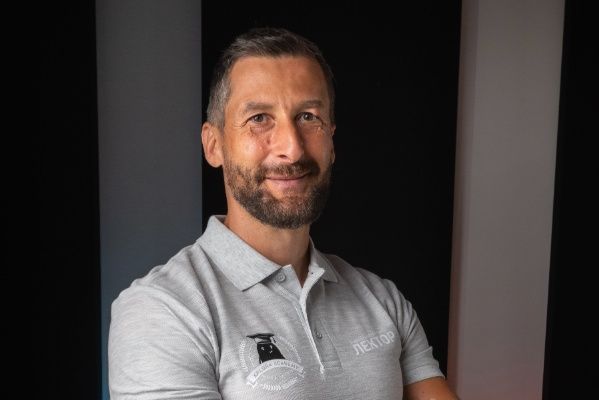
The right moment for monetization is when we already have an established and loyal audience that “hires” us as confirmation of our expertise!
Introduce yourself in a few words..
My name is Georgi Malchev.
I conduct training on personal branding and branding. I believe that people need brands that they “hire” for things that are important to them. In my case - my brand includes marketing, leadership, volunteering, teaching, parenting.
And if you type my name into Google - you will see that people search for it so much that Google has created a so-called Knowledge panel for me and I can provide official information about myself 🙂
On LinkedIn, you will find that
I also have a column in Forbes Bulgaria, where I write about productivity, leadership, and communications. One of my most popular articles there is about the KISS model - at the request of the media team, I wrote three articles on the topic. You can find more about the model in
How would you define personal branding and why is it so important today?
People have always needed brands. They are specific attitudes, expectations, and experiences - with a company, product, institution, or person. And we “hire” brands - for specific progress we seek, or to recommend if someone is looking for specific progress. And of course - to reduce the risk of being misled.
For example, personal branding can be about marketing - starting with strategy, planning, implementation, analysis, and subsequent scaling. Or for advice on how to get to know and use your personal profile. Or for parenting advice. Or for personal and work productivity. Or for leadership and team management. All things that search engines, social networks, and now chatgpt recommend me for.
And why is personal branding so important?
It has always been important, but in my opinion, in the AI era, people and algorithms will increasingly seek whom to truly recommend. In this regard, a few years ago, Google changed its algorithm. Each of us is a type of Entity, i.e. a specific personality in their ecosystem, but previously E-A-T was monitored and prioritized, i.e. Expertise - Authority - Trustworthiness. But now the model is E-E-A-T (pronounced double eat) and the first letter for our Entity is Experience.
I believe that branding, i.e. the intentional efforts to build a personal brand, should increasingly include sharing personal and real experiences and personal perspectives.
How did you start building your personal brand? What motivates you?
I would say it happened naturally - first as a value I can provide. Then as real people who have experienced that value. Then with building on that value - one characteristic, like extreme responsibility or leadership, is not limited to one area.
Then I started to work more methodically on the brand, i.e. to make intentional efforts to have visibility across the pillars of my personal brand. For me, these are:
-
Marketing - effective, applicable, strategically oriented
-
Leadership - developing successful teams, personal responsibility, consistency
-
Teaching - applicable practices, focus on learners, real examples and assignments
-
Volunteering - clear values, inspiring others, a wide range of good deeds
-
Parenting - good practices, balance, developed potential
What are the most important elements of a successful personal brand?
That it is a brand, i.e. people really have attitudes, expectations, and experiences related to this personal brand.
That there are real people who are the real target and who share, in conversations, recommendations, or in a digital environment, what this brand means to them. The more these people are, the better, because it corresponds to the real identity of the person and the value they carry.
One of my favorite examples, which often happens, is when I meet someone at a marketing event and they share how useful the lectures I conducted were. And that they are now developing their potential precisely in this area. Even more so - that in turn they share good practices.
Another favorite example is when someone reaches out to me for advice or recommendation for a marketing campaign. Or where to start an internship.
Recently I learned that people in Park Zaimov “hire” me to show their children that someone can take responsibility and pick up trash from the path, demonstrate exercises on the sports ground, or do good deeds like watering young trees in high heat. Perhaps this is one of the reasons, unexpectedly for me, to receive this year's award from the Municipality of Oborishte for personal example, initiative, and involvement in the civic initiatives of the area.
How to find your niche and unique value?
My personal advice is based on our real actions and what people really “hire” us for. And when people trust us - there is an excellent model by Rory Sutherland, who is a “guru” in marketing. He says that every person looks for clear signals and criteria for applying. And such are “expensive to give signals,” as they come in three types:
- reputation - people know what it is about and thus there is a critical mass. But people also intuitively know that you wouldn’t want to “mess up” this reputation.
- preliminary expense - means that someone really believes in the value they will provide to someone and that the situation will be win-win. And they are ready to give value in advance - like free materials, useful content, individual attention
- long-term relationships - this means looking at the big picture and satisfaction. If there is a mistake - it is compensated. It is not about seeking a quick sale, but the right people extracting real value over time
In my opinion, if you now imagine the people who are a strong personal brand for you, or see my examples at the end of this interview - you will immediately understand what I mean.
Should the personal brand be built around personality or expertise?
As I pointed out - my advice is around Experience, i.e. real experience and thus to build our identity in the real world and in a digital environment as an optimal combination of Experience - Expertise - Authority - Trustworthiness.
What first steps would you recommend to someone who is just starting?
To understand what “expensive to give signals” they can and will give. Because it is really worth it and because they can really give them.
You can find many examples in my newsletter on LinkedIn - Xplore Marketing Malchev on
What platforms are most suitable for developing a personal brand today?
I would say those where first your audience is and second - where you can provide access and experience with you as a brand.
My advice is - keep in mind that people are increasingly looking for quick and convenient content to consume. But keep in mind that they have three states:
-
on-the-go, i.e. scrolling type
-
lean forward, i.e. reading 1.5 to 2.5 minutes
-
lean backwards, where they watch and read much more
This is a concept that we dedicate at least half an hour in trainings, often at least an hour. Then people can easily scale the three types of content themselves and make it work for them. Because for some goals, short and quick content works well, for others, especially with more complex value - longer content comes into play. And then, if we have done our job excellently - again short content, especially as it is over 70% of the time.
Every week I meet or people write to me, sharing that they have received value from me in the last month, even though we haven’t seen each other recently in person. Some from the Xplore
Other people share with me that they are subscribed to my newsletters on LinkedIn and read and forward them to their teams. What do they like most? That the reading time is 5 to 7 minutes, but there is a clear structure, there are applicable approaches and examples. And of course, additional links for deeper knowledge.
What role does authenticity play in personal branding and how to maintain it?
Authenticity has two aspects - who you really are and what people expect from you. The two should be in sync, then they are maintained most easily.
The more we tell and show real situations - the more authentic we are. If your brand includes being “more ideal” certain LinkedIn and Instagram will help you. If you want to be like in real life - Facebook seeks exactly this authenticity. And platforms like TikTok and forums are excited about what others like and amplify that, even if it is the darker or sillier part of life. Discover yours based on who you are as people 🙂 and what expectations and experiences you want and can provide to your audience.
How to create content that engages and builds trust?
People are not stupid and more and more, in my opinion, will be aware that you can build a false image. Just because you use chatgpt well or speak well in front of the camera or make funny clips - more and more people will realize that it is not enough when we talk about personal branding. They seek and will seek more and more the experience with you as a brand, and what efforts you make to provide them with meaningful progress.
My advice - use “expensive to give signals,” ideally - use all three, because they provide both the attitude and expectations, as well as the real experience. Speak and write with specificity - photos, videos, and numbers will help you with that. Keep in mind that people and algorithms will increasingly seek real engagement, not just views or clicks on the like button.
What are the most common mistakes people make when building a personal brand?
In my opinion, it is crucial to know your personal profile. Type your personal profile into search engines and the first or second result will be my blog malchev.net
A tip from me - read
So here are my tips:
-
know your strengths and build on them. It is most likely why people “hire” you. And for you to enjoy and find it easy to do what you do
-
know and manage the challenges of your
profile - it may be that you do not want visibility, or that you are a perfectionist. Or that
you switch from idea to idea, or you are very sensitive to negative feedback
From there it is easy - be consistent and do the things you are
strong at. In the blog article, you will find many personal examples of
using strengths and compensating for challenges.
How to deal with
negative comments and criticism?
With the right mindset and specific actions. These are still
the only things we actually control 🙂
For years I have applied the following approaches, which I recommend to
everyone:
- who my target audience is - how I provide value to them
and how I know they are my target audience
- which people I cannot bring value to - is there a way to still
bring them value, or through them - to my target audience
This has always worked - when I take my responsibility and say “Yes, and …” to people I can visibly bring value to. As well as how I
react to people who approach aggressively - whether because they live in their own world or are trolls. I have the most fun with anonymous or fictitious profiles of people whose ego I have clearly affected. It shows that things are working out for me 🙂 And that I am achieving something important for them, which they do not have and do not provide as value to others. I have received hate for volunteering, parenting, teaching, marketing.
I have also received criticism and I welcome it. In this case,
I say “Yes, and …”, i.e. I understand you and I know that it can be better and I will try harder next time.
How to avoid
burnout when investing a lot of effort in your personal brand?
Have I had such cases? I would say not exactly burnout, but at
one point I was writing so many articles and newsletters per week that after that
I didn’t want to start again for several months.
How to help avoid burnout - to be observant.
Once for ourselves, if something drains our energy. And if so - to look for ways
to make the task more fun or with a more pleasant reward at the end. Personally, I
use both.
But we need to be observant and ultimately what brings
real value to our audience and how they interact with our content.
We will always be more motivated if we see meaningful behavior from the audience. I still
remember how impressed I was when I saw how people who landed on my blog after
advertising stayed there and read for over 15 minutes and an average of 3 articles. Why was I pleasantly surprised - at the beginning of my blog,
the stay of people was under 2 minutes, while the articles are at least 5 minutes long, and
the articles are written to be interconnected and provide even more
value.
How a strong personal
brand can lead to more opportunities (jobs, partnerships, clients)?
Do you remember why people “hire” a brand - they associate it with
a specific progress that they will receive, or a person they will recommend us to. That’s why the brand must be connected to what people and
clients (because we are also talking about people with clients) will experience.
For me, the following have worked the most:
-
I know that you won’t “push something” and I know that you care
-
it shows that you have values and live by them
-
you are hyperrealistic and always look for real benefits
for others
-
you will not screw over a client, partner, or team member
-
you seek long-term relationships
What does this lead to? Many of the clients of
What are the best
ways to monetize a personal brand?
It is not always necessary to talk about monetization -
sometimes the brand allows us to open doors or have engagements and
partnerships that cost thousands of leva. Or to prepare a business, in which if
we use the Canvas business model - in the “key resources” field is our brand. And
these key resources are important for carrying out the key activities through which
we will provide value. This value can range from image, through unique knowledge and
skills to developed communication channels.
When is the right
moment to start offering paid services or products?
Whatever we do - the important thing is to be consistent with the brand we are developing.
The right moment for monetization is when we already have
an established and loyal audience that “hires” us as confirmation of our
expertise. Signs such as strong feedback, active interactions, and
willingness to take additional actions are indications that our personal brand
is developed enough to move on to paid offerings.
My examples are in different areas. I used to be just a host
or moderator of events where we are partners from Xplora. Currently, I am a host
and moderator of various other events, sometimes as a paid service if
we do not have partnership relations or it is not for a cause.
In LinkedIn, there are no developed influencers in Bulgaria. I would be
very happy if there is both sufficient demand and supply of quality
influencers and products and services in this network.
How to maintain
sustainability and long-term growth of a personal brand?
If you have strong foundations - you can work for the long-term
growth of your personal brand. What does it mean to have strong foundations? To know what value you give to what people
and can actually provide it.
After that, it is much easier because both people and algorithms
know much more about you specifically.
For people - to be able to recognize your brand, but also to expect
a level of novelty, which is a key concept that I include in the trainings
I conduct.
We should also take into account that algorithms immediately “categorize”
a given content - whether it is short or long form, how much effort has been put into
creating it, and who is most likely to be interested. They are greatly influenced by how
someone has reacted to our content before and how they will react now. And of course - it matters a lot how much a given content engages people - like
comments, shares, and sending in private messages. That’s why they are algorithms - they
work with probabilities, and it is up to us to take advantage of that.
So, a condition for sustainability and long-term growth is to
combine our brand with the formats that people consume more and that
platforms encourage at a given moment.
For example, I scaled my LinkedIn newsletters to
the largest in Bulgaria on the topic - for marketing and accordingly - for
productivity. I created it at the moment when the LinkedIn algorithm was very
encouraging this format. It is much more difficult now to develop a successful newsletter
on this platform. And yet the algorithms work for me - I already have over 18
00 followers and a total of over 15 thousand subscribers for the newsletters.
What habits and
discipline are needed to build authority?
I would divide them into two types:
-
habits of living according to our values and creating
“expensive to give signals”. After all, we ourselves seek such brands and
people
-
habits of helping people create expectations and
experiences with our brand. This includes both creating more occasions and
telling the right way, without overdoing it or annoying with
self-praise.
Which personalities with
a successful personal brand inspire you and why?
I can definitely mention people like:
- Vanya Ananieva - values manifested through actions. And
the way she tells stories
- Nikola Rahnev - again values manifested through
actions. And the best storytelling through numbers I have seen. His
content is of the type “Today we got up at 4:22. We traveled 423 kilometers. We planted
15 trees in 4 cities.”
- Georgi Nenov - again values manifested in actions.
Zhorro is an example of how one characteristic helps you develop your brand in different
areas.
What three specific
things can people do today to improve their personal brand?
To ask specific people what they would “hire” them for. To see
what “expensive to give signals” they are already giving or can start giving. To
use and build on the E–E-A-T model and keep in mind that positioning is in
phases, i.e. after a few months and a few quarters they will be at a much higher
level.