Reveal yourself, even if someone doesn't like you
· Radostina Yaneva
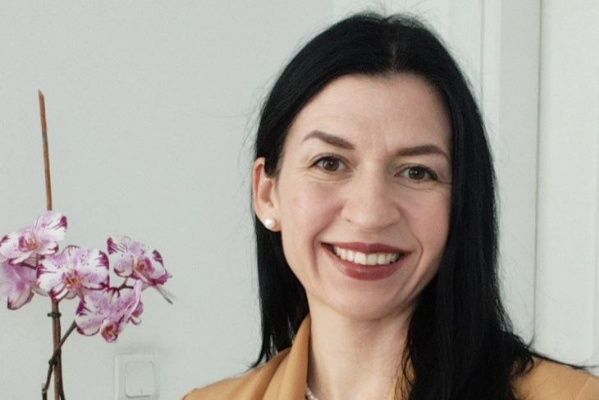
Each one of us, even without realizing it, builds our personal brand daily with our actions and decisions that we make.
Introduce yourself
in a few words..
My name is Radostina Yaneva, I am a lawyer and mediator by profession. I specialize in the field of labor law and focus on out-of-court resolution of labor disputes, team disputes, and business disputes.
How would you define a personal brand and why is it so important today?
The personal brand is important not only today, perhaps today it is gaining wider popularity, especially in the context of social networks, but I don't think that this exhausts the topic. The personal brand is about who you are, what your values are, what you stand for, what you fight for, and how you express all of this. That is why each one of us, even without realizing it, builds our personal brand daily with our actions and decisions that we make.
How did you start building your personal brand? What motivates you?
I started more than 5 years ago with a website, at that time I had plans to develop profiles on social networks, but for one reason or another, related to my surrounding environment, I didn't do it. However, a year and a half ago, I decided that it was high time to start working on this again. Thus, I launched profiles on social networks where I share interesting cases from the world of labor law, share information about the rights and obligations of employers and employees, discuss different ways of resolving disputes, and why I, as a lawyer, rely on out-of-court methods and especially on mediation; I actively engage with the audience and seek new and creative ways to present information. Throughout this time, I realized many things about myself, found my strength, my voice, reviewed my values, and organized my priorities. I am mastering public speaking and working with criticism and so-called hate and turning it into something that builds me, not something that destroys me; I am learning to present information briefly, concisely, professionally, and still in a way and language that is accessible to people. Overall, an interesting process, I enjoy it and eagerly await to see where it will take me.
What are the most important elements of a successful personal brand?
Discipline, patience, dedication, willingness to reveal yourself and show yourself as you are and to stand by that even at the cost of someone not liking you.
How to find your niche and unique value?
By answering simple questions like What do I like to do? What makes me lose track of time? What would I do for free? What feedback do people give me during our collaboration? A very interesting question is “What am I very good at and don’t think I should get paid for it?” – we usually think that the things we like and do easily are not something we can ask for money for.
Unique value comes from accepting ourselves as a whole.
Should the personal brand be built around personality or expertise?
For me, they are inextricably linked. For example, I am a lawyer specializing in labor law, but I am also a mediator. I am a person of collaboration and understanding, I love to negotiate and seek mutual benefit. That is why for me the focus is on prevention and out-of-court resolution of disputes while seeking win-win outcomes. I do not like court cases at all and I strive to turn to the court only as a last resort, but even then I do not stop looking for a way to resolve the dispute out of court not for any other reason, but because of my attitudes. Other lawyers who specialize in labor law may share completely different views regarding dispute resolution and for them the court path may be preferred due to their attitudes and values. This is how two specialists with seemingly identical expertise are actually quite different precisely because of their personal attitude towards a part of their work – dispute resolution. And here we are not talking about whose approach is right or wrong, but about the fact that these differences strengthen and make each one's personal brand unique. By conveying this appropriately, everyone will attract the relevant cases and clients who also have their own personal views on how they prefer a dispute to be resolved and will accordingly prefer the specialist who is closer to their views. Accordingly, each of the lawyers will be satisfied because they can work in a way that aligns with their internal attitudes and values.
What first steps would you recommend to someone who is just starting?
To get to know themselves.
What platforms are most suitable for developing a personal brand today?
An interesting question. Even before I started doing this, I consulted with several specialists and they all agreed that among the widely used platforms in our country, LinkedIn is the most suitable for me, while the least suitable is Instagram. Well, I actually like Instagram the most and I took it unpleasantly that I am not suitable enough for this platform. At one point, however, I decided to give it a try on Instagram, and the lady I was working with at the time supported me, even though she didn't think it was appropriate. And surprise – my profile on Instagram, is the one that has developed the best organically during this year and a half period and currently has a little over 11,400 followers. LinkedIn, on the other hand, is the network where my profile is growing the slowest, even though it is “the most suitable.”
As developing a personal brand is a long-term project, working on it should also bring us pleasure, so I would say this – to use as many social networks as possible, because the audience is different and you never know where yours is. On the other hand, the choice of platform will also vary depending on what type of content is comfortable for each to create, as well as which format of delivering that content is appropriate. Because if the platform, let's say, is primarily for video and other visual content, and you prefer to write but not to shoot videos and show yourself, then it might be better to focus on a platform that primarily showcases text content and has the corresponding functionalities. It is also important for the choice how much time a person can dedicate, because let's not fool ourselves – this takes time.
What role does authenticity play in a personal brand and how do we maintain it?
In my opinion, it is fundamental. People can sense even through screens when someone is inauthentic. We maintain authenticity by stepping out of the roles we play for one reason or another and stop trying to please everyone at all costs.
How to create content that engages and builds trust?
There is probably a secret recipe, I still don't know it. I am guided by what I see on a daily basis in my practice – for example, what are the most common mistakes made on a given issue or what are the most frequent questions from employees or employers in one situation or another; what rights and obligations employers and employees have on a given issue; I discuss various myths; I explain which practices are legal and which are not. I am also guided by the feedback that my audience gives me – there is always someone who writes to me asking to make a post on a certain issue or to clarify rights and obligations in a certain situation. However, I am also guided by what is important for me to share regardless of whether it will find as wide a response as some broader topics, because maintaining these profiles is also for me.
What are the most common mistakes people make when building a personal brand?
People with very well-developed profiles and outright influencers have told me that the biggest mistake is having someone else create your content instead of you; it is immediately felt. Also, blindly following the advice and guidelines of marketing specialists, especially when you don't feel it as your own. I have experienced the latter firsthand – besides not bringing me satisfaction and feeling pressured in the process, I also encountered problems with the algorithms and policies of some social networks, which set me back a bit.
How to deal with negative comments and criticism?
By not taking it personally. Sometimes negative comments say more about the person making them than about us – then we just let them be. I do not delete negative comments, I leave them. However, I do not compromise with rude and impolite behavior, indecent language, and the like. It is good to look at negative comments with a different perspective – with curiosity, asking ourselves, if this person is acting in good faith, what are they actually trying to tell us? There might be something we need to pay attention to.
How to avoid burnout when investing a lot of effort in your personal brand?
By thinking about it in the long term and not making it the center of our world, but accepting it as something we do primarily for ourselves and for our satisfaction, but not at the expense of other important things for us. Sometimes it is better to slow down, even to take a short break, than to reach burnout and a complete withdrawal from the process.
How can a strong personal brand lead to more opportunities (jobs, partnerships, clients)?
As one marketing lady I had the pleasure of working with at the very beginning said – first you work for your name, then it works for you; at first, it is hard and you will want to give up many times, but there will come a moment when it will start to turn on its own; the bad thing is that no one can say when that moment is, but be sure – it will come and you will recognize it.
With each passing day, I am convinced of how true her words are. And for the moments when it is hard and you want to give up, and for the fact that at some point it will start to pay off. Because I constantly receive job offers, invitations to participate in interesting projects, collaborative activities, and messages from people who just want to thank me for how helpful something I shared was and to pat me on the back to keep going. And all of this is very valuable to me.
What are the best ways to monetize a personal brand?
I can't say, I don't possess any secrets. People seek my services on their own.
When is the right time to start offering paid services or products?
They say that people don't like to be sold to, but they love to buy. Personally, I am repelled by overly aggressive selling. I quickly figure out who is selling what, and if I am interested in the product/service, I research what it is and decide whether I want to buy it. If they aggressively try to sell to me, I am just done. I personally have never stated that I am selling anything. People have always sought my services themselves, whether by sending me inquiries in private messages on social networks, calling me, or emailing me.
How to maintain sustainability and long-term growth of the personal brand?
First of all, to be aware that this is our path and we do it because it is important for ourselves. Secondly, to view it as something that is ongoing over time and rather has no endpoint, but continuously undergoes development, to be curious, creative, and adaptable.
What habits and discipline are needed to build authority?
Consistency, confidence, perseverance, creativity, openness, adaptability, curiosity.
Which personalities with a successful personal brand inspire you and why?
I admire people who seem to do it with ease. By ease, I mean that it comes from within, that they are authentic, sometimes even vulnerable.
What three specific things can people do today to improve their personal brand?
To open up to new ideas; to try a new type of content; to accept this as work, but also as something that brings them pleasure and satisfaction.