Surrounding yourself with the right people saves stress
· Kaloyan Parchev
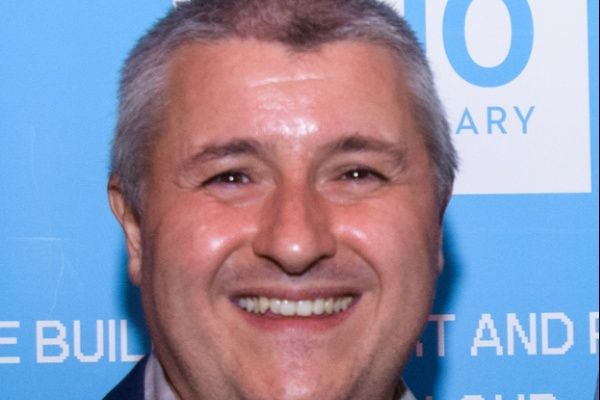
Very often, growth opportunities are hidden behind challenges that seem daunting at first!
Introduce yourself in a few sentences..
My name is
Kaloyan Parchev, 45 years old, father of two children - a 14-year-old daughter and an 11-year-old son. Together with two partners, we founded Zetta Systems 11 years ago. As a high-tech IT company, we focus on cloud technologies, DevOps,
Cybersecurity, and 24/7 support for critical business applications. My passion for technology, which started as a hobby, turned into a profession and eventually into a business. We serve clients on 3 continents and strive to be strategic trusted partners, not just contractors.
What did you dream of becoming in your childhood?
My whole family are doctors – my great-grandfather, my grandfather, my father, my mother, my aunt. My brother and I are the black sheep, so to speak. He is a geologist, and I work with technology.
When I was finishing my primary education, I wanted to enter the prestigious English high school of the time. At that time, there were no quotas for girls and boys, and accordingly, with very high grades, I couldn't qualify. I graduated from the Technical School of Electrical Engineering and Automation, majoring in Production Automation.
Later, I wanted to enter Computer Technologies at the Technical University in Sofia, but again I didn't have enough points and was accepted into the Electrical Engineering Faculty, majoring in Electrical Devices. This, of course, gave me quite a bit of knowledge, but not in the field I desired. I caught up by constantly working with computers and software in my free time. I worked in my university specialty for exactly one year, and since then I have been solely in the world of IT.
I have no regrets about anything on this path. I believe that everything happens for a reason, enriches us, and helps us to view the world more openly.
What are the main factors and examples that shape us as individuals at an early age and form our interests?
The environment in which we grow up is of immense importance for our formation as individuals. In my case, receiving a computer at the age of 10 opened the door to a whole new world. Other key factors are parental support, education, and encounters with people who inspire us. Having a mentor is also quite important. I believe that everyone should have one, even more than one. Personal experience is the most important, but it is invaluable to be able to draw from the experience of proven professionals and leaders in the field you are interested in.
My recipe for curiosity includes never stopping asking questions, experimenting with new technologies, and stepping out of my comfort zone. Curiosity is one of the constant and sure characteristics of a strong intellect.
I strongly recommend reading books as well. It is important to note that the amount of life experience a person has is significant for understanding and realizing the big ideas in books. It is also crucial to know that books contain the true concentration of human knowledge in the world. Not in social networks, not in movies, and not in YouTube and podcasts. I am not saying that they are not interesting and important. What I am saying is that nothing can replace books as a source of wisdom and knowledge.
Has there been any significant change in your perceptions in more mature age about what motivates you?
Yes, over time I realized that from 20 to 25 years old, I had no clear idea of what exactly I was doing. I was going with the flow of life. However, I then realized that I needed to make a plan for what I wanted to achieve in life and my career. This was a key moment that I believe every young person should go through. I realized that without such a plan, it is very easy to miss valuable opportunities. With the accumulation of experience, my motivation shifted from purely financial to creating value and building lasting partnerships. The best way to predict the future is to create it.
Whose decision was it where to pursue higher education and what to study?
I applied to three universities. I was accepted into two of them. The majors in both were not what I truly wanted. But the decision was mine, and from today's perspective, I would repeat it again without hesitation.
Share more about your interests, knowledge, skills, and hobbies?
My main interest is technology. I always give the example that I was one of the first users of the iPhone in Bulgaria. At a time when it was not officially imported, and the first Android was separated by a full 3 years from its appearance in the world. I have worked on Apple II, on Pravets 8C.
I love reading books. Mainly literature on finance, science, autobiographies of famous people from business, and personal development. I have a huge library and have read over 500 books in these areas.
As for skills and hobbies, I love driving cars, shooting firearms, I learned to fly a small plane, and I am currently taking piano lessons. I enjoy playing computer games with my children online, but lately, this happens less and less.
I like to invest. I find it interesting to plan and track the stock, gold, cryptocurrency markets, etc. I understand how they work technologically, and this further stimulates my interest in this area.
Would you change your profession today and which areas of activity capture your interest?
I would not change my profession, as it directly stems from my passion for technology, which started in my childhood. The evolution of technology in the last 30 years is something incredible; I am glad to be in this dynamic field and have the opportunity to work with partners and clients who share my vision. Areas such as artificial intelligence, blockchain, and cybersecurity continue to capture my interest as they constantly evolve and change the business environment and the world we live in.
They say that personal branding is everything that people say about you when you are not in the same room with them. What would you like to hear today?
I would like people to say that I am a reliable partner who always delivers what is promised. That I am a person with vision who is not afraid to take risks but also responsibly bears the consequences of my decisions. That I create an environment where people grow professionally and personally. And most importantly, that I am a person who understands that trust "takes years to build and seconds to destroy" and therefore values every aspect of relationships with clients, partners, and employees.
Emotional intelligence, adaptability, and flexibility are key. How do you deal with daily challenges?
To maintain good condition and mood, I apply the "data-driven" principle in my personal life as well. I try to analyze situations and make decisions based on facts, not just emotions. This is quite difficult, and I don't always succeed. It is important to surround yourself with people who share your values - this significantly reduces stress. Additionally, my phone's calendar is an indispensable tool - when I set aside time for something, it becomes law, and I adhere to it unconditionally, whether it is a work meeting or personal time with family or friends.
What are the most important conclusions for maintaining proper communication?
Active listening - to focus on the interlocutor, not to interrupt, and to show that we truly understand what has been said. I have a very important rule for how I understand whether a given meeting went well, and that is whether my interlocutor spoke more than I did. If the answer is YES, then this meeting went well.
Empathy - to try to understand the perspective of others and to show respect for their feelings.
Feedback - to check whether we have understood our interlocutor correctly and to seek confirmation.
Nonverbal communication - to be aware of the importance of body language, tone, and gestures. Remember that 80% of the information conveyed during a meeting is nonverbal!
Adaptability - to adjust our communication style according to the situation and the interlocutor.
What do you think about money? What is its influence on your life?
I will start with a quote from P.T. Barnum - "Money is a bad master, but an excellent servant."
Money is an important tool, but it should not be the ultimate goal. It gives us the freedom to choose and realize our ideas. For me, it was a turning point to decide to start my own business and not rely on a stable monthly salary and a 9 to 5 job. It was a risk, but it turned out to be the right decision. My advice is not to think of money as a goal, but as a means that allows you to follow your passion and create value.
What is the most valuable career advice you would give to people?
Do not be afraid to take risks and step out of your comfort zone. Very often, growth opportunities are hidden behind challenges that seem daunting at first. Also, be curious, continue to learn and constantly improve. Technologies and the business world are evolving extremely quickly, so it is vital to update and expand your knowledge and skills. And finally, make decisions quickly – often the wrong decision is the lesser evil compared to the absence of a decision.