The absence of relatives and close friends is something that is not easily gotten used to
· Veselin Rusev
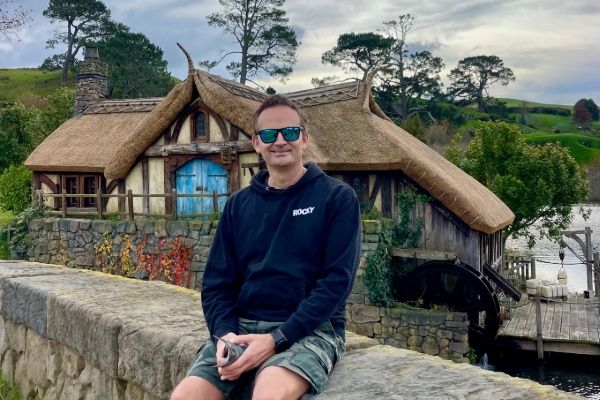
New Zealand taught me to seek and appreciate the balance between work and family and to spend more time in nature!
Introduce yourself
in a few sentences. What does your work as daily
commitments consist of?
My name is Veselin (Ves) Rusev and
I am a residential property sales consultant at Ray White agency in Auckland, New
Zealand. I have a degree in marketing and before settling
in New Zealand, I gained experience as a marketing manager in various companies in
Bulgaria.
My workday is dynamic and
focused on several main areas: actively seeking and attracting
new clients, building a strong network of contacts, as well as targeted
personal marketing and branding. I believe that building a strong personal presence is
key to sustainable success in the industry.
In which country
and city do you currently live and how did you end up there?
I currently live in Auckland, New
Zealand. Eleven years ago, together with my family, we made an important
decision — to seek a new beginning in an environment that offers tranquility,
safety, and opportunities for growth. With two small daughters at the time, we dreamed of them
growing up in a multicultural society that promotes tolerance, education,
and personal growth.
What were the
biggest challenges you faced at the beginning of your stay?
At the beginning, one of the biggest
challenges for me was the need to start almost from scratch. In
Bulgaria, I had already achieved significant professional successes and built a
reputable name in my field. Upon moving to New Zealand, I had to face
the reality that what I had achieved up to that point had no automatic weight in
the new market.
I had to adapt my skills
to a different cultural environment, prove myself again, and build a new
professional network of contacts. This required a lot of patience, perseverance, and
constant work on myself, as well as the ability to be flexible and open to
new opportunities.
How did you overcome the language barrier (if there was one)?
New Zealanders speak English
with a particular accent and expressions that differ from the academic or professional
English I was used to. At first, especially during the first six months,
it was a challenge for me to understand the locals, especially over the phone.
Over time, thanks to
daily practice and communication in various settings, I was able to adapt quickly. New Zealand is a highly multicultural country where
diverse accents meet, and this environment significantly facilitated the process of getting used to and
overcoming the language barrier.
What resources or networks (local communities, colleagues,
organizations) helped you adapt?
During the adaptation process, I mainly
relied on myself. In New Zealand, there is a relatively small Bulgarian community,
which provides support mainly with practical advice related to everyday
settling and daily life. However, true adaptation required personal
efforts, actively building contacts, and gradually entering the local
cultural and professional environment.
What are the
main differences between the work culture in your current country and that in Bulgaria?
One of the main differences is
related to the mode of employment. In New Zealand, a large part of the people work in
small or medium companies or are often self-employed. Many New Zealanders work on
contractual agreements, hourly basis, or on specific projects. Although
large corporations and multinational companies are present here as well, the spirit of
entrepreneurship is strongly felt — a significant number of people have their own small businesses
and rely on their own efforts. In Bulgaria, in contrast,
employment traditionally dominates in larger structures or corporate environments.
What values and workplace practices impressed you the most?
The culture in New Zealand is
deeply connected with tolerance and respect. In the workplace, New Zealanders
demonstrate a high degree of attention and concern for their colleagues. I was impressed
by the spirit of camaraderie, as well as the attitude of respect and support among
team members, regardless of their background or position in the company.
Have there been situations where cultural differences have made it difficult for you?
Definitely. As an Eastern European,
I am used to a more direct style of communication, which at first was not always well received in New Zealand. The local culture prefers a more nuanced,
delicate approach in expressing opinions and interacting with others.
It took me about two years to soften my directness and adapt my
communication style to local expectations. This was a process that
required time, observation, and a willingness to change.
How does finding a job differ in your current country compared to your homeland?
I wouldn't say there are significant
differences. In both New Zealand and Bulgaria, recommendations from colleagues, friends, or
previous employers play a key role in the job search process.
What is more noticeable in New Zealand is the attitude towards frequent job changes — locals do not hesitate to change their employers
more often, without it being perceived negatively for their careers. Employers
here tend to value accumulated experience and flexibility more than long tenure in one
place.
Did you have to
go through any additional qualification courses?
Yes, for my current job as a
real estate agent in New Zealand, it is necessary to complete a licensing course that lasts between 6 and 9 months and ends with a written exam and an in-person exam. After obtaining the license, to keep it valid, I need
to complete at least 20 hours of training each year, which ends with a test. This is
part of the strict regulation of the real estate market, which ensures
the quality of services and protects the interests of clients.
Have you encountered prejudices or obstacles due to your foreign
background?
New Zealand is a multicultural
country where people from different cultures and languages coexist. Subconsciously,
as in any society, there may be some prejudices, but they are usually quite superficial and do not have a serious impact on my daily
interactions with locals. Overall, the culture in New Zealand is open and
inclusive, and in most cases, differences are accepted with curiosity and respect.
What would you advise people who want to take
such a step?
I recommend doing
thorough research on the country, culture, traditions, and social environment,
before taking the step. Studying the values of society,
the education system, and even the local “quirks” will help you adapt
faster and easier. Additionally, it is important to visit a few different cities, if
possible, to feel the differences in their atmosphere and way of life.
Plan everything in advance, but at the same time, be open to new
experiences and ready to adapt to the unexpected.
If you could go back, would you choose the same
path?
Without any hesitation. Often
people hesitate before taking such a big step, but it is important to remind themselves that everything is reversible. Bulgaria will always be there and will wait for you, and
the experiences and opportunities you will gain will not be on the losing side. Changes
sometimes require courage, but they lead to new perspectives and personal
growth.
What do you miss most about your homeland in a professional and personal sense?
Professionally, I wouldn't
say I miss anything. On the contrary, the New Zealand environment offers a lot
of freedom and opportunities for entrepreneurship, which is something I appreciate and that
gives me space for development. Personally, however, it is more difficult. The absence of
relatives and close friends is something that is not easily gotten used to and will always be
part of my emotional life.
Have you considered returning and under what conditions
would you do it?
Returning to Bulgaria is always a topic that
I discuss with my loved ones. For me personally, I do not think it will happen in the near future,
especially considering the current business and political situation. I would only return
if I needed to take care of a close one or relative who needs my help and support.
What do you think
about money? What is its influence on your life? What is your advice to
people who often ask themselves questions related to money and how sufficient they are?
Money is a means to achieve
goals, but not an end in itself. Since I have been in New Zealand, I feel that their
meaning and influence on my life are changing. Here, life is much
more balanced, with an emphasis on family and the quality time we
spend together, even though New Zealand is quite an expensive country.
In my profession in real estate,
I have met many people who possess great wealth. For me,
the truly wealthy are those who invest in their personal development, not
just in accumulating assets. It doesn't matter whether you have 100 BGN or 100
million BGN — money never suffices if you don't know how to balance your life.
The only thing that changes are the problems you face.
New Zealand taught me to seek and
appreciate the balance between work and family and to spend more time in
nature.