The Confluence of Circumstances and a Genuine Dose of Luck Led Me to Dubai
· Yuliy Slavov
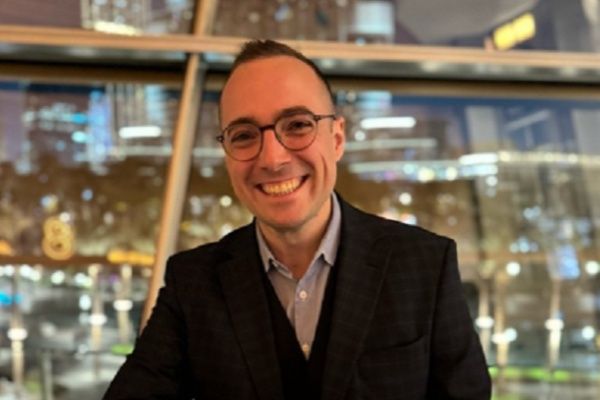
A very large part of the promotions are based on visible results that are discussed at the beginning of the year and overlap again in the middle between the second and third quarters. This reduces the opportunities for unfair treatment!
Introduce yourself
in a few sentences. What does your work as daily
commitments consist of?
Hello to you
and the readers of the column. My name is Yuliy Slavov, a proud Plovdiv citizen and Bulgarian
who has been living for over a decade in the United Arab Emirates. Currently, I hold
the position of Rooms Director at Centara Hotel (a Thai family hotel chain
spread across Asia, Thailand, Vietnam, Maldives, and my region – UAE, Oman, and
Qatar). My main commitment and
the team I lead is the satisfaction of the hotel guests and
the optimization of hotel operations, so that the hotel's profit can be preserved and increased
annually.
In which country
and city do you currently live and how did you end up there?
I currently live in
Dubai, UAE. An interesting confluence of circumstances and a genuine dose of luck,
which motivates me to develop both professionally and personally.
In the not-so-distant year of 2010, I was one of many Bulgarian
students who, while studying, worked in the dawn of outsourcing, in
one of the first Call Centers in Sofia. (Since I graduated from the Plovdiv
English High School – with a German language profile, and this was my first exposure to
international companies).
The work was not complicated and did not require specific skills, other than handling the
language. I quickly became saturated and was already in my second or third year as a student, which made me
orient myself professionally in my field of education,
specializing in Tourism at Sofia University. I had the opportunity and started working at Hilton
Sofia. Perhaps the first real university in the field of tourism. I would very much
like the training in our universities to provide the desired starting
point, but in my case, it was not so. Nevertheless, the hotel managed to ignite a spark that continues to burn to this day. The clash with foreigners and
professionals from Bulgaria (not only the employees but also other Bulgarians coming
to participate in various seminars and events) motivated me to develop in
this field. Sofia University used to offer the 3rd and 4th years to be
combined, so that one could graduate earlier, and that’s what I did. Finding myself with
a diploma in hand, but without the necessary skills, I realized that I would need to
upgrade my education to at least start developing
professionally. After some time and reviewing the financial requirements,
I chose to specialize in a master's program at the Academy of the Emirates for Hospitality
and Tourism. (The other 3 universities were in Florida, Holland, and Switzerland,
each with much more expensive programs).
Purely by chance
or perhaps pure luck was the fact that the then-operational
director transferred to Dubai to open a 364-room hotel and I could apply for a transfer.
Everything went well, and in 2011 I had the opportunity to work for
Hilton Hotel in Dubai and be accepted into the Academy for my studies. In
November 2015, I graduated – MBA in Hospitality Management, with a course project on the necessity of
implementing technology in the luxury hotel segment.
What were
the biggest challenges you faced at the beginning of your stay?
Perhaps the first
clash with reality in Dubai came when I had to learn to
live in a work dormitory. And of course, the workforce from Asia can be
very provocative, but in my case, it didn’t matter much because the goal was
set – to be a general manager in an international hotel chain.
How did
you overcome the language barrier (if there was one)?
In the Emirates, by
law, everything is in Arabic and English, so there is no language barrier.
What resources or networks (local communities, colleagues,
organizations) helped you to adapt?
With every new
hotel opening, staff is gathered according to the needs of the region and
the expected guests, which initially helped me make friends with colleagues
from Egypt, Russia, Kazakhstan, Germany, and Italy. All from our (batch) were
motivated and ready to improve themselves to be simply better than
the competition, which automatically placed me in a competitive environment. And so, over
time, friendships remained and mandatory participation in various
seminars, networking events, and similar activities. There were also colleagues from Bulgaria, with
whom I am glad we managed to work together and motivate each other.
What are
the main differences between the work culture in your current country and that in
Bulgaria?
Mainly, development
is 100 percent based on results up to a certain level. After that, there is
mandatory compliance with standards and uncompromising adherence to all
laws and requirements, which at least here are made with intent for both the employer
and the employee, as well as for the development of the given emirate. Another very important point
is predictability, which is at least in three periods (1-3 years, 3-5 years, 5-10 years),
while in our case it is more of a season-to-season situation.
What workplace values and practices impressed you the most?
A very large part
of the promotions are based on visible results that are discussed at the beginning
of the year and overlap again in the middle between the second and third quarters.
This reduces the opportunities for unfair treatment.
Have there been situations where cultural differences havehindered you?
At the beginning of
my career – YES. Now I wouldn’t say so, because when you work with over 20-30
nationalities, there is no room for cultural differences, only professional views.
How does finding a job differ in your currentcountry compared to your homeland?
Before Covid, it was
much easier, but now the market is flooded with colleagues from Asia, who undercut
minimum wages, and it requires much more patience to find a
suitable company and position. Purely administratively, everything is very clearly
explained, digitized, and fast. So, there is no room for a gray area, because both
the worker and the company are protected. The law is the same for everyone,
and it is followed by all, without loopholes or opportunities for deviations.
Did you have to
go through any additional qualification courses?
Working in an
international chain by standard, all employees go through minimal
training, and it depends on the motivation of the individual person how much they want to
know more to be more competitive.
Have you encountered prejudices or obstacles due to your foreign
origin?
Not here. Perhaps,
because most employees are from abroad. Or it is more likely to see a non-local working.
What would you advise people who want to take
such a step?
First of all, to
have a goal. Not to give up or find a reason why something won’t
work for them. The chosen goal should be the leading motivation. In my case, I was
lucky to know what I wanted to achieve before coming here.
If you could go back, would you choose the same
path?
Yes, I work in what
brings me joy.
What do you miss most from your homeland in professional and personal terms?
Family,
friends, our customs, and of course the mountains.
Have you considered returning and under what conditions
would you do it?
Returning always
remains an option. If the working conditions offer the possibility of a similar
quality of life in Bulgaria, of course.
What do you think
about money? What is its influence on your life? What is your advice to
people who often ask themselves questions related to money and how sufficient they are?
Money is a very
important motivation, but it should not become an end in itself. One must still adhere to principles of right and wrong, otherwise things go out of control. I
don’t think they would be sufficient, because there will always be someone with more, and
that will never make us happy.