The opportunity for networking in France is more closed
· Boris Slav Todorov
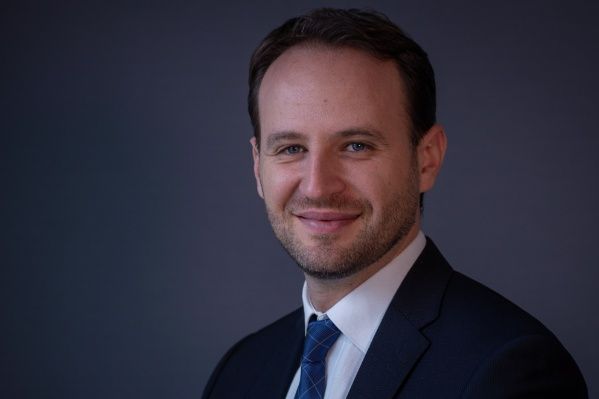
Money is a means to satisfy the basic needs of a person. The rest is pure human greed!
Introduce yourself
in a few sentences. What does your work as daily
commitments consist of?
Hello,
My name is
Boris Slav Todorov. I work for a French insurance company for credit risk insurance Coface. I lead a sales team in the Global
Multinational Clients department.
My team
manages a portfolio of over 50 million euros in annual premium income. My work is
related to defining strategies for the development of existing clients,
which are large international companies with an annual insured turnover of over 250 million.
Euros. The insurance includes both branches in Europe and subsidiaries
on all continents. A large part of my work is related to negotiations, which
are both at the internal level in the various departments of the insurance company,
and with our partners (brokers or agents) and end clients. The product is
quite niche in the market and expert knowledge in the field is a condition without which
there can be no ultimate success.
The international
aspect of the activity is strongly represented, as we have offices in over 100 countries and
with global clients, it often happens that insurance policies are issued in
Asia, South America, Australia, or Africa. Daily contact with different
teams of the company from the other side of the world is a necessity as well as a good
understanding of local peculiarities, customs, and even some legal aspects. I often say that my day starts with Japan and
China, passes through Europe, and ends with Chile, Mexico, and Brazil.
In which country and city do you currently live and how did you end up there?
I live and work in
Paris, France since 2015. My path from early childhood brought me
here. When I was 6 years old, I wanted to become the ambassador of Bulgaria. Pursuing this
dream, I went through a French high school in Sofia, then International Relations
at the university, and after several internships in the state administration, my disappointment
with the functioning of the state apparatus led me to the economic and financial
sector.
I did
my master's degree at the University of Toulouse, France, and changed several French companies
like Renault, BNP Paribas, Société Générale until I finally ended up in the current
company at the local branch in Bulgaria. After spending three years there in the sales
department, my curiosity led me to the Coface headquarters in Paris. I wanted to see how
business is done in Western Europe and how this business model works on a larger
scale.
What were the biggest challenges you faced at the beginning of your stay?
The challenges
at the beginning were both of a domestic nature and of a professional one.
The master's program in Toulouse helped me a lot for easier adaptation,
as well as my friends in Paris.
The language with all its
nuances was one of the challenges. The fact that I had studied French in
high school and then at university was a big plus, but on the other hand, my French
was that which Victor Hugo spoke in the 19th century since we studied French
literature in high school. This was relatively quickly corrected, but still,
there were difficulties for a while.
How
did you overcome the language barrier (if there was one)?
With effort, targeted
work, and determination.
What resources
or networks (local communities, colleagues, organizations) helped you adapt?
I prefer to immerse myself
completely in the local culture and do not deliberately seek local communities.
What helped me for quick adaptation was my girlfriend, also Bulgarian,
who decided to follow me to Paris, leaving a well-paid international
law firm in Sofia. Subsequently, she also became my wife and the mother
of our daughter.
What are
the main differences between the work culture in your current country and that in
Bulgaria?
A difficult question, with
no easy answer. The differences are both many and not so many. Of course,
there are differences, but people are essentially the same everywhere. They react
in a similar way, driven by the same emotions. The differences are in customs,
education, and cultural peculiarities. In our company's office, there are employees from
over 30 nationalities, in my team, there is a Mexican, an Algerian, a Portuguese, and I
am Bulgarian. This amalgamation of differences in the work environment does not make me feel
too far from the Bulgarian environment.
Have there been
situations where cultural differences have hindered you?
I wouldn't say they
hindered me, but rather the opposite. I love cultural differences, as well as
languages. It is precisely these differences that motivate and inspire me.
How does finding
work differ in your current country compared to your homeland?
Contacts are
key, regardless of the labor market. In Bulgaria, things are a bit
easier because the scale is smaller, people know each other better, meet more often,
and attend the same events. The opportunity for networking is greater.
France is more closed in this regard. The reason is historical, due to
the division in society and the different hierarchical levels cannot merge
easily. But this is not characteristic only of France. In some Asian countries, it is even
more pronounced.
Did you have to
go through any additional qualification courses?
No. I was
a prepared candidate with expert knowledge in the field and language.
Have you faced
prejudices or obstacles because of your foreign origin?
Yes, I have faced them,
but everything is a matter of self-perception. In fact, prejudices are not so much with
others as they are within ourselves. If we manage to free ourselves from them, the
counterparties also change or rather our perceptions change. I
have always been proud of my Bulgarian origin and have clearly stated it. Of course,
there have been jibes, in the form of jokes, but this is more due to ignorance
and lack of knowledge. For example, one of the misconceptions among the French is the geographical
location of Bulgaria. 90% of them think that Bulgaria is somewhere in the north, in
close proximity to Moscow and that it is very cold there. My friends have admitted to me
that their level of knowledge in geography is pathetic and that this is due
to education in school at a young age. Of course, there are also those who
travel the world and are aware of where exactly Bulgaria is, but they are a small percentage.
What would you advise people who want to take a similar step?
They need to ask themselves
“why”. Why do they want to do it? What exactly are they looking for?
First, it is necessary to have a clear and precise answer and then to start planning step by step. For example, my “why” was curiosity. I wanted to
understand how business is done in Western Europe, how the business functions, how far
one can go, etc. I wanted to test the limits of my own
capabilities. I did it, once again, and it worked. 20 years ago, I tested
my capabilities on a student brigade in the USA. It also worked then.
If you could go
back, would you choose the same path?
Absolutely.
What do you
miss most from your homeland in professional and personal terms?
In personal terms,
the answer is clear and not particularly original. It is family and friends. But
I try to compensate for this to the maximum extent and spend about 1-2 months of
the year in Bulgaria.
In professional
terms, I cannot say that I miss anything. Maybe it is my desire to create or
be part of a business in Bulgaria that works for the benefit of society.
Because part of the meaning is to help and give to others.
Have you considered
returning and under what conditions would you do it?
I have thought
about the topic and I definitely have the desire, but it should not be at any cost. In
the short and medium term, I have goals related to my family and
returning is not on the agenda.
I would do it,
if I can realize my idea of helping, which I mentioned in the previous
paragraph or some other idea that makes sense for the benefit of society.
What do you think
about money? What is their influence on your life? What is your advice to
people who often ask themselves questions related to money and how sufficient they are?
Money should not
be an end in itself. Money is a means. They are needed to pay the bills,
to buy healthy food, not in large quantities, but only as much as
is necessary, and to allow a person to travel from time to time. Money is a means to
satisfy the basic needs of a person. The rest is pure human
greed.