The people I meet truly inspire me
· Kaloyan Parchev
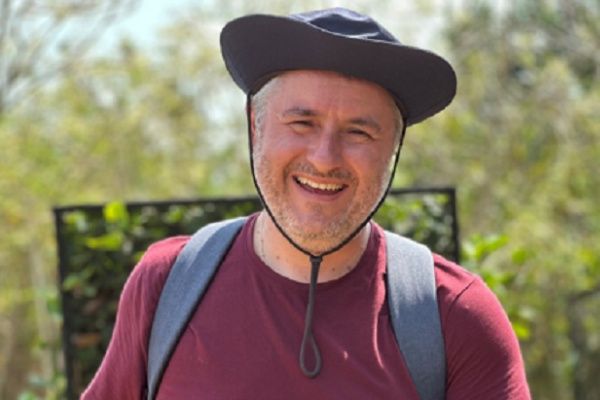
I believe that great ideas require both access to information and resources, as well as space for creative thinking!
Introduce yourself in a few words..
Kaloyan Parchev, 45 years old, entrepreneur in the field of IT technologies, founder of Zetta Systems (Zetta Systems, father of two children, traveler, passionate explorer of history, of new ideas and cultures.
For you, traveling the world is?
Traveling is a way to broaden my horizons, to step out of my information bubble. It is an opportunity to meet different cultures, business models, and to see how people from different parts of the world approach modern challenges. Traveling enriches my thinking and gives me a perspective that I otherwise could not obtain. The world is a book, and those who do not travel read only one page.
How many different countries have you seen so far? Share an interesting story or highlights from your travels?
I have visited about 50 countries so far. My most interesting trip was to Uganda in Africa. It was my most exotic and extreme trip. I had no expectations, and what I saw truly amazed me. It is a different world there, nothing like Europe, for example. Africa is generally a continent of contrasts. And nuances. There were quite a few things that surprised me - for example, the drastic difference between the poor and rich, the lack of drinking water, misery, corruption, the lack of road infrastructure and public transport. At the same time, people are very kind and open to the new. I liked it a lot, but it is not for everyone. Especially for pampered Europeans – for them, it is sobering to see countries like Uganda, to realize how deeply they are sunk in the inertia of their deceptively comfortable and predictable lives.
For
people with heightened sensitivity, Africa pricks the heart with social
inequality, but at the same time, the unplowed territory that this continent
represents, in many ways heralds an interesting future for all of us. Tetsi Nunoa, founder
of MEST Africa, says, "Africa will always surprise you. Expect the unexpected
and the impossible to happen... here more often than anywhere else."
Do you like to repeat destinations? Give examples and motivation for "for" or "against"?
I prefer to discover new places, but there are a few destinations I return to. For example, I return to Greece and Turkey for their nature and hospitality. I would also return to Uganda for its exoticism and people. I believe that the balance between discovering new things and deepening knowledge of already visited places is important.
What was your first trip that truly changed you as a professional and can be said to have changed your thinking?
I have two such trips. Back in 2006, I attended my first serious international professional training in Prague for 10 days. For the first time, I encountered such an intensive program with international lecturers of world renown and an even more dynamic exchange among colleagues. We were about 15 people from across Europe, and in the end, we took an exam and received very specific certificates. This achievement is a great pride for me, especially considering how young I was then. I will never forget the incomparable feeling of receiving international recognition for my knowledge and skills! Perhaps this was my first personal professional realization that I am competitive on a universally valid level. In addition, I created valuable professional contacts that I still use today.
The
other such trip was in 2012 when I went to Geneva at CERN. After
that visit, we implemented a project for the Large Hadron Collider, which was
quite interesting and impressive. On site, I met the technical team that
maintained the collider, and again I created valuable contacts and learned a lot. I
have been to Geneva twice, and each time was extremely interesting. CERN is
the center of science in Europe, and there is much to see and learn. The data
centers themselves are also very impressive and were definitely unforgettable
experiences.
What do you learn about yourself and your professional skills when you are in a new cultural environment?
In a new cultural environment, I learn how adaptable I can be. This is a critical skill in the tech business, where change is the only constant. I also observe how different cultures approach problem-solving and managing business processes. This helps me implement best practices in my company and avoid the traps that others have fallen into. I realize how important it is to be "street smart" - a quality that we highly value in our corporate culture. It is not the one who has traveled further who is wiser, but the one who has observed most carefully.
Have you met people or ideas during your travels that have influenced your career path?
I have met extraordinary people during my travels. The last such person I met was in Israel. An extremely smart and erudite person, with vision and motivation, working with flair. Such people inspire me to be a better professional and person. I can say that in almost every country I have been to, I have created valuable contacts, both professionally and personally. Including now when I was in Uganda, even though I was on a pleasure trip, I managed to meet with the local IT business community and made contacts with the IT people there.
What skills do you develop the most when you travel, and how do they reflect on your work?
Traveling primarily develops my adaptability, flexibility, organizational skills, and problem-solving ability in unforeseen situations. When you are in a foreign country, you often have to improvise and find unconventional solutions, which is directly applicable in managing an IT business. I also develop my intercultural communication skills, which are invaluable when working with international clients and partners. Traveling is the only thing you buy that makes you richer.
Are there any cities or countries that have inspired you to start a new business or project?
So far, I have not discovered such a city or country. The city that has impressed me the most, however, is Jerusalem. There are buildings that are 6000 years old, and when you see collected in one place the tomb of Jesus, the Temple of Solomon, the Wailing Wall, the Tower of David, it cannot help but affect you. A millennia-old history that can be touched. It was truly very impressive!
When you are in an unfamiliar country, do you feel more motivated or distracted? Why?
I definitely feel more motivated. The new environment, different perspectives and approaches to business stimulate my creativity. In an unfamiliar country, everything is new and interesting, which makes the brain work more actively, making new connections and associations. This often leads to insights that I carry into my business. Besides that, the distance from everyday problems allows me to look at challenges from a different angle.
Are there destinations that act as a "restart" for your creativity and ambition?
Natural destinations have the strongest "restarting" effect on me. Places like Ireland with its rugged landscapes or the beaches of the French Riviera act as a catalyst for new ideas. I love to combine these places with visits to technology hubs like Tel Aviv and Berlin. The contrast between nature and high technology often leads to unexpected ideas and solutions for business.
How do you manage the balance between work and pleasure when you travel?
I use the same principles that I apply in my daily life - my phone calendar is the law. I plan in advance how to allocate my time between business meetings and sightseeing. I try to follow the 80/20 rule - 80% of the time for the main purpose of the trip (whether business or vacation) and 20% for the other side. This allows me to have productive trips without missing the opportunity to get to know the places I visit.
How have travels changed the way you perceive the value of money?
Traveling in countries with different standards of living has shown me how relative the value of money is. In some places, what we consider a small amount can be a monthly salary for the locals. This taught me to appreciate what I have and to realize how privileged we are in many ways. I also saw how in some societies the focus on non-material values leads to greater personal satisfaction - a lesson I try to apply in our corporate culture. The most valuable things in this world cost nothing.
Do you travel with the aim of finding new ways to make money?
I do not travel directly with that aim, but I am always open to business opportunities and innovations that can be adapted for our market. My travels are more of a way to enrich my perspective.
What lessons about financial independence have you learned from different economies and cultures?
One of the most important lessons I learned is how different the concepts of financial independence can be in different cultures. In some Asian countries, for example, the emphasis is on saving and long-term planning, while in other places the focus is on creating sustainable business networks and communities. This diversity of approaches taught me that financial independence is not just a matter of the amount of money, but also a way of thinking and managing resources. Wealthy is not the one who has much, but the one who needs little.
Do you think it is better to spend on experiences rather than on material possessions?
Absolutely. Experiences and accumulated knowledge shape who we are and how we think. They stay with us forever, while material possessions often lose their value over time. Investing in travel, education, and new experiences is actually an investment in oneself. This does not mean that material things are without value, but they should serve experiences, not the other way around. Collect valuable moments and memories, not things.
How do you see the future of digital nomad life?
I see a future where the boundaries between work and travel become increasingly blurred. Technologies already allow people to work from anywhere, and the pandemic accelerated this process. At Zetta Systems, we are already implementing a hybrid work model that gives our employees the freedom to work from different locations. I believe this will become the norm for many industries, especially in the IT sector.
Are there specific countries that are more favorable for work and investment?
Estonia, Singapore, and New Zealand are excellent examples of countries with a good business environment, clear regulations, and high digitalization of administrative processes. Bulgaria also has its advantages, especially in the IT sector, with competitive tax rates and qualified specialists. On the other hand, I am watching with interest the development of some African countries like Rwanda, which are making significant investments in the technology sector.
If you could choose one place in the world to develop your next big idea, what would it be and why?
I would choose an area that combines good technological infrastructure with inspiring nature - for example, the area around Bergen in Norway. Such places offer a balance between access to technology and the opportunity to disconnect and reflect in nature. I believe that great ideas require both access to information and resources, as well as space for creative thinking. I think Bulgaria is also a good example of such a balance, with easy access to Vitosha at any time during the work week.
What are the destinations you would definitely recommend to be visited and why?
Japan - for the unique combination of ancient culture and futuristic technologies; Iceland - for the surreal landscapes that expand your ideas of the possible; Singapore - as an example of extremely effective urban planning and management; and Uganda or Rwanda in Africa - to see how technologies are adapted to local conditions and solve real problems in innovative ways.
What is the career advice you would give based on what you have seen around the world?
Be bold! Try new things, find what brings you professional pleasure and delve into it. Do not stop investing in yourself. Do not be afraid of failing, often the lessons are more valuable than successes.