The road changes, and interests evolve
· Djesika Stoilkova
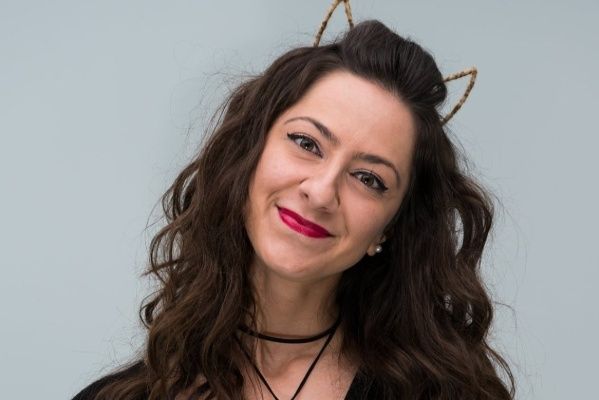
Never believe that everything is "final" or that you are "late" for something!
Introduce yourself with a few sentences..
My name is Jessica Stoilkova and since 2018 I have been the marketing manager at Netpeak Bulgaria – part of the international Netpeak Group. I have been involved in digital marketing for almost 8 years, responsible for the overall marketing strategy of the agency – from maintaining brand identity and key partnerships to participating in international competitions, organizing events, and managing internal marketing processes. I lead a small but very strong team of marketing and design specialists.
At the same time, I am also the editor-in-chief of Netpeak Journal – an established blog for digital marketing, where my colleagues and I create and share expert content on topics such as SEO, online advertising, eCommerce, email marketing, ASO & ASA, AI, and web development.
I am also responsible for the development of Netpeak Alliance – the agency's partner program, which unites over 35 established companies in various digital and creative fields – from web and mobile application development to influencer marketing, UX/UI design, video, and creative services. Through this collaboration, we offer a comprehensive ecosystem of services aimed at the growth of client businesses.
I am also part of the organizing team behind the Online Advertising Conference – an event with 8 in-person editions since 2016, as well as its digital format OA Conf Live, which already has 5 online editions.
I actively participate in the organization of internal and partner initiatives such as Netpeak Friends Day, training for agency clients, and various formats for exchanging know-how and inspiration within the community around it.
What did you dream of becoming in your childhood years?
To be honest, when I was little (around 10 years old), I dreamed of becoming like Ani Salich 😀, i.e., a news presenter or more generally - a journalist. I won't hide that my childhood friend and I even had our own TV show, and of course, I was always the host. Basically, I have always loved telling stories, communicating, and asking questions. Today, although my professional path is a bit different, many of these skills continue to guide me in my work in marketing. And when I have the opportunity to write articles for the Netpeak blog - Netpeak Journal, it feels like I have really fulfilled this childhood dream at least to some extent. It is very inspiring and motivating.
At what age did you earn your first money? Tell us an interesting story?
In general, I received my first money in life thanks to my European and student scholarship when I was in my second year at Sofia University, majoring in “Spanish Philology”. It was truly an unforgettable moment for me - my first honestly earned money, and with a lot of hard work and effort (really). Anyone who has studied any philology at SU will confirm this. :)
I started my first official job when I was 21 years old, and that was when I received my first salary in life. I can't say it was something wow in terms of amount, but at that moment, for a student like me who was self-supporting, it was really wow. As well as for its time. Back then, I worked in an international call center with Spanish and English and served clients from all over the world. For me, this was a great school for patience and communication skills — qualities that still serve me today.
Not to mention that in the call center, I worked night shifts for almost two years - a trial that, I dare say, significantly shaped my endurance and resilience to stress and pressure. There were times when I even had 5 consecutive night shifts, which, believe me, is not pleasant at all.
What are the main factors and examples that shape us as individuals at an early age and form our interests? What is your recipe for curiosity, sources, and wells of information and inspiration at this stage of our human development?
The main factors for me are the environment and the opportunity to try new things. Family, teachers, and first mentors guide us, but true curiosity comes when we ask ourselves the question “Why?” and start seeking answers. My recipe is simple: reading, observation, active listening, and constant exposure to new ideas and perspectives.
For me, curiosity is a state of mind – a choice to remain open and adaptive, regardless of the experiences or successes we have already accumulated. In this dynamic stage of human development, when the world is changing at an unprecedented pace, my recipe is a combination of three things: a constant pursuit of learning, critical thinking, and deep empathy towards the people and processes around us.
My sources of information and inspiration are diverse – the professional communities I actively participate in give me the opportunity to exchange experiences and ideas with people from different industries. I follow authoritative publications and platforms for marketing, digital marketing, and advertising, technology, and business development, I often listen to podcasts, but I also do not underestimate the value of conversations with colleagues, partners, and even new people I meet along the way.
I believe that in a world of abundance of information, the most valuable skill is the ability to sift through the important, to ask the right questions, and not to be afraid to rethink our positions.
The curiosity that drives me is directed not only towards the new but also towards a deeper understanding of the already known. And most importantly – I remind myself that in our careers and lives, nothing is final and nothing is “at all costs” – this helps me maintain drive but also balance.
Personally, I completed the first comprehensive program in digital marketing at Softuni Digital, which started in 2016, which was actually my starting point to reorient my career. After that, over the years, I completed several more courses there - Digital Project Management, PhotoShop essentials in the Softuni Creative program, numerous seminars.
In 2020, I also enrolled in a course at the London School of PR in Sofia, which was dedicated to Brand Management & Employer Branding. It was very useful and interesting for me.
To this day, my daily routine allows me less and less time to dedicate to various courses and training, but I still often buy online courses on the platform Domestika for example - there is something for everyone, and the videos are short, clear, and useful. Udemy also offers great courses and training - I have taken courses in digital marketing there as well. Basically, nowadays there are many sources - the question is to have the desire and drive to pursue what interests us. Then nothing can stop us from developing.
Recently, we at Netpeak Bulgaria launched our own super platform for getting acquainted with the basics of working with AI, called - kursove.ai. If you want to delve into the world of artificial intelligence in an understandable and practical way, the platform is a great place to start. The courses there are designed specifically for people without technical experience but with a desire to understand how to use AI tools in their daily lives, work, or own business. From quick tricks with ChatGPT to real applications of generative AI in marketing, communication, design, and analysis – the content is accessible, organized, and immediately applicable.
Whether you are an advanced professional or just curious, you will certainly leave with specific skills and a new way of thinking about the technologies around us.
Has there been any significant change in your perceptions in a more mature age about what motivates you to do or not do?
Definitely. At first, I was driven by the need to prove myself, to show others that I can.
Today, I am motivated by the desire to work with meaning, to create value, and to be in sync primarily with my own values. I work not for external recognition but for internal satisfaction.
Whose decision was it where to pursue higher education and what to study? Was that decision correct, looking at it from today’s perspective?
The decision was a combination of my love for languages and my family's recommendations to choose a “safe” major. After applying for journalism at SU and UNSS but not being accepted, I “returned” to Spanish and applied for Spanish philology - it gave me an extremely stable foundation. Thanks to this, I started my first job in the call center. So in life, absolutely everything is interconnected. And I do not regret it in any way — every step is part of the bigger picture.
Share more about your interests, knowledge, skills, and hobbies?
Professionally, I am focused on digital marketing, event organization, and strategic communication. In my personal life - I love to read, travel, hike in the mountains and be in nature (as often as possible), as well as practice yoga. I am interested in creative writing and personal development.
I try to go to the gym at least twice a week, play tennis, run for health, and ride a bike (in the summer), and sometimes I just go for a long walk with my dog. Movement is health. These are also the moments when I recharge and clear my thoughts.
For several years now, along with fiction, I have started to focus more on books about self-development, time management, motivation, awareness, developing creativity. I have found that this type of literature not only inspires but also provides me with many practical tools that I apply in both my personal and professional life.
Books like “Atomic Habits” by James Clear and “There’s Always a Solution” by Marie Forleo have helped me build more sustainable habits without approaching myself with pressure. And one of the most inspiring books I read recently is “Someday is Today” by Matthew Dix – it talks exactly about how not to wait for the “perfect moment” but to act now, with the resources and time we have. It is especially useful for people who juggle between work, multiple projects, and ideas, and still do not get to “that thing” they have been postponing for years.
Alongside this, I am also excited about books that develop creative thinking and creativity. These books help me think more flexibly, seek ideas outside of templates, and not be afraid to share the process. For me, reading is not just a break, but a way to expand my worldview and stay inspired — especially in a dynamic field like marketing, where creativity and personal discipline go hand in hand, and we marketers must always be on “the crest of the wave” and in tune with trends.
Would you change your profession today and which fields of activity capture your interest?
At the moment, I find immense satisfaction in what I do. But if I ever decide to change direction, I would turn to fields like design, talent development, or coaching — everything related to helping people discover their potential.
They say that personal branding is everything that people say about you when you are not in the same room with them. What would you like to hear today?
I would like them to say that I am a person who can be relied upon and who approaches everything they undertake with great responsibility and dedication, pays attention to every detail, notices every little thing, works quickly, consistently, and neatly; that I bring creativity and a lot of humor into the work process; that I am one of those people who create value without making noise around themselves.
Emotional intelligence, adaptability, and flexibility, as well as our soft skills, are key conditions for success in recent years. How do you cope with the daily challenges of life to stay in good shape and mood?
Over time, I realized that resilience is not built through rushing and pressure, but through constant care for oneself and the ability to adapt without losing touch with oneself. Emotional intelligence for me starts from one simple thing: recognizing how I feel and why, and acting with understanding towards that state – instead of suppressing or neglecting it.
In everyday life, I strive to maintain a healthy rhythm, in which there is room for both work and rest and time with loved ones. One of the ways I keep myself in good shape – physically and mentally – is movement. As I mentioned above.
Besides physical activity, I consciously set aside time for quality rest – time for myself, for family, meetings with friends, a nice dinner, a walk, or a few pages from a good book or my favorite magazine every day. I believe that the balance between “achievements” and “presence” is the best prevention against burnout.
Professionally, soft skills such as the ability to listen, to adapt my communication according to the person opposite me, and to remain calm under pressure, have helped me many times. But this is not achieved in a day – it is the result of inner work, of allowing yourself to learn, to make mistakes, and to become better in dialogue with others and with yourself.
Coping with challenges does not always mean being strong. Sometimes it means giving yourself a break, grounding yourself, asking for help, or just taking a step back to see more clearly where you are. I believe that true strength comes from flexibility, awareness, and the ability to recover — not from always being perfect.
What are the most important conclusions you have drawn so far about maintaining the right communication considering the different characters of the people you meet daily – colleagues, friends, loved ones?
The most important conclusion I have drawn is that *there is no universal communication style that works with everyone*. People are different – not only in character but also in ways of thinking, reacting, and perceiving. If you want to communicate effectively – you first need to understand the person opposite you.
Professionally, I strive to listen more than I speak – not just to respond, but to understand. I accept that not everyone expresses disagreement directly, not everyone shows their stress openly, and not everyone communicates with the same emotionality. This knowledge helps me not to take everything personally and to leave room for nuances.
With loved ones and friends – the biggest lesson is that there is no need to agree on all topics or to be alike to be connected. We can have different opinions and characters and still respect each other. As long as there is honesty, empathy, and boundaries.
The most valuable skill,
that I build every day, is adaptability
with authenticity – not pretending to be someone else, but being flexible so that
communication can be truly effective. And above all – to not forget that behind
every character stands a person with their stories, fears, motivations, and good
intentions.
What
do you think about money? What is its influence on your life? What is your
advice to people who often ask themselves questions related to money and how
sufficient it is?
Money is an important
instrument, but it is not a measure of personal value. It provides security,
opportunities, and freedom of choice — I do not deny it. But if we turn it into the only
criterion for success, we can easily lose focus on what truly brings us satisfaction.
In my life, money
has always been a means, not an end. I have had moments when I have turned down
a higher salary to follow a path that is closer to my heart.
This decision has brought me more value in the long run — both personal and
professional.
My advice to people,
who often ask themselves the question “How much money is enough?” is: first define what
“enough” means for you. Not by society's standards, but according to your
needs, goals, and values. For some people, this is stability, for others —
the ability to travel, for others — time with children. When you are clear with yourself,
it is much easier to make financial decisions without guilt and without unnecessary pressure.
Money has a strong
influence on our lives — but only if we allow it. True freedom is knowing that you
control it, not it controls you.
What is the most valuable career advice you would give to people?
Never believe that
everything is "final" or that you are "late" for something. The path changes,
interests evolve, and success comes when we are ready to
embrace new opportunities without fear. Continuous learning and adaptability are our greatest
allies. Guaranteed.