The shelf life of knowledge is shortening
· Elena Drecheva
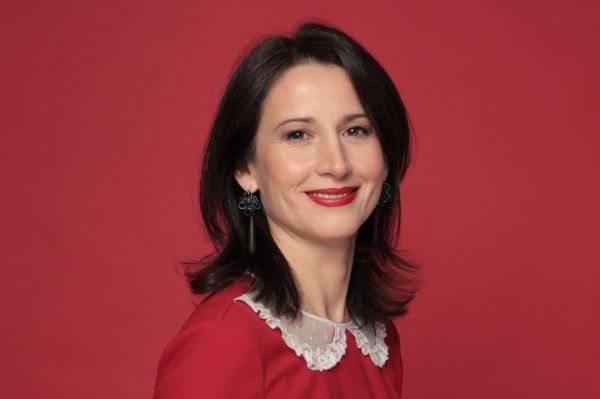
In a world with fewer 'bosses' and more responsibility for each individual, those who can set goals, self-organize, and take responsibility will survive!
Introduce yourself with a few words...
I am Elena Drecheva – a leader with over 25 years of experience in the field of information technology,
interest in business development, focusing on people, transformation, and
innovation. I believe that every change starts from within – with a clear vision, sustainable
values, and a desire for growth.
How would you describe your career in a few words?
A path filled with
lots of learning, obstacles, incredible opportunities, encounters with phenomenal people, and
breathtaking experiences. Every step forward has been a conscious choice – sometimes
hard, but always with the thought that I can learn more, challenge myself, and
create value for my team.
What was the most important choice that shaped your path?
In my student years, the desire to understand how things happen in practice. I studied Business Management at Sofia University – a major I wanted,
super interesting subjects, great professors and colleagues. At that time,
the corporate culture in Bulgaria was just starting. I decided in my 3rd year to start working
as an intern at the largest IT company at the time. Super useful experience! Then
I recognized and seized the opportunity that appeared before me – to create a company,
as I envision it, in which I believe, to invest efforts in its
development – even when things seem uncertain. Consistency and
patience are often underestimated, but they are what build sustainable success.
What would you like to know at the beginning of your career that no one told you?
That you don’t need to
know everything. Vulnerability is not a weakness – it opens the way to true learning,
partnerships, and trust.
How can a person understand which profession is suitable for them?
By being aware of
oneself –recognizing their strengths
and diligently working to develop them further and fulfill their dreams.
Which skills will be key in the next 10 years, in your opinion?
In the next
10 years, the world of work will continue to change at an unprecedented pace
– driven by artificial intelligence, automation, globalization, new business
models, and cultural transformations. This will require a combination of 'hard'
technical skills and 'soft' human competencies that cannot be
replaced by machines.
Adaptability and
resilience)
The ability to
cope with changes, to accept uncertainty as the norm, and to maintain mental
stability in challenging situations.
Critical
thinking and solving complex problems
The ability to
analyze information, to ask the right questions, and to find solutions
that do not fit a ready-made template.
Creativity and
innovation
Emotional
intelligence and interpersonal skills
The ability to
understand oneself and others, to build trust, to influence without dominating, and
to lead with empathy will be crucial for leadership.
Digital
literacy and technology skills
Not everyone
needs to be a programmer, but everyone will need to be able to work with digital tools,
data, and artificial intelligence.
Self-management
and autonomy
In a world with fewer
'bosses' and more responsibility for each individual, those who can set
goals, self-organize, and take responsibility will survive.
Continuous learning (lifelong learning)
The shelf life
of knowledge is shortening. Successful professionals will be those who do not stop
learning by the 70 – 20 – 10 method i.e. 70% from practice, 20% from others (colleagues, mentors, etc.) and 10% from formal learning
Cultural intelligence (CQ)
The ability to
understand and respect different cultures, to adapt to the global context, and
to avoid unconscious biases.
How to
build a network of useful contacts without appearing interested?
By approaching with
a genuine interest and a desire to give, not just to receive. People sense
sincerity – and it is our best ally.
What is the biggest mistake you have made in your career, and what did you learn from it?
I let strong
emotion guide me when making an important decision. I learned that it is better to
count to 10 and be rational in this process by relying on data and
anticipating consequences.
How to recognize a toxic work environment and when is it time to leave?
When fear is
stronger than the desire to contribute. When there is no space for opinion, development,
or respect. It is time to leave when we start to lose ourselves.
How to keep
our motivation in times of stagnation?
By returning
to the 'why' – to the inner reason why we embarked on this path. In
such moments, I start to learn and explore something new, interesting to me, that
I have postponed, set new goals, and self-motivate.
How to
achieve a balance between professional and personal life?
I don’t have to
make this choice because I work what I have dreamed of and actually,
my professional and personal life are one whole, my family supports me, and I
feel fulfilled.
When is it time
to change our career, not just the job?
When we feel
that our values no longer align with the path we are on. When we do not
recognize ourselves in our role and need a new calling.
If you had to give just one piece of advice to people seeking success, what would it be?
Be true to
yourself. Success is the result of consistency, boldly pursuing dreams, and
standing up for yourself.
What is your
definition of a 'successful career'?
A career that leaves
additional value for the company, for society, and most importantly for
the people with whom we have been in a team.