The work mentality in Germany is cooperative and solution-oriented
· Radina Ralcheva
Making money is not easy and is often a function of many factors that none of us control!
Introduce yourself in a few sentences. What does your work as daily commitments involve?
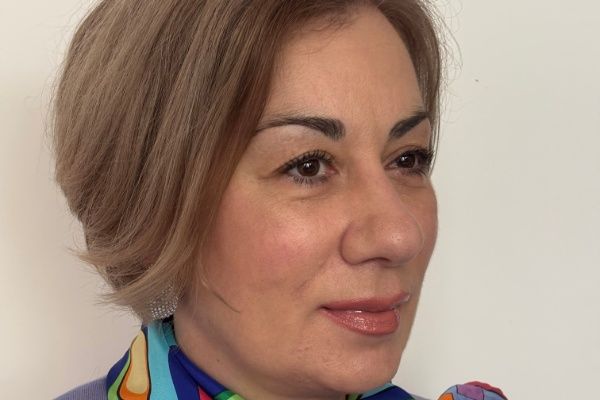
My name is Radina and I am Regional Communications Manager
EMEA at Corning, a company
from Fortune 500. The division
of the company I work for produces optical cables and the full range
of components and products that provide communication infrastructure and
connectivity. To give perspective on the scale of the company's business, I will say,
that so far Corning has provided
a huge share of installed optical cables – over 8 billion kilometers of
global optical connectivity is realized with our cables. This is a distance,
which is equivalent to 27 trips to the Sun and back. And my job is to take
care of the communications of Corning across the
region of Europe, the Middle East, and Africa. Our activity does not directly relate to
end customers, even though in reality everyone is our consumer. We work in
B2B segment and
this has its specifics and challenges for a professional
communicator. Much of what we do cannot be communicated
publicly, as it is either related to third parties (our clients) and active projects, or
represents a trade secret, or is under intellectual protection.
Our company invests huge resources in Research, Development & Engineering
(RD&E) – over one billion dollars just in 2024 - and
we have over 12,000 active global patents. In this sense, my work is quite
peculiar. The natural reaction of a communicator is to showcase the added
value that the company provides, but in my case, this cannot be done easily and
therefore I seek creative ways to convey the important without violating any of
the legal and competitive restrictions of the business. Additionally – we communicate quite
narrowly, not to mass media, and the editorial requirements of working with commercial
and specialized media are different and can also vary in different
countries. Every day I have between five and fifteen different projects that
I manage – some are small, others are larger in scale. I have an internal team, as well as
an agency that provides us direct media access to various key
markets in the region. There is a lot of coordination and alignment – both internally and
externally, accompanying every public appearance we make. In practice, I manage
the external, internal, and communications related to the leadership team across the region.
This can range from posts on social media to public presentations at
huge industrial forums, from articles for our internal intranet portal to
global annual reports and from local media engagements to global
information events or crisis communications. I cannot complain at all about
lack of interesting projects. And often I create them myself. 😊
In which country and city do you currently live and how did you end up there?
I live in Berlin, Germany. My move was the result
of a long-considered decision that would allow me to develop professionally,
on one hand, and on the other, it “freed” me from the internal emigration I was
living in my own country. I am a civic activist, I have always been,
I dedicated nearly 30 years actively to working for Bulgaria, which is
a modern, democratic, supportive, good place to live and develop, looking
towards the future and belonging to the world. At one point, it became unbearable to
bear what was happening in the country, despite the immense efforts of
limited groups of people to improve the environment. I am not someone who
settles. I do not participate in schemes, I do not accept relationships and work that
contradict my principles and values, I treat my
projects professionally and demand a lot, I know that. But I demand it first from myself after all. Anyway, my thought is that the militant mediocrity, the inability
to work honestly and professionally and even to live like that, at one point made me
realize that my task in Bulgaria was over and that I had nothing
more to give. Or that what I have to give is not of interest. So I simply decided to take another path and see how much I “worth” on a truly global
level. It turned out that I “worth” and very quickly found professional opportunities.
Germany was not my natural first choice, but it happened that Berlin offered me a very interesting option – to manage communication projects,
financed directly by the EU. I am talking about very large projects, some in over 30
countries and with budgets of around 6 million euros. This was a year and a half of
remarkable work experience, great campaigns, contacts with people from all over and
various backgrounds. Then I started at Corning and
that’s how it has been since then.
What were the biggest challenges you faced at the beginning of your stay?
I think this is quite different for different people. I
am a specific case – I had a very strong career and, I hope, respect in my
industry, contacts with all kinds of people, which is a huge strength, a well-organized life, etc.
And I was 43 when I changed countries. Not many people do that. In
Berlin, I knew two people, literally, and not very well. And in Bulgaria,
I knew everyone, almost. I did not know the language, I had not even been to this city before
– my first visit was for the interview for the job I started.
My thought is that this is a gigantic transition for a person. I think the biggest
challenge was internal – to find the right mental attitude with
which to navigate through all of this. And that was a test, for sure. The truth
is for me continues to be that success depends on you. Yes, there are circumstances, but
if you do not find the internal resource to cope, whether they are
favorable or not, you risk a lot. Can you imagine what this
change meant for me? But I made it look easy. Many people I have
spoken to tell me that. Well, it wasn’t. But inside myself, I was determined that this
would be a success story. That was the hardest part – to create that mindset and
determination day after day, as long as necessary. Of course, I received help and
support. My then-fiancé, now husband, without a shred of hesitation joined me
on this path. The two people in Berlin provided support with advice and assistance for
administration, logistics, information, etc., and I will be forever grateful to
them for that. We found friends and a community, we built connections. But this takes time.
At first, you come with two suitcases and a new job in a country whose language you do not speak and
whose customs you do not know, you do not know what to expect and whether you have the capacity,
knowledge, skills, and qualities to adapt, to be whole, etc. And on
top of that, you leave your entire previous life that you have built since you
exist, you leave your family, your friends, all the dear things and people, everything
that you have been, to walk this new path for which you have no guarantees, nor a support network,
nor even enough information about what awaits you. I don’t know if this is
the answer you expected, but this is my answer.
How did you overcome the language barrier (if there was one)?
I have not overcome it 😊 I started learning
the language, then came Covid and the classes were suspended. Additionally, my working language is
English, at home we speak Bulgarian, of course, and in Berlin, one can easily live
without knowing German. I realize that these are excuses, but I am trying to
explain why my German is still at a basic level. And yes, I know that I need to
change that. I will let you know when it happens.
What
resources or networks (local communities, colleagues, organizations) Inhelped you adapt?
I think I partially answered this question. I did not
rely on local communities or colleagues, I had no network here when
we arrived. At first, two of our acquaintances in Berlin helped with advice and administrative recommendations (I am not saying
who they are not because they are a secret, but because I haven’t asked them if it’s okay), and then, once the system here “sees” you,
the things start to fall into place. Of course, over time, great friends appeared who are an important part of our life here and with whom we help each other with all sorts of things.
What are the main differences between the work culture in
your current country and that in Bulgaria?
Oh, this... There are quite a few, at least in my observations. But
perhaps the most important for me are a few:
- Diversity
and multiculturalism – there are people from all over the world here, it is amazing what this
means not only for the work environment but also for the life environment. It is very nice. A huge lesson in
respect, consideration, tolerance, understanding, thinking about how a given behavior can
be “read” by people from another culture, etc. On the other hand – this
amalgam of people and qualities makes work much more successful and productive –
it is a huge wealth of experience, perspectives, ways to solve given
situations, etc. Just in my office, there are currently people from over 30 countries – every
day I learn something new. And every day I confirm something I know – people at
their core strive for the same things and just need an environment free
from prejudices to see how much they resemble each other
- Corporateness
and collaboration – this is somehow an unwritten postulate in working here. The focus is on
solutions, not on who to point fingers at, support is provided, discussions are held,
nobody imposes themselves, regardless of whether their position allows it, teamwork is emphasized, no one “steals” others’ merits and people are not belittled. Respect and
team spirit.
- It does not matter where you come from and how you look – in a work environment, what matters is what you
contribute to the work. People can be themselves at work and not be
judged for it.
- There are no important and unimportant people in the office – everyone does what their job requires and
strives to do it well. Not because someone is constantly hovering over their head and
scolding them, but because that is the work culture – not to be mediocre. And this with
micromanagement is almost non-existent. But people know that they bear responsibility and if
they make a mistake, it is on their account. Not that someone will explicitly point it out, there is no
need for that.
- Urgency
does not always mean speed. Here I rediscovered this knowledge – sometimes there are urgent
problems, but not speed, but the quality of the solutions takes priority.
If I have to summarize – the work mentality here is different –
much more inclusive, non-hierarchical, supportive, cooperative, and solution-oriented. And generally, the idea is not to create unnecessary stress and to work
together, with everyone contributing according to their professional tasks and skills. It is clear that I am summarizing, as well as that these are my observations and that there may be other
perspectives on the topic.
What
values and practices in the workplace impressed Inyou the most?
I think I answered this in the previous question. For me, it is
very pleasant to work in no blame culture of diversity, respect, consideration, and meritocracy.
Have there been
situations where cultural differences have Inhindered you?
To hinder me – no, maybe because even before I moved to Germany I had experience with international projects, campaigns, and colleagues, but there has certainly been a case when I was not prepared and realized that I might have crossed some invisible lines. The good thing is that this is a two-way process – it happens to me, it happens to others, and since we all know this, we accept that there is no intent, smile, and move on. And the next time we do not do it that way.
Otherwise, I remember that even now I sometimes forget that in
some parts of my region the weekend is on Friday and Saturday, not on Saturday and Sunday.
And so from time to time I have to reschedule meetings that I have organized myself and apologize to my colleagues.
How
does finding a job differ in your current country compared to Inyour homeland?
Well, the market here is very large, at any given moment there are
literally dozens, if not hundreds of open positions for every profession. Additionally,
the dynamics are different – many businesses, a lot of variety, many changes and
movement. Honestly, I don't know how the hiring process is going in
Bulgaria at the moment, but here it can take months and require up to four – five meetings and
interviews. My impression is that employers here are not in a hurry, even when
they are in a hurry. I mean, they prioritize finding the right person over speed. Oh, one more thing that I don't think exists in
Bulgaria. I'm talking about the so-called Works Council (in German Betriebsrat). It is not a
mandatory body and can exist in any company that has at least
five employees. The employees of the company decide whether they want it or
not, and limiting this right is criminally punishable. Its members
are voluntary and are elected by the employees through voting for a period not longer
than four years. The members of this “Employee Council” are protected from
dismissal, which is important, considering that the role of the Council is to represent all
employees and to serve as a bridge between them and the company in resolving
disputes, protecting the interests of employees, ensuring compliance with labor laws,
advocating for better working conditions, pay, incentives, and rewards, etc. It also takes care that if any tensions or
problems arise with the workplace culture, they are addressed. Why is this important for
selection? Because this “Employee Council” actually has a say in the selection process and can reject a candidate. In practice, even if you pass
all interviews successfully and the company wants to make you an offer, it cannot do so before the Council also approves.
Did you have to go through any additional
qualification courses?
No, not as a condition to work or to develop. But I am a big supporter of lifelong learning and I organize and find various trainings myself. My company offers many such
opportunities and as long as a person has the desire, they can be trained in various
fields.
Have you encountered
prejudices or obstacles because of your foreign origin?
No, not so far.
What would you
advise people who want to take a similar step?
Oh, tough question. I would say that it is good to be aware of what they are getting into. And not to believe too much in other people's stories – people tend to rationalize their personal experiences and present them in a favorable light for their personal psychological narrative. This applies to my
story as well, although I am aware of this phenomenon and consciously make efforts to
avoid it and to keep my narrative objective. I would also advise them to thoroughly research
the country, to assess whether they are really ready for such a step and to mentally prepare for everything related to it. If they start with the mindset that they are only changing geography, but everything else will remain the same, that is not a good
start. Such a change is much more complex than it may seem and
requires a certain mindset, according to which you may need to forget your previous practices and do things differently. It requires you to stop thinking of yourself in the categories you have thought of yourself in all your life
and to start thinking of yourself through your new environment and country. I do not recommend
staying in a limbo between before and now; you will need to decisively push off, mentally and psychologically, from the past and focus on the present moment and your future projection. This does not mean to
cut ties with your past or to neglect it, but it means to use it as a
stepping stone to move forward and not to cling to it. You just need to
internalize what your new reality is and work with the clear
understanding that it is what it is. And the other thing is not to think that someone owes you anything. People,
usually, will help you as long as you do not act as if it is a given
or their obligation. Your new country will certainly have systems and
institutions to guide you, but it is your job to find and use them.
And last but not least – the only sure way to fail is not to try at all. I tell this to my students, I tell this to friends who are hesitating. And I tell it to myself when necessary.
I hope this answer is helpful. I am generally willing to
talk to anyone who is considering such a step and share my experience. I have done it more than once
and will continue to do so because these are things that are not written anywhere, and often people who have walked this path do not want to share them.
If you could
go back, would you choose the same path?
Yes, I would. I have not received anything on a silver platter, nor achieved
anything easily; I have worked hard for every small or big victory, I have learned from
losses and mistakes and will continue to do so. As Nelson
Mandela said “I never
lose. I either win or learn.”
At the same time, I know that I am privileged to work
in what I want, to have choices, rights, freedom, horizons, opportunities,
access to knowledge, medicine, education, culture, travel, and all the
wonderful things that the world can offer. Not everyone has it this way.
What do you miss most fromyour homeland in a professional and personal sense?
In personal terms – my mom and my friends and loved ones. In
professional terms – that core of people with whom we worked for years for
the development and prestige of our profession, for example in BDA. I also miss some of
the things I had the opportunity to do for the first time. It is a huge wealth
to have the professional opportunity to be a pioneer in something, to pave the way and to
open a door.
Have you considered
returning and under what conditions would you do it?
No, I have not. At this stage of my life, I do not see reasonable
grounds to think in such a direction. My connection with my homeland remains strong,
but I have found that we understand each other much better when I just visit it, but do not
live there permanently.
What do you think about money? What is its influence on
your life? What is your advice to people who often ask themselves questions
related to money and how sufficient they are?
I don't think much about it, or at least not in that sense. For me,
money is not and will not be a goal. It is perfectly clear that it provides opportunities.
But my understanding is that if a person knows what they are doing and gives their best,
money comes as a consequence. I haven't worked just for money for a long time. If I ever did, actually. Someone might say that it is easy for me to say
that because I am not financially worried. And yes, and no. I am not financially worried,
precisely because I live according to what I said - I roughly know
what I am doing and constantly challenge myself to do it well. And no, because I neither
grew up with a silver spoon in my mouth, nor do I consider this situation a
given. I started working while still in university, not because it was necessary (my parents were
behind me), but because
I wanted to. From then until now, I have dedicated years in total to working for causes,
charity, or projects that do not involve payment, and I continue to do so. My point is that the material demonstration of success has never excited me. For me, other things are important. To be able to go to a concert of my favorite artist, regardless of the ticket price, to be able to travel, to be able
to explore in every sense of the word, to have access to good
healthcare, education, and similar, to be able to support my parents in
times of need, you know how it is with pensions in Bulgaria, to be able to afford time for
the things and people I like, etc. So, this is how I understand money – as
a means to do this and to have time for the things that are important to me. How much is
sufficient, I do not know. It depends on the person. If it is important for you to buy designer bags and
clothes for tens of thousands – then that is how much you need. If it is important for you
that your children receive a first-class education in Ivy League, then that is what you need to keep in mind. If you want a calm, simple life with simple things,
that is how much you will need. The only thing I can say is that the measure is what gives you
comfort and peace. I know that making money is not easy and
is often a function of many factors that none of us control. But at least I
think it is right for a person to do what is necessary to turn those factors that
he controls to his advantage and thus secure better opportunities. If tomorrow
I am left without a job because there are no insured positions, and no one needs my
expertise, I will change my occupation. And I can say that even if I sell
vegetables at the market, I will do what is necessary to be the most competent, prepared,
and pleasant vegetable seller. This is my approach to making
money.