Work is hard when you don't share common values
· Dorotea Filipova
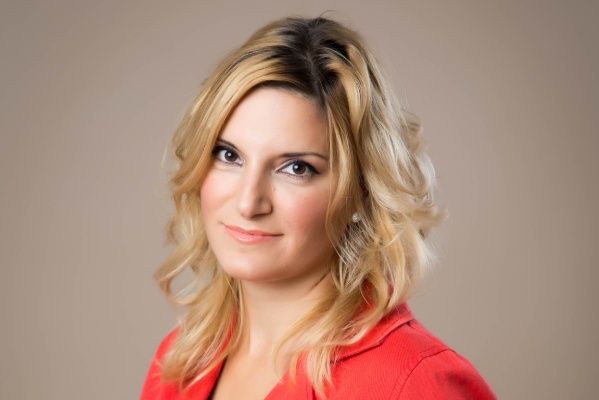
The busier you are, the more time you have for everything, as you organize yourself better!
Introduce yourself
in a few words..
Introduce yourself in
few words… or tell us about yourself briefly with phrases you often hear
when meeting HR consultant,
psychologist or recruitment expert. My name is Dorotea Filipova and as a representative
of this category of specialists, as an HR consultant, I meet daily with people who want to make
professional changes (and sometimes not only) or are simply looking for something better for
themselves, driven by various motives (for career growth, for better
compensation, better working environment, etc.). In this way, I continue
to study human psychology and the psychology of human relationships,
through my meetings with people. I graduated in “Psychology” and chose to specialize in
“Management and Development of Human Resources”. Since then, I have been working in this field for more than 20
years, consulting both companies and professionals seeking change. This April, on Easter, our company “Personnel Solutions Factory” (www.psf.bg) celebrated
9 years.
How would you
describe your career in a few words?
If we metaphorically
consider career as one of our life paths, my path had
branches that required making decisions and choices. There were
paths upward and paths downward; the path upward teaches you about persistence, effort, and
goal orientation, while the path downward gives you confidence that you are on your way and moving in
the right direction.
Career = Decisions
+ choices, backed by a dose
of intuition
What was the most important choice that shaped your path?
The choice to
listen to myself, to choose what I like more and to enroll in studying “Psychology”
was fundamental for my subsequent choices and decisions in my professional life.
What would you like to know at the beginning of your career that no one told you?
To listen more
and accept others' opinions as another, complementary perspective that would expand
my horizon. Like
any young person, when someone wanted to share their opinion, experience, or idea, my first reaction was “who is he to tell me”, “who is he to teach me”, “I
know better”, etc.J
How can a person understand which profession is suitable for
him?
There are people who reveal
their talents early, showing clear direction and interest in their childhood or teenage years, which lead to a specific professional
field. For others, it is more difficult, especially if they have authoritarian parents
or relatives who think they know better. There are also those who truly
do not know where to go…
In my opinion, the choice
of profession should follow personal interests and talents to bring
satisfaction. I always ask the question of what you love to do the most,
what you excel at and do with ease, and accordingly, we look for how to
connect those skills with the professional competencies of specific professions. If someone from
a young age seeks adrenaline through high speeds and extreme experiences, it would be hard for
them to be happy working in an office, sitting from 9 to 5. Another person who shows
creative and artistic inclinations would feel best in a creative environment;
marketing, advertising, etc. Nowadays, there are various methods and means,
that can help a person more easily orient themselves and choose the best
for them; career orientation questionnaires, career consultants, and even
more unconventional means like consulting a good astrologer can also be
guiding…
What skills do you think will be key in the next 10 years?
Adaptability and
flexibility, communication and social interaction skills, the ability to learn
throughout life and constant self-improvement, the ability to balance and
center oneself.
How to build a network of useful contacts without
appearing interested?
For me, every
contact in itself shows interest. And the way relationships develop will evaluate how the contact is used.
When the message is I am here to support you and be useful to you when
you need it, i.e. when you are the first to extend a hand and expect nothing in return.
What is the biggest mistake you have made in
your career, and what did you learn from it?
Years ago, I made the mistake of working with people with whom we did not share common
values twice. I learned my lessons and started to better research the people I
work with. Over time, it is a fact that my long-term working partnerships
are indeed with people with whom we have a similar philosophy of life and shared values.
How to recognize a toxic work environment and when is it time
to leave?
A toxic
work environment is one that drains your energy and with each passing day,
you go to work with less desire and motivation to work. On a physical level,
a toxic work environment leads to illnesses and physical discomfort, while on a
psychological level it leads to irritability and constant annoyance or the other
extreme: self-blame, depressive symptoms, and as a result frequent tardiness,
non-compliance with working hours, absences, and unproductiveness. If
we do not notice these symptoms ourselves, it would be good to listen to our
close friends, partner(s), or other members of our large family, for
whom they would already be visible and take the necessary actions to change the
environment.
What would you do differently if you could start
over?
I would not change
anything: I believe that everything happened in the best way for me. From the heavy and
difficult life situations, I have grown as a person and as an individual, and maybe
I would not be the same without them.
How to maintain our motivation in times of stagnation?
To stop, to
center ourselves and realize what is happening. To ask ourselves a few questions through
which to outline our path again; what do I want to achieve, how will I achieve it, and what am I doing to make it happen.
How to achieve a balance between professional and personal
life?
For me, the formula
is in the distribution of time – the busier you are, the more time
you have for everything, as you organize yourself better.
Everyone can
determine the important areas for them and strive to dedicate time to them in their daily lives,
until they become habits. For me, they are: time for work, time for
family, time for sports and personal care, time for self-improvement, time
for entertainment, hobbies, and interests.
When is it time to change our career, not just
our job?
When changing
one, two, or three jobs has not led to a sense of
satisfaction with work. Before making such a decision, a person would do well to have made the distinction for themselves whether they have fallen into a routine or their work
has truly run its course. For this purpose, I would advise first to
initiate changes at the workplace itself, i.e. to take on new work
responsibilities, to expand the area of professional competencies (by learning something new that would be useful and enhancing for their current job; e.g.
if it concerns an accountant or financial analyst, they could take
an educational course that would guide them on how to apply ChatGPT or another AI to optimize document processing or
their analysis, etc.) and despite the changes, if there is no
change in their feelings, then a career change is indeed necessary, not just a job change.
If you had to give just one piece of advice to people who
are seeking success, what would it be?
I notice that “successful people” are rarely recognized and defined as such
…. So, first of all, define what you put into the word “success”,
what success means to you and when/under what conditions you will call yourself “successful” … maybe you have already achieved it J
What is your definition of “successful career”?
To have time for
everything: work, family, sports, hobbies and interests, time for yourself and at the end of
the day to feel that you are doing things the right way, that
things are happening and the environment confirms it.