Working in Vietnam and Cambodia was an irresistible challenge
· Valentina Belcheva
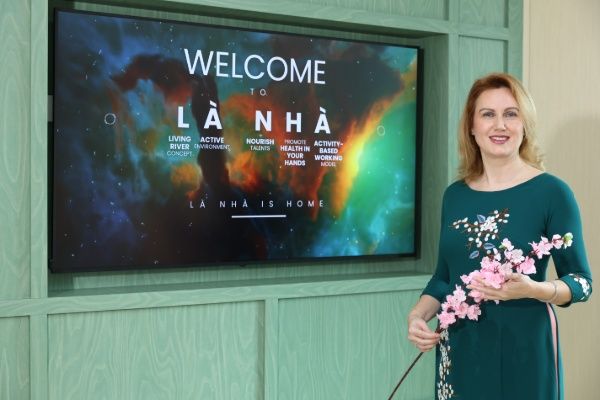
There was a moment when I hadn't seen the sun for 2 months, wrapped in smog, and I quickly realized that the concept of "walking" on the street does not exist!
Introduce yourself in a few sentences..
Hello! My name
is Valentina Belcheva, mother of two daughters, master's pharmacist and doctor of
medicine by education, soul, calling, and work.
I have been
working in a multinational pharmaceutical company almost exclusively in my 20 years,
which I have dedicated to the pharmaceutical industry.
I teach
pharmacy students as part of my moral commitment to pass on my
experience.
In which country
and city do you currently live and how did you end up there?
I currently live in
Ho Chi Minh City (also known by its old name – Saigon) – the largest city in
Vietnam and its economic center.
I ended up here as
a result of the classic development of professional growth for anyone who
embarks on the path of ExPat career.
After about 11 countries, with which I worked directly in Europe, the last of which
were Greece and Cyprus, and another 7-8 indirectly, my company offered me the irresistible opportunity
to find myself in the heart of the world's
economic tiger, as Asia is called, and specifically in Southeast Asia, with
responsibilities for Vietnam and Cambodia. It was absolutely irresistible to accept the challenge,
which took me and my family out of my comfortable living zone in good
old Europe, but also provided me with a career opportunity that far exceeds
standard commercial operations, and included responsibilities for the full cycle – R&D, production and commercial operations. Not least – to take on one of the Top 4 business locations for the company, and Top 10
in terms of absolute business size. All this at a historic moment of separation
from the parent company and the creation of a new Top 3 global player in Consumer
healthcare business.
What were the
biggest challenges you faced at the beginning of your stay?
The climate! I will
never forget how, stepping out of the airport in November, after 18-hour flights,
I was hit by the warmest wave I had ever felt in my life (and I had
claims to being experienced with the heat of Athens). The humidity made the feeling even stronger.
I quickly
realized that the pictures of crowds of people in Asia are the very reality. Everywhere, at
any time, the noise of the crowd is part of the landscape, and at the same time, this apparent
chaos works and things happen.
I realized that
the concept of "fresh air" is impossible in the urban environment of this tropical part of
the world. I noticed that I hadn't seen the sun for 2 months – hidden behind a thick layer
of smog, which is the result of millions of scooters that are on the roads around the clock. In fact,
"walking" on the streets here does not exist as a concept.
I also had to
accept that it is impossible to drive here, especially since my company prohibited it for
safety reasons.
A few encounters
with the meaning of "spicy" reminded me to be very careful about what is written in the menu.
And so on ….
How did you
overcome the language barrier (if there was one)?
In no way
could I overcome the language barrier. In other countries where I have lived,
I started courses, I had basic knowledge. For Vietnam, my employer explicitly emphasized,
that part of my role is to help the team improve their English skills. In the first months, communicating with people who claimed to speak
English, but with a strong accent was a challenge in itself.
In my personal time, Google
Translate with options for simultaneous
text translation solved a large part of the challenges of the language barrier.
What resources or networks (local communities, colleagues,
organizations) In helped you
adapt?
Colleagues expat-and gave me some guidance, a lot of reading posts in expat groups and
in the network gave me additional information, but that does not help you adapt.
It only happens with time. And different people accept changes in different ways.
Rather, in
my conversations with foreigners, I calibrated my feelings with what they shared,
so I knew I was not alone.
Sometimes the
differences in culture and environment are so great that you just accept them and learn
to live with them. There is no need to "adapt" because that
means you have to change in some way. And sometimes that is impossible.
What are the
main differences between the work culture in your current country and that in
Bulgaria?
In fact, the differences
are general – starting from the super hierarchical approach, which is deeply
rooted here and reaching the very strong unions that make the work environment
quite secure and protective for workers, contrary to our perceptions of
existing exploitation of labor in this part of the world. The dynamics of
the labor market is so great that especially in large economic centers,
the competition for better career
opportunities and better pay is in unison with the speed of business development – double digits. From the perspective of someone working now in Asia, I have the feeling that
the development of Europe has stopped or is very
strongly slowed down.
What values and practices in the workplace impressed you the most?
Having worked for one
company for almost 20 years, there were not many unknowns for me, because our
corporate values are global. But the local practices, which are expressions of
the local culture, both fascinated and surprised me. There was no need to
motivate the team to come to the office more often – they enjoyed the opportunity to be
together. Every special moment is captured with a professionally
quality photo – Asians just love to be photographed. But I also inevitably encountered a reminder
that I work in a country that is communist in its political orientation, with all the
inherent procedures of this system – many formalities in meetings, solemn
signing of documents, etc.
Have there been situations where cultural differences have
hindered you?
Oh yes. But
the difficulty is when you are not aware of the cultural difference. Once you understand
about a particular feature, there is no problem managing any situation. The challenge
is that there are quite a few differences, but people in Asia definitely like Europeans,
they understand that many local customs are incomprehensible to us and are willing to help.
How does finding a job differ in your current
country compared to Your homeland?
I don't know if I am
the right person to answer, I myself have not looked for a job or hired people in Bulgaria for years. But I definitely think that the difference is in
the scale – a country with a population of 100 million, which is a priority market for every
global company and a huge number of local companies, definitely makes a difference in
career development opportunities and diversity.
Did you have to
go through any additional qualification courses?
No, not for taking
any position. Qualification courses are part of our corporate culture
and are regular and related to the career aspirations for development
of everyone.
Have you encountered prejudices or obstacles due to your foreign
origin?
Definitely yes –
from the most negative to the most positive. I can say that in Asia, no one emphasizes the
difference between different European nationalities – you are a European and that in
most cases is very positive. Truly negative prejudices
I have encountered in Europe and with Europeans based anywhere in the world. Everyone
who has worked in Asia begins to realize why Europe is declining in population, in
economic growth and influence in the world, and this is deeply related to the mentality of
people on the old continent.
What would you advise people who want to take
such a step?
Go boldly forward!
If you could go back, would you choose the same
path?
Oh, yes! I would even
accelerate, because now I know what the factors were that slowed me down on
this path.
What do you miss most from your homeland in professional and personal terms?
My home! To walk
on the streets, without crowds and without the danger of being run over on the sidewalk. To be able
to eat ajvar whenever I want. To go to the theater!
I have no professional
shortages – in fact, that is why I have to live outside Bulgaria.
Have you considered returning and under what conditions
would you do it?
That is always an
option – if a professional opportunity arises that is at least at the level of
the current one – I would gladly do it.
What do you think about money? What is its influence on your life? What is your advice to people who often ask themselves questions related to money and how sufficient they are?
The topic of money
has never been my motivator, nor driving force. I have refused numerous
offers focused mainly on money and I think I have made the right choice for myself.
I have always been a strategic player with a long-term perspective –
money is a short-term asset.
If for someone
the amount of money is what makes them happy – I cannot give advice there.
This one-dimensional model of happiness is not my specialty.