25 year career development - from salesperson to leader in two European directions
· Radoslav Koshkov
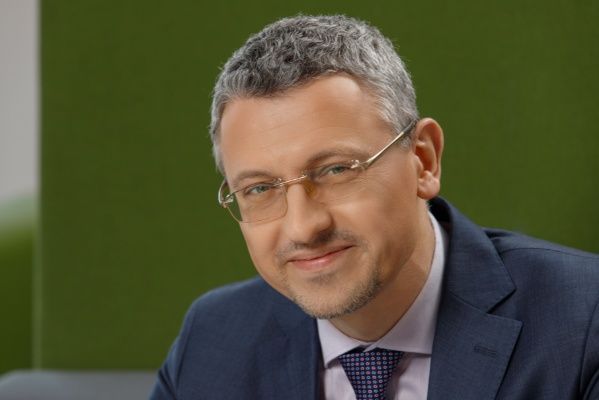
For me, it has always been very pleasant to be able to provide exactly this kind of support for the people in my teams, to build trust, so that everyone can reveal their strongest sides!
New position: Europe Services CommEx and Channel Leader
Company: Schneider Electric
Introduce yourself in a few sentences and brief highlights from your career development so far?
I have been part of
Schneider Electric for almost 25 years. The company is developing very dynamically, which allows people to develop as well. I have been a salesperson, a small team manager, a sales director in various directions, and then a manager of operations in Bulgaria, Albania, North Macedonia, and Kosovo. After this position, I started looking beyond the borders of the country and the region, and that’s how I joined our service direction – first in a role for Southeast Europe, and currently in the Global team, responsible for Europe in 2 directions in the service business.
What motivates you to accept this new role and what are your main goals for the position?
Overall personal development – I don’t mean just career development, but overall development: to embrace new things or to have a more global perspective, to learn from practices from around the world. The opportunity to cover many markets and see how the same technological and business trends unfold in different ways under the influence of various local factors is very enriching. Also, the adaptation of global processes, practices, and strategies according to the specifics of a country or region. Bulgaria is a good starting point for this: often we don’t realize it, but there is very good practice here that can be successfully replicated in other markets. In fact, it often turns out that something applicable here is valid on the other side of the world and vice versa.
What professional or personal qualities do you think will help you succeed in your new position?
To a large extent, these are the main qualities that are imposed as the culture of the company – curiosity and desire for development, learning new things, professionalism and quick action, skills for working in a diverse team, the desire to find meaning in the things you do for yourself and for clients. I would also add adaptability, listening, understanding the local context, but also the motivation to uphold global strategies.
Modern business requires much more flexibility than before. The ability to switch roles teaches us this and helps us enter and exit different contexts, to be ready for the unexpected. Over the years, I have developed this quality, and it pays off multiple times with each position change.
What challenges do you expect to face and how do you approach change management?
Service services are a business direction that is currently on the rise, and therefore the challenges are in the direction of strengthening and managing growth well. Effective energy management, constant monitoring of the condition of critical assets and equipment, as well as predictive analytics are not new solutions, but businesses are still getting acquainted with them and need quite a bit of consulting to choose the right service plan for themselves. This is partly due to the fact that there is a dose of uniqueness in every client, and solutions need to be adapted.
The change we strive to manage, is precisely around this: companies want to be efficient, but they don’t know exactly where they can achieve results; they want to avoid power interruptions and downtime in operations, but they don’t know either what their critical points are or how to secure them. Therefore, adopting a consultative approach, cloud maintenance, and equipment monitoring requires personalization, consistency, and continuous upgrading. I would summarize it this way – change in our case is managed with consistency, rather than with abrupt actions. No one likes abrupt movements.
What is your approach to teamwork and building a strong internal culture?
Teamwork and a strong internal culture are part of our company’s business card, so in this case, I am lucky because this responsibility does not weigh solely on my shoulders. The main role of the leader is in personal example. Everyone strives to follow and emulate leaders – consciously or not. The behavior you want a team to have is the behavior you should demonstrate in return. If distrust is demonstrated, the team cannot trust you in response. Therefore, trust and the desire to see and bring out the best in people based on their strengths is the right way.
What would you like people to say about you in the company in a few months?
It is tempting, of course, to think that we are bringing something new and different that has not been done before, but things are usually much simpler. Like everyone in a leadership position, I would be happy to bring something of myself, and yet, above all, my goal is to create trust and to discover and develop others. Our business is governed by trust, and for me, it is a conscious goal to be recognized with justified trust. It opens doors, especially in global structures. In such matrix structures, the ordinary employee needs the more experienced colleagues to develop not only as a professional but also to navigate successfully in the organization according to
their strengths. For me, it has always been very pleasant to be able to provide exactly this kind of support for the people in my teams, to build trust, so that everyone can reveal their strongest sides.