Access to information is the greatest advantage of modern society
· Marta Neshova
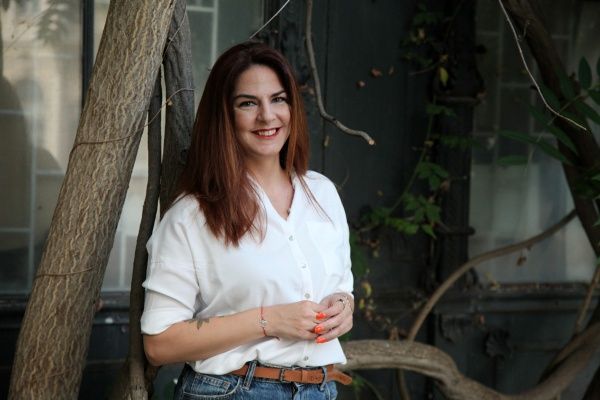
I don't believe in workaholism – an addiction as dangerous as any other!
Introduce
yourself in a few sentences..
My name is Marta Neshova. Communications
are my calling, my son – my great love and my most important teacher,
digitalization – passion and challenge.
Currently, I am CMO at Vaisman Investment Group, where I
immersed myself in the depths of investment topics and project development in the
real estate sector and all accompanying services, after years in the IT field. Here I discovered
for myself the opportunity to engage in managing people, projects, and processes
and to “do” marketing and integrated communications in the way I
understand it – with measurable results, value, and real impact.
What did you dream of becoming in your childhood?
These days I recalled that there was a
period in elementary school when, impressed by the authority of a wonderful
teacher, all the girls wanted to be teachers. In fact, even now I really want
to pass on my knowledge and good practices to develop not only good professionals
but also our environment.
At what age did you earn your first money? Tell us an interesting story?
I think I must have been 15,
the summer after 9th grade, maybe. I worked as a promoter in BTL campaigns in stores
– I sold laundry detergent by staining different fabrics and then removing the stains,
it was a lot of fun and I enjoyed it a lot. I couldn't wait to start earning my
own money – mainly for treats at that time. Since then, I haven't
stopped working. At 21, I was already working at one of the leading PR agencies on
the market.
What are the main factors and examples that shape us as individuals at an early age and form our interests? What is your recipe for curiosity, sources and fountains of information and inspiration at this stage of our human development?
I have been fortunate that for me the main
such factor has been the example of my family and social environment, which have
shown me different perspectives and have given me all the opportunities to try this and
that. I really like the concept that you can do anything until someone tells you that
you can't and explains exactly why it won't work.
I am also teaching my son now that access to
information is the greatest advantage of modern developed society and
the ability to reach and use it correctly is invaluable.
Has there been any significant difference in your perceptions in more mature age about what motivates you to do or not do something?
Actually none, but I think this is a very
human motivator – the desire to see the results and meaning of
the things you do. I assert that for me it can be a calling and to change
the world for the better and both the role of CEO of a technology
company and that of a cashier in the local fruit and vegetable shop are equally important.
Whose decision was it where to pursue higher education and what to study? Was this decision correct, looking at it from today’s perspective?
Since my choice of SMG for secondary
education, the decision has always been entirely mine and one hundred percent supported by
my loved ones, despite my mother's hesitations.
This has been the case since my choices of
hobbies, sports, and courses in childhood, such freedom I have given to
my son. After the mathematical high school, I decided to study Public Relations and
this unconventional choice was the best decision I made. For me, communications are
part of my identity, not just work, and this is how I have achieved this
situation, for which people say that you never work because what you
do brings you joy.
Share more about your interests, knowledge, skills, and hobbies?
I must admit that I don't have a specific hobby
and this bothers me a lot because I find it hard to divert my mind from the work
process. But I actually love my job, it truly is my greatest passion and
when I am in a period of challenge and inspiration, it energizes me a lot.
Perhaps my hobby is learning new
things, every day, more and more. I have very serious interests in the field of
digital transformation of services, processes, and communication and a large part of the
so-called free time I dedicate to researching and testing new concepts and
tools.
In my personal time, I read or listen to fiction,
watch series and movies, we all love to go to the cinema together, spend time at the sea,
and try different types of food.
Would you change your profession today and which fields of activity capture your interest?
Actually, I wouldn't. Sometimes when my
energy level drops, I vow that I will go back many years and rediscover programming,
but it quickly passes.
They say that personal brand is everything that people say about you when you are not in the same room with them. What would you like to hear today?
I want to know that each and every one of
the people I have met for one reason or another would choose to work
with me again.
Emotional intelligence, adaptability, and flexibility, as well as our soft skills are key conditions for success in recent years. How do you cope with the daily challenges of life to stay in good shape and mood?
I strongly believe in authenticity and
honesty and not at all in the mantras of positive psychology and artificial
cheerfulness. I don't believe in workaholism – an addiction as dangerous as any
other. I have my moments when I have no energy or am not at my best
and I don't try to mask them. I think it's important to remember that
we are all human, there are no machines and it shouldn't be expected. I also constantly
remind myself that I am a happy person who loves my job and despite that it is
just a tool, everything important is with my family.
What are the most important conclusions you have made so far for maintaining the right communication considering the different characters of the people you meet every day – colleagues, friends, relatives?
Since this is the core of
my professional profile, I have two main postulates for communication with people:
- Everything starts with listening with a sincere desire to understand
and delve into the understanding and needs of the other party and
- To put yourself in “their shoes”, trying to see
things through their eyes, to understand their perspective and only then
you open your mouth to react and respond.
What do you think about money? What is their influence on your life? What is your advice to people who often ask themselves questions related to money and how sufficient are they?
Money is a necessity and a result. Not
a goal, not a motivator, not a reward. For me, they are sufficient when nothing is missing
for me and my family and I still sleep peacefully at night.
What is the most valuable career advice you would give to people?
To never stop developing and learning things
that inspire them every day.