Being a good leader does not just mean holding a high position
· Gogo Krustev
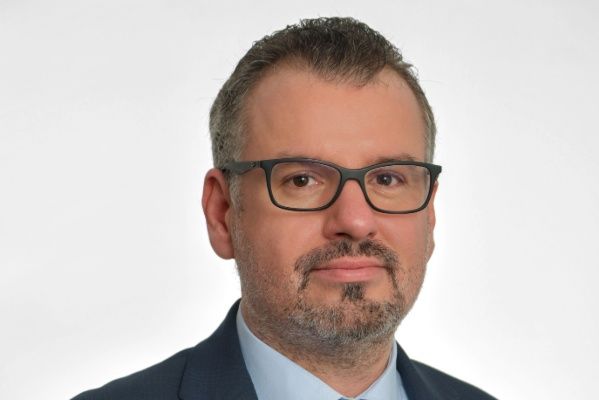
It doesn't matter what exactly you offer, but how you offer it and that if you find the right approach, everything can be achieved!
Introduce yourself in a few
words..
My name is Gogo Krustev and I
have been working in the pharmaceutical industry since 2006, I am a pharmacist by
education. During my career, I have been in both large, so-called Big
Pharma companies as well as in
smaller companies, both in original and generic, as well as in retail and in the tender business, head of various departments in
various therapeutic areas, and for the past year, I have been the head for Bulgaria
of a biopharmaceutical company focused on innovative medicines that we
manage to secure for the markets in Central and Eastern Europe, including
Bulgaria.
How would you describe your
career in a few words?
It is difficult for a person to
describe what I have worked on over the years, but if I must…, I would
say that I am satisfied with what I have gone through. The good thing is that over
the years I have gone through the entire career ladder and I dare say that I have a view
of the different functions – from medical representative, through brand manager,
sales, marketing manager, head of marketing team and head of
representation.
Being a good leader does not
just mean holding a high position – it means understanding people,
the processes and the challenges at every level in the organization. When a person
passes through the different stages of career development, they not only accumulate
experience but also build empathy, respect, and a real understanding of how
business works from the inside.
Does climbing the ladder step by step provide opportunities?
- To understand
the details of operational work – something that often remains invisible
from above.
- To build trust and authority among colleagues, because you have been in their place and
know what their job requires.
- To make more informed decisions based on real experience, not just on theory or
reports.
- To manage with understanding, not with distance – the leader who has gone through all
levels knows when to demand and when to support.
- To be placed directly in a leadership position without this experience can lead to a lack of
connection with the team, misunderstanding of real problems, and making decisions that do not
reflect the needs of the people on the ground.
True leadership is built with time, experience, and respect for every role in the organization. There is always more
to learn from your colleagues. If you feel this way, then you are in the right
place.
What was the most important choice that shaped your career?
The most important choice was back
when I had to choose what to pursue. As a person from a medical family,
my parents really wanted me to be a doctor, but I remember the specific moment – on
a bench at the Vasil Levski stadium in Sofia, when I decided that I would study pharmacy and
work in this industry – since then 25 years have passed including
6 years of study, but what I decided back then and to this day is the most important decision
in my life in terms of career and I do not regret it for a moment.
During my career
in the industry, I dare say that the most important decision I made was
to leave my first employer, where I spent almost 12 years at the beginning
of my career. You understand that after so much time it is not easy
to make the decision to start over – to have to prove yourself, to learn how
different companies operate, to learn how to work with new people and in new
therapeutic areas, but actually this gave me the opportunity to learn a lot - how
to approach the market, how to structure teams, what and how to prioritize.
This gave me a broader perspective on the industry. I managed to meet different
cultures and learned about different
ways of motivation,
effective communication and different ways to achieve the necessary results. This
helps you develop adaptability and emotional intelligence – key
qualities for leadership today! For
the next 7-8 years, I learned much more than if I had not made a
change. Every transition – new role, new company, new industry – brings with
it a chance to step out of your comfort zone and build new skills.
By accepting change as an opportunity, you not only adapt – you grow.
I am grateful for everything that has happened to me. And I haven't even mentioned the people
and colleagues I met who will remain friends for life – they are
the most valuable part of the entire journey.
How can a person understand
which profession is suitable for them
Here I am lucky,
I managed to understand early in life and I am happy with what I do. But
if I have to be honest, a person needs to try to understand what is for them. To
understand which profession is “yours” is not
a one-time act, but a process of self-discovery – of oneself, of possibilities and of
reality. Do not be afraidto try something new – even if it is not
“perfect”, you will learn something
about yourself and you will be one step
closer to what you are looking for.
Sometimes the path to the right profession goes through several
“wrong”, but this is not lost
time – this is experience that you will always have.
What skills do you think will
be key in the next 10 years?
In the next 10 years,
leaders in the pharmaceutical industry (but also in many other
industries) will need to develop
and refine skills that reflect both technological advancement and
social and economic transformations not only in the healthcare sector but also in the new realities of the business environment.
Leaders will need to
make decisions in a dynamic environment – with rapidly changing regulations, new therapies
and global health, economic, even military challenges. Adaptive
leadership will be key – the ability to respond quickly and adjust
plans in real time. It will be difficult to
plan 3-5 years ahead, as before. The use of artificial intelligence,
machine learning, and big data analysis will be at the core of strategic
decisions. Leaders will need to be able to interpret complex information and turn it
into action. Decisions will no longer be made solely with profit in mind, but also with consideration for the long-term impact on society, the environment, and employees. This requires systematic thinking and ethical leadership.
Understanding the human aspects of decisions – how they affect teams,
clients, and society – will be increasingly important. Emotional intelligence will
help for better communication, motivation, and conflict management. Decisions
will need to take into account global factors – geopolitics, supply chains,
cultural differences. This requires a global perspective and cultural sensitivity.
Employees will also need
to develop a combination of technical, digital, communication, and adaptive
skills that will keep them competitive in the next decade. In the
future, employers will seek people who not only perform tasks but think strategically,
ask questions, and propose solutions.
Regardless of the role – the ability to work with digital tools, understand
data, and use technology effectively will be essential. In a world of
hybrid work and global teams, the ability to communicate clearly, work with
different people, and build trust will be key. Companies will value
employees who think “out of the box“, offer new ideas, and are not afraid to
experiment. Employees,
who invest in their own development – through courses, certifications, new
languages or skills – will always be one step ahead.
How to build a network with
useful contacts without appearing interested?
Building a network of
contacts (or the so-called networking) is a strategic process that requires time,
authenticity, and consistency. For me, it is extremely important when you build
contacts – to have a goal – not just to connect with different people, but with people from
whom you can learn something, people who pull you forward, people with whom you have
the same interests. For good professionals, it is important to be active in
professional circles – to participate in conferences, webinars, training,
industry events. It is extremely important that when you connect with someone, you
show authentic interest, know what they do, know what their interests are, etc. Networking
is not just about "taking," but also about "giving" – show that you
can be helpful too, with information, knowledge, or that you can contribute to
some common goal. As for whether you look interested – I think
that is no longer a problem – it is clear that you are interested! There is no need for theater
– we all know how the world operates – we all know that we are in a given place to
build contacts – stop people and get to know them. No modern
leader will refuse you, on the contrary – they will be glad that you are interested in
them and their work. Well, of course, they should be modern 😊
What is the biggest mistake
you have made in your career and what did you learn from it?
I am not sure what the biggest one is,
but I know which one I learned the most from. When I was younger, I was quite
assertive and as you might expect – I wanted to impose my opinion. Participating in
a project, I suggested restructuring the team and including it in the new project,
because I did not see a way to handle this task without people in the field. At that time, I was refused
and since I did not propose another solution, the project was given to another colleague. With
time, he did the same and managed to include people in this project, but without being
so persistent in pushing his ideas.
This changed me quite a bit over
time. I concluded that it is not important what exactly you offer, but how you
offer it and that if you find the right approach, everything can be achieved. And
also, that things should never be accepted as is – if something cannot be done,
it is necessary to find another solution, so that it can be done – see, in the end, it could.
Since then, I provide solutions. Now I also require the same from my people – it is not only
important to identify the problem, but to also be able to provide a solution – even more than
one! 😊
How to recognize
a toxic work environment and when is it time to leave?
Recognizing a toxic
work environment can be done by observing certain behavioral and
organizational patterns that repeat and negatively affect employees. There are
extremely many signs of this, starting from lack of communication,
micromanagement, favoritism towards certain employees, and a sense of
injustice, lack of recognition and opportunities for development, overload,
ignoring problems, and leading to headaches, insomnia, fatigue and anxiety – related to work.
The question of when it is time
to leave is more complex - leaving a job is a big decision, but sometimes it is
the healthiest and right choice. You do not need to fight with
unfulfilled for years and acquire "Stockholm syndrome," life is
too short not to work on what you love. As I said above, for
me, leaving my first employer gave me the chance to learn extremely
many new things and to develop my expert skills much faster. Every new
beginning is associated with change, uncertainty, but also with opportunities for development – this
is a chance
to learn something new about yourself and the world around you. Starting over requires
courage – to step out of your comfort zone, you often ask yourself "Will I manage?", "Am I doing the
right thing?", but in the end, the satisfaction from a new beginning comes when you feel
that you have taken a step towards a better version of yourself or your life.
What would you do
differently if you could start over?
I would say that I am one of
the lucky ones who like the path they have taken and would repeat it again.
Of course, looking back from the distance of time, I could have done
many things differently, my perspective is definitely changing with my experience and age.
For example, I would have started experimenting with internships,
volunteering, freelancing earlier – everything that gives real experience and helps you understand
what suits you. I would invest more in communication skills, emotional
intelligence, time management – they are often more important than diplomas. I would
have sought mentors much earlier, people who inspire, support, and challenge you
to grow. In my life, they came naturally and now I dare to
say that they are close friends. I would have learned to say "no" to projects,
that do not develop me, to people who do not respect me, to fears that stop me from
achieving my goals.
How to keep our motivation
in times of stagnation?
Here it is very difficult for me to
answer because I somehow manage not to lose enthusiasm in difficult moments –
I somehow know that there is always a way to achieve your goals, one way or another.
I have heard various advice for maintaining motivation, but for me, the most important thing is
to remind yourself why you started, what you want to achieve, what inspires you?
I often seek in such moments to surround myself with inspiring people - motivating
colleagues, mentors, friends – they can give me the energy that I lack.
I also divide my
big goals into small steps. Every achieved step gives a sense of progress – as they used to say, "the elephant is eaten bite by bite" 😊
How to achieve a balance
between professional and personal life?
If someone knows, let them
tell me… 😊 The truth is that when you do what inspires you,
you do not feel it as a burden and therefore somehow you are protected from the
now fashionable burnout. I have often observed how colleagues from Western countries,
when they are on vacation, cannot be reached in any way, no matter how urgent it is.
At first, I admired it, but actually, when you have pursued a certain
goal for a long time and the opportunity opens up at that moment – should you miss it?
Will you not regret it? I have had to negotiate a big deal, just
while I was on vacation – I exchanged emails, wrote on Teams, met online. If I had missed that deal,
just because I was on vacation, I would have regretted it a lot. That is why I always carry
my computer with me and if necessary, I work! And honestly, it does not weigh on me – important
things are important. Saying this, my family knows me and respects this decision of mine,
because they know that I would not feel good if I missed opportunities. Well,
sometimes they want compensation for the time I was not with them 😊
When is it time to change
our career, not just our job?
I have no experience in this, nor
have I had to. I suppose that changing your career, not just your job,
is a big step – and often comes after a deep inner feeling that something
fundamental is wrong. It is difficult for me to determine what the signs are, but perhaps a lack
of meaning and inspiration - you are not just tired – you feel that what you
are doing has no value for you. You may feel that you have changed, but
your profession has not "grown up" with you. The truth is that for me it is much easier to
recognize the signs when a profession is right for you - not everything is easy, but you are
motivated to learn and develop, you get immersed in tasks and often forget to
look at the clock, your work allows you to apply what you are best at,
you see how what you do has value, etc.
If you had to give
only one piece of advice to people looking for success, what would it be?
It is very difficult to give
only one piece of advice, I personally have many. If it has to be one, maybe it would be –
"Surround yourself with people who lift you up" – only then will you always learn continuously
new things, because success is not a destination, but a process.
What is your definition
of a successful career?
A successful career today
is not measured only by titles, salaries, or prestige. It is dynamic, personal, and
multifaceted – combining professional development, personal satisfaction, and
sustainability over time. The best definition I have heard, but do not remember where
it is: "A successful career today is not the top
of the ladder, but the path you walk with confidence, meaning, and joy." But
most importantly, do not follow others' notions of success, but create your
own definition. Success in this to all of us!