Denmark and Bulgaria - with differences from culture to perception of the 'normal'
· Antonia Petkov
Here, references from former employers are of exceptional importance. Cover letters are still read carefully. Working hours are structured to support personal life and hobbies!
Introduce yourself in a few sentences. What does your work consist of as daily commitments?
I live in Central Denmark.
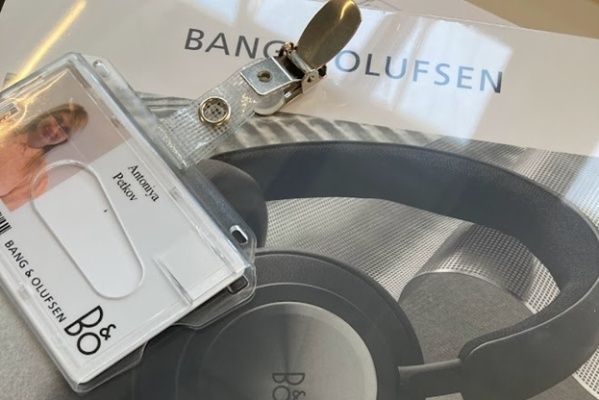
My work is diverse and full of surprises. I am involved in personnel selection and I am a senior consultant at Bang & Olufsen. I have been living in Denmark for eight years and during this time I have been part of several iconic Danish brands in various industries – from military software to gaming and high-end electronics.
My job includes meetings with many different people – I select niche professionals, blue-collar workers, and senior management. In addition, I lead the development of the employer brand in the company and I am currently developing the overall strategy for its growth.
The dynamics of my profession involve me in meetings with representatives of companies like Apple, Google, Maserati, and Ferrari. I work between two cities – Struer and Copenhagen. Our company also has an office in Sofia, and traveling for events and between different locations is a frequent part of my daily life. I work globally, and my meetings often take place in different time zones.
In which country and city do you currently live and how did you end up there?
For the last 7 and a half years, I have been living in a small, picturesque town located on a fjord – Ringkøbing. My story began when I decided to move in with my boyfriend, who was finishing his education in Aarhus at the time, and we initially settled there. Subsequently, he received a job offer as an engineer in a company operating in the renewable energy sector, and we moved to Ringkøbing.
What were the biggest challenges you faced at the beginning of your stay?
Denmark and Bulgaria are fundamentally different countries – from culture to perception of the 'normal'. The dynamics of life are different, and the way a person searches for a job – especially in smaller towns – is extremely challenging, even for locals. The process of finding a job can take more than a year and usually happens through personal contacts, not through online ads.
How did you overcome the language barrier (if there was one)?
I wouldn't say I have completely overcome it. My work environment has always been in English. I speak Danish at a conversational level – mainly thanks to my children, who attend the local education system. In the small town where we live, I often communicate in Danish, but the level of English in the country is high, which helps.
What resources or networks helped you adapt?
The key was proactivity. There was no international community in the town, so I contacted the municipality and we created one. Professionally, both times work found me through headhunters. Adapting to the local community mainly came through contacts around the children – at kindergarten, school, and various activities.
What are the main differences between the work culture in your current country and that in Bulgaria?
Many. The Danish work culture is flat, informal, and based on trust. Mistakes are not punished but accepted as learning opportunities – often literally 'celebrated' with cake. Communication with senior management is informal, and people maintain professional distance.
Here, references from former employers are of exceptional importance. Cover letters are still read carefully. Working hours are structured to support personal life and hobbies.
Have there been situations where cultural differences have challenged you?
Yes. The first was when I presented an idea that I was very proud of. My manager listened to it with a smile and said: 'Wonderful idea, Antonia, but we won't be able to implement it.' The smile misled me – I thought she was joking. This was a cultural clash that taught me to read non-verbal communication better and to give and receive feedback in a new way.
How does finding a job differ in your current country compared to Bulgaria?
The workday here starts early – around 7-8 AM – and ends at 3-4 PM. Productivity is high, lunch breaks are short, and time after work is for hobbies and family. The week is 37 hours, and working hours are flexible.
Did you have to go through any additional qualification courses?
Not necessarily, but I was looking for development opportunities on my own. I started at a small agency without qualifications from a Danish institution, which was a challenge.
Have you encountered prejudices or obstacles because of your foreign origin?
Yes, often. But I am fortunate to work in a field where I can openly talk about it. Diversity is part of my job.
What would you advise people who want to take a similar step?
To carefully consider what they want, to develop their personal brand and professional network, and most importantly – to believe in themselves.
If you could go back, would you choose the same path?
Yes. The path was not easy – I restarted my life, but I learned humility and openness to differences.
What do you miss most from your homeland in a professional and personal sense?
Sometimes I miss the closeness and spontaneous connection with colleagues.
Have you considered returning and under what conditions would you do it?
Yes. For now, we stay here because of the high professional ethics, tranquility, and the environment in which our children are developing.
What do you think about money? What is its influence on your life? What is your advice to people who often ask themselves questions related to money and how sufficient they are?
I have turned down jobs with high salaries because they took too much of my personal time and creativity. I like that in Denmark there is a guaranteed basic standard of living, and the pursuit of more is a personal choice. This creates an environment of respect, patience, and personal development – something I sincerely wish for Bulgaria as well.