Denmark - order, rules, trust in institutions, healthy living and family focus
· Nikoleta Belicheva
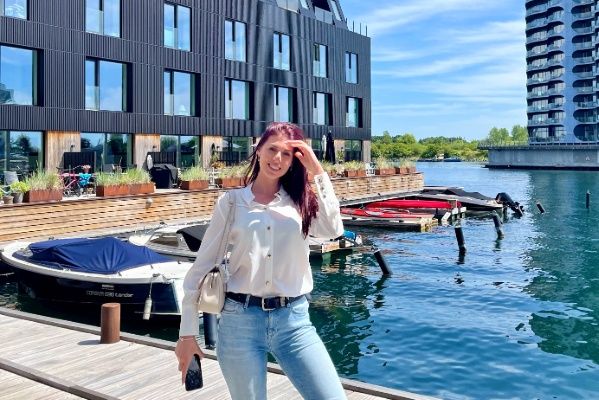
Danes strongly prioritize the balance between personal life and work. After the workday, most people spend time with family, exercise, or engage in charitable activities!
Introduce yourself in a few sentences.
What does your work as daily commitments consist of?
My name is Nikoleta Belicheva and my work experience is in sales over the last 6 years, which I spent in Bulgaria after returning from abroad. My professional experience so far includes corporate sales in the insurance and hospitality sectors, as well as real estate sales. Currently, I live in Copenhagen, I am taking a digital marketing course and training to become a Health / Wellness consultant as my personal passion for many years, while preparing for a significant change in my personal life.
In which country and city do you currently live and how did you end up there?
I live in Denmark, Copenhagen since the summer of 2024. I arrived here with my partner, a diplomat at the European embassy. Before Denmark and Bulgaria, I lived in England and Florida for a total of 6 years. I went to study at Oxford (Oxford Brookes University), where I spent 3 years in this charming student town, and in the meantime, in the middle of the program, I moved to London for 1 year for an internship - that was my first job at 19 years old, it wasn't easy, but I call it “my little military training.” After England, the desire for new challenges (and more sun) took me to Palm Beach, Florida. I worked at an upscale resort with very high standards for customer service, where I laid the foundations of my understanding of a delicate and professional customer experience process with attention to detail.
What were the biggest challenges you faced at the beginning of your stay?
At the very beginning of my stay in Denmark, there were no serious challenges, as we were supported administratively by the embassy, which facilitated the integration into the system. However, my observations and personal experience show that many expats face difficulties in finding rental properties due to high demand and limited supply, especially in areas close to the central part of Copenhagen.
Unlike the real estate market in Bulgaria, where a broker takes on the client's search and assists diligently throughout the process from organizing and conducting viewings, negotiating terms for the tenant/buyer, and closing the deal, in Denmark brokers seem to be more focused on protecting the interests of the property owner, and not so much on the service of actively taking on the client's search. Contacting agencies and brokers by phone/email was not easy to establish when I tried to reach out, but colleagues from the embassy helped organize viewings for us during the period we visited before moving.
One challenge for me was also the first winter here, given the shorter day and lack of regular sunny days for a long period. The strong wind and humidity make the temperatures feel lower than the actual ones shown by the thermometer, which is important to know when choosing an outfit for the day.
When I was looking at job postings at the beginning, I noticed that many companies in the corporate sector require Danish as a condition of the posting. Therefore, this was a surprise to me given the widely spoken English in Denmark.
How did you overcome the language barrier (if there was one)?
For the first time, I felt the difference of living in a country where the main language is not English, and this has its challenges at times. A great convenience is that in Denmark almost everyone speaks English at a good to high level. Communication in everyday life is relatively easy for me, but there are moments when I feel the language barrier when receiving online communication, reading products in stores, printed materials, letters by mail, etc. Then AI comes to the rescue. :)
The good thing is that Denmark is a country with very good social policies towards citizens and registered immigrants, and offers a free course for learning Danish, which I am considering enrolling in to help me in the process of finding a job in the near future.
What resources or networks (local communities, colleagues, organizations) helped you adapt?
My active work in sales in Bulgaria taught me that creating warm contacts through networking and personal meetings with new people is an extremely valuable and important skill. Personally, I was fortunate to meet and build friendships with Bulgarian ladies here, through connections from my friends from Bulgaria. To build a professional network, I attend events open to foreigners to meet new people and build new contacts.
I am definitely grateful that in less than a year I managed to create interesting and sincere new friendships, which for me is one of the most important things in life to feel fulfilled and part of the community.
I would advise anyone who changes their location, regardless of whether it is a new country or a new city, to be active in proactively seeking and establishing new contacts and friendships - attend events, become part of a club with common interests or organizations whose mission you believe in. Connect with people, invite them for coffee or lunch, and maintain good relationships with those who resonate with your values.
What are the main differences between the work culture in your current country and that in Bulgaria?
Although I do not yet have personal professional experience in Denmark, my observations as a resident here and from conversations with friends indicate that there are significant differences in work culture. In Denmark, the workday starts relatively early, around 8:00 AM for the corporate sector and some institutions, and ends around 4:00 PM. Even in many cases after 3:00 PM, many work activities are halted and you cannot reach an employee by phone or in person. I notice that the biggest bike traffic starts around 3:30 PM-4:00 PM, when parents go to the kindergartens to pick up their children. Danes strongly prioritize the balance between personal life and work. After the workday, most people spend time with family, exercise, or engage in charitable activities.
Another peculiarity, as I mentioned above, is that it is difficult to find a job with only English, even though it is widely spoken. Of course, there are opportunities, but they are more limited, and without a good command of the Danish language, the chances of getting a job in the field you are looking for can be relatively restricted.
I notice that some employers require knowledge of English plus another relevant language for the company, such as German, Swedish, Dutch, etc., which would be a plus for people who do not speak Danish.
What values and practices in the culture of the country you live in impressed you the most?
Danes are a very sporty nation and technologically advanced! There are extremely many sports activities and events, such as marathons, triathlons, diving, etc. We live by one of the lakes and I always see people running from 5:00 AM to 11:00 PM at night, maybe even later. For many people here, running is like a religion; you constantly observe people running around you, regardless of whether it is raining, whether it is windy, or how low the temperatures are. They are Vikings and are not afraid of the weather. :)
I like that there is a strong focus on a healthy lifestyle and most places offer healthy food options. A large part of cafes and restaurants have a variety of salads, fresh sandwiches with protein and whole grain bread, light snacks, etc. I believe this should be the standard everywhere in the world. Eating is such a fundamental step in building healthy habits, and it is just the beginning of the pyramid.
Also, Danes are a nation that strictly adheres to order and follows the rules. Public order is at an enviably high level - there is trust in institutions; the organization of infrastructure, transport, and state administration functions more than well. The facades of buildings are maintained regularly, although many of them were built about 100 years ago, they look impeccable. People pay high taxes (around 45-55% +/-), but receive full health care and a favorable environment.
Electronic services and the digitization of administrative processes are fully integrated into the system here. Without the necessary electronic platforms and registrations, it is impossible to open a bank account, receive government communication, and other important services during your stay.
Have there been situations where cultural differences have troubled you?
The main moments when my partner and I felt the cultural differences are that in Denmark social activities (business events, etc.) end earlier and seem to happen less frequently in terms of organizing conferences and corporate events compared to Bulgaria. While in Sofia we attended events every week from 6-7 PM to 10 PM, here most events end by 5-6 PM, at most 7:00 PM, so that Danes can return to their families.
Overall, people's daily lives start earlier and end earlier.
Did you have to go through any additional qualification courses?
As I mentioned, I am currently taking a digital marketing course to enhance my knowledge on the topic, but my personal goal is also to enroll in a Master's in Business Administration during my stay here.
Have you encountered prejudices or obstacles due to your foreign origin?
Honestly, I haven't felt any.
What would you advise people who want to take a similar step?
I would advise them to first visit and feel the place where they want to live. It is good to get acquainted with the peculiarities of the culture, because although neighboring countries like Denmark and the Netherlands can have significant differences in lifestyle.
Also, specifically for Denmark, I would advise them to look for remote work if possible before moving, so that the employer can assist with the administrative establishment, including obtaining a personal number and potentially finding a property will be easier. For newly arrived immigrants, Denmark can be a difficult place to adapt without a clear plan and understanding of the system.
If you could go back, would you choose the same path?
Yes. I am grateful that I have the opportunity to live in a Scandinavian country and get to know a new culture.
What do you miss most from your homeland in professional and personal terms?
Personally, I definitely miss my friends and family, so I try to return every 2 to 3 months.
Professionally, I miss the network of contacts I built over 6 years in Sofia, and the fact that I started to know the job market and culture in Bulgaria, while here things are still new to me.
Have you considered returning and under what conditions would you do it?
Life has taught me not to make grand plans for years ahead, so I am flexible and open-minded.
What do you think about money? What is their influence on your life? What is your advice to people who often ask themselves questions related to money and how sufficient they are?
I believe it is important to maintain the balance of distributing expenses and to handle money with discipline - we set aside certain funds for saving/investing (even a small amount is better than nothing), prioritize important needs and obligations, and allocate part for desires and hobbies. In my opinion, money itself does not make people more or less happy, but the way we reach them and improve ourselves is what will bring us satisfaction and happiness in the long term. I believe that when money comes “easily” to us, we do not appreciate it in the same way as when we have contributed to its creation.
Regarding how much is enough, the answer is different for each person, depending on the standard they want to live by.