From a leap into the future in the USA to rethinking life in India
· Dimitar Galabov
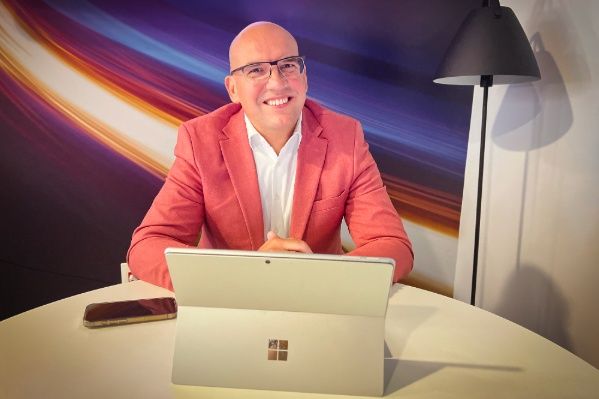
The world does not wait, it changes – be part of the movement, not the status quo!
Introduce yourself
in a few words..
My name is Dimitar
Galabov and I have been the executive director of Sutherland for Bulgaria since 2015, during
these ten years the company in Bulgaria has significantly expanded in
operational and financial terms, reaching almost 2000 employees from all
over Bulgaria, serving millions of clients of 25 international companies from seven
different industries. I have nearly 30 years of management experience in the field of business
development and management of customer service centers, shared and outsourced services, and business processes. I have held management roles in
international companies from various sectors – telecommunications, pharmaceuticals,
automotive industry, information technology, and business process management.
For you,
the journey around the world is:
Traveling is my
way of rediscovering the boundaries of my thinking, as well as a source of inspiration,
new emotions, and knowledge. I look forward to every trip with anticipation because it energizes me,
opens new horizons, introduces me to different people and cultures, and gives me
the opportunity to discover new perspectives – both for the world and for myself.
I return from every trip richer, energized, and deeply inspired.
How many countries
have you visited so far? Share an interesting story or highlights from your
travels:
I have visited exactly
42 countries and I can easily list them because since the very beginning, back in
the distant 90s, I started collecting a souvenir plate from each
country, which I carefully keep in a special box. I have wonderful memories from
so many places that it is hard for me to choose a specific story. My last
memorable trip was to Goa, India, in the company of more than 20
compatriots with different professions and interests, living in different parts of the world.
We rented scooters and for ten days we explored exotic places and interacted with the locals
everywhere we stayed. India is a country that makes you rethink
almost everything – how you perceive wealth and poverty, happiness and unhappiness.
The contrasts, colors, aromas, emotions – everything is at the maximum level.
Do you like to
repeat destinations? Why “for” or “against”?
I believe that
truly getting to know a place begins on the second or third visit.
On a repeat trip, one can discover new aspects, immerse
deeper into the culture and environment, or relive something that left a strong
emotion – this is undoubtedly an advantage. On the other hand, the world is so
vast, and time is never enough. Therefore, I usually avoid returning to
already visited destinations. Still, I make exceptions for two reasons – business
trips or when I want to share with close people a place that has strongly impressed me. For many years, my daughter and I maintained the tradition of traveling to
countries I have visited and spending time just the two of us in my favorite places. Now that she is independent, I continue this tradition with my son.
Our next destination is China – we already have tickets, we have planned
the route, and we eagerly look forward to immersing ourselves in a completely different world –
history, technology, cuisine, way of life.
What was
your first trip that truly changed you as a professional?
The first trip
that gave a serious direction to my life was to the USA. My parents went there
in the early 90s with a green card, and I had the opportunity to visit them
in the summer. At that time, Bulgaria was just starting to emerge after the changes, and many
of the things we take for granted today were simply not available then.
The contrast was striking – dynamics, business, infrastructure, level of services,
goods, scale... This trip was like a leap into the future. There I saw how to
run a successful and sustainable business, what the benefits of true
competition are, how adherence to rules provides peace and predictability for
everyone. There I understood what uncompromising quality means and how the details in
service and business make the difference between average and global success. I returned
with countless ideas, determined to work hard and honestly, setting a high bar for
myself. I believe that this, along with the chance to be in an excellent working environment, was
key to my development as a professional.
What do you
learn about yourself and your professional skills when you are in a new cultural
environment?
I learned that
flexibility, tolerance, adaptability, seeking different perspectives,
and the ability to listen are extremely important. In a new cultural environment,
your “working practices” may prove inadequate – you are left only with
your human approach and the ability to build trust. Every new culture brings me
different understanding of people and their perceptions – sometimes something that
seems logical to you is completely foreign to your partner. I discover how others
think and react in situations, and this expands my worldview, gives me new
approaches, and enriches my philosophy of life and business. I believe that every culture
is a huge wealth and should be respected, studied, and preserved.
Have you met
people or ideas during your travels that have influenced your career path?
Definitely – both
people and ideas. Every new acquaintance is an opportunity for new friendship,
an unexpected business partnership, or simply new knowledge. In Israel, I met an
entrepreneur who showed me the power of failure as a step forward, not backward.
Since then, I regard failures as an inevitable companion on the path to
the right product or service. Over the years, I have built valuable contacts with
partners and friends around the world, with whom we mutually help each other in life and business,
sharing experiences, knowledge, recommendations, contacts, and assisting each other.
Do you think that
your travels help you expand your professional network? How?
Without a doubt.
Every new acquaintance opens doors to new contacts and opportunities. I have noticed
that the best business opportunities come not from formal meetings, but from
spontaneous conversations at the airport or in a café. During my travels, I
meet people with different professions and interests – each of them brings invaluable experience
and knowledge that can prove useful in a given situation. I also believe that
when you give and help selflessly, the moment inevitably comes when you receive
something in return – exactly when you need it the most.
What skills
do you develop the most when you travel, and how do they reflect on your work?
When I travel,
I always observe, listen, be curious, and seek the new and different. I filter what I
learn through my reality and find inspiration to improve the way I do my work. Adaptability,
patience, and strategic thinking are among the skills that directly help me in managing teams,
projects, and negotiations.
Is there a city
or country that has inspired you for a new business or project?
From every trip,
I return with at least one business idea. I often come across an unknown service or
product that I could apply in Bulgaria, or well-known solutions
elevated to a completely different and much higher level. A year ago, I was impressed
by Oslo, where I spent a week with a group of Bulgarian businessmen. I realized that in
Norway, sustainability is not just a trend, but a business model. This inspired me to
think about projects that combine profit with care for the environment and
society.
When you are in
a foreign country, do you feel more motivated or more distracted? Why?
When I travel for
pleasure, I fully immerse myself in the local culture, cuisine, sights, and
relaxation – then I am more distracted and strive to relax as much as possible. In
business trips, it is the opposite – I am highly focused, always well prepared,
and motivated to give my best. In these cases, I am completely focused
on achieving the specific goals I have set for the trip.
Are there
destinations that act as a “restart” for your creativity and ambition?
Yes – some places
strongly inspire me. For me, such a destination is Dubai, where one understands
the true meaning of the phrase “nothing is impossible”.
How do you
manage the balance between work and pleasure when you travel?
I always find
a way to achieve balance – I have my tried-and-true methodology. When I travel for
pleasure, I dedicate an hour in the morning to urgent and important work tasks,
after which I indulge in a fulfilling rest. In the evening, before the daily
program ends, I set aside another hour for work. In business trips, it is the opposite –
I plan time, most often in the evening after work meetings, to feel the atmosphere
of the city. I often leave a free day after completing business
commitments to get to know the local culture and way of life. This way, the trip
feeds both my professional and personal energy.
How have
travels changed the way you perceive the value of money?
Money is an
instrument whose value is determined by its ability to meet our needs
and realize our goals and dreams. New knowledge, positive emotions, and
experiences are invaluable wealth, and travels provide an abundance of all of
this. I learned that the value of money depends on the context – with 5 euros in India,
you can have a culinary experience that costs 150 euros in Paris. Therefore,
I believe it is better to invest in experiences rather than in shiny packages.
Do you travel with
the aim of finding new ways to make money?
Yes – every country
is a market, every culture – a new way of thinking. Almost always, when I travel for
work, I also look for opportunities for new business, investments, and expanding
contacts.
What lessons on
financial independence have you learned from different economies and cultures?
Financial
independence is not simply measured by the size of income, but by the ability
to live freely, without heavy dependencies, and with wise management of resources. In
different economies and cultures, there are various approaches to
building stability – for Thais, for example, minimalism and a moderate
lifestyle bring satisfaction, while other nations rely on investments
and savings. The pursuit of financial security is a universal goal for people around
the world. The methods differ – in some places, real estate is a key
instrument, while in others, stock markets or pension schemes dominate. For example, in
Bulgaria, real estate is a key investment for many, while in India,
the focus may be on gold or family businesses.
Is it better to
spend on experiences rather than material possessions?
Material things
age, memories – never. However, I would not place one before the other – the balance
strongly depends on a person's life phase, their material
security at that moment, and their personal preferences. If a person has
unmet basic material needs - for example, if they urgently need a
car to do their job, it would not be wise to spend
resources on a trip to Dubai. But I believe that when those needs are
met, investing in experiences is the best solution.
How do you see
the future of digital nomad life?
Given
the dynamics with which everything is developing, it is difficult to make an accurate forecast
even in the short term. The digital nomad lifestyle is not my
forte, but I believe that working from anywhere will become the new standard - but
only for those who know how to manage themselves and their time.
Are there
specific countries that are more favorable for work and investments?
I believe that business
can develop anywhere, as long as there is a clear vision, strategy, understanding of
the market and local specifics, as well as adaptability. Every country has its niches,
which are favorable for investments. Still, some countries offer a better environment - clear rules,
stable economy, predictability, government policies,
qualified workforce.
If you could
choose one place in the world to develop your next big idea, where would it be and why?
I would focus
on countries like Azerbaijan, Kazakhstan, and others from the region that were once
part of the Soviet Union. I believe this is a good but still undervalued market in
terms of foreign investments and innovations with global potential.
What are the
destinations you would definitely recommend visiting and why?
London - for
culture and traditions, New York - for business courage and ambition, Lisbon - for balance and
inspiration, Dubai - for scale and progress, Delhi - for culture and contrasts, Oslo
– for balance between business, society, and nature.
What is the
career advice you would give based on what you have seen around the world?
The world is vast
and offers endless opportunities. Follow your dreams, set clear goals,
and act boldly forward. The world does not wait, it changes – be part of
the movement, not the status quo.