How can managers convey their messages more clearly and effectively?
· Magdalena Ivanova
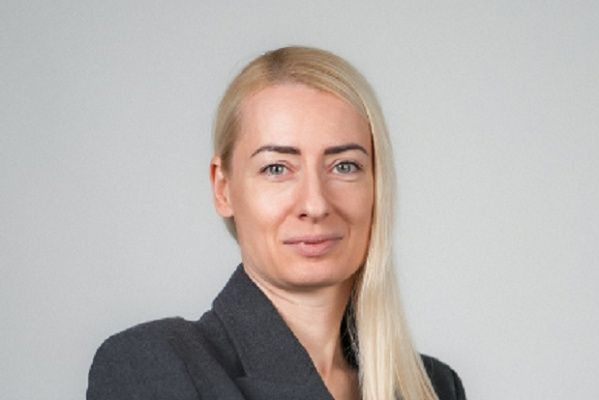
Building relationships in the context of the business environment should be based on the question, 'What can I offer?'
Introduce yourself
in a few words..
My name is
Magdalena Ivanova and I am the founder and manager of Executive Content – a specialized agency for
communication services for managers and leaders. I have over 15 years of experience in
media, mainly in business media, including as the editor-in-chief of the website of
Bloomberg TV Bulgaria. I have worked as a PR expert in two banking institutions, and
in recent years in the healthcare sector. I have conducted trainings for various audiences on crisis
communications, media communications, internal communications, change management,
employer branding, corporate communications as a prerequisite for
business growth, conflict management, and more.
How would you
describe your career in a few words?
My career has
moved so far along the path of journalism and along the path of PR. In both
fields, I have gone through all the steps and have gained solid
practical experience.
Over time, I have been convinced that managers at the middle and high
management level, business leaders, and professionals in a given field achieve
higher results when they use professional help to express their
ideas in an understandable language, so as to capture the attention of the other
party. That is why I focused on creating communication services, which help managers convey their messages effectively.
What was the most important choice that shaped your path?
This is a choice
that I make continuously – to never stop reading, learning, and staying up to date with all the news in my profession. Ultimately, lifelong learning is
part of the expertise we can offer to the clients or the organization we
work for.
What would you
like to have known at the beginning of your career that no one told you?
At the beginning, no one
told me how much of your personal time the profession I chose could take. Of course, one learns on the go how to adapt, and at different
stages of life, this requires different approaches and mindsets.
How can one understand which profession is suitable for
them?
It’s hard for me to
say how, but it is certainly very important for a person to be aware of themselves, of
their strengths, and to use them in the best possible way. For me, it was an
internal conviction that this is what I want to do – I’m talking about work
related to writing. And accordingly, writing has found various ways to express
itself – either through journalism or through PR.
Which skills do you think will be key in the next 10 years?
In my opinion,
communication skills will hold leadership positions in the next 10 years,
because no matter how much technology and artificial intelligence develop, without
communication, no area of business can exist. The ability to present ideas convincingly, both to the team and to clients and investors,
will also be among the key skills we need. Leaders will need to
develop their skills to inspire and motivate their teams so that
necessary transformations can happen as effectively as possible under the influence of
technological advancement, climate and demographic changes, etc.
How to build a network of useful contacts without
appearing interested?
Building
relationships in the context of the business environment should be based on the question
'What can I offer?'. When we share useful information, contacts, and
are ready to offer help, trust is created in a natural way. In
addition, for our contacts to be 'useful', relationships must be
built and maintained over time. Only then will we have people we can truly
rely on and be useful to.
What is the biggest mistake you have made in
your career and what did you learn
from it?
As a mistake for
myself, I can identify a moment when in my earlier professional years
I burned a bridge to another colleague just because they made me feel
uncomfortable. Over time, I learned that work is work, and if someone behaved
badly for one reason or another, it was because they couldn’t do it any other way, they
didn’t know how to cope with themselves, or there was some external reason for
their behavior.
How to recognize a toxic work environment and when is it time
to leave?
If we do not
feel good in a given workplace, if we are not properly valued, if we do not receive
opportunities for development – it is time for a change.
What would you do differently if you could start
over?
If I could do
something differently, it would not be related to my profession, but to my education. If
I had the opportunity, I would have completed a master's degree abroad. This provides a different perspective,
an additional way to improve the language, and people and contacts that
we would not otherwise meet.
How to maintain our motivation during times of stagnation?
In a moment of
stagnation, I believe we should reflect on what causes this period – our personal choice or the specifics of the work process. There is nothing wrong with moments
of stagnation; they are part of the normal cycle of life and work. Of course,
it is good to be aware of whether we are talking about a normal period of
stagnation, laziness, or if there is another reason for being more passive at a given moment in our lives.
How to achieve a balance between professional and personal
life?
The balance between
work and personal life is very fragile, and the right answer for each person is
different. I am increasingly convinced that it is not so much the number of hours spent working
or the hours dedicated to family that matter, but their quality. We can
spend three hours next to the child, checking our email on our phone, but it is completely
different to have active time together.
When is it time to change our career, not just
our job?
When a person
constantly feels dissatisfaction with their work, even if they change their job. The lack of meaning should be the red flag that we are not in the right
place. I do not want to delve into the topic of burnout here, because with it,
a person may simply need a much longer break from any
work to restore their balance. Not least, a person must be
mature enough for the change and ready to walk the path to it.
If you had to give just one piece of advice to people who
are seeking success, what would it be?
Success should not be
sought as an end in itself; it comes when we are 'burning' for what we do. Besides,
it is hard for me to imagine that in the world we live in, there can be success
without continuous improvement and learning.
What is your definition of a 'successful career'?
A successful career
is one that satisfies us and does not interfere with our personal life and health.
#Magdalena_Ivanova #Executive_Content #Communication_Services