I connect companies seeking investments or sales with suitable investors
· Zorina Dimitrova
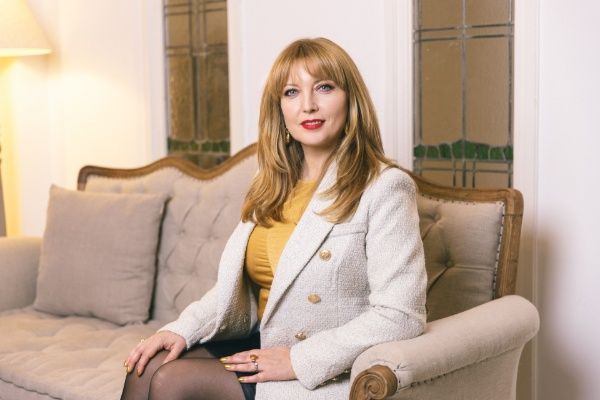
Austria is the fifth country in which I live. This is a country that values balance. People do not "overwork"!
Introduce yourself in
a few sentences. What does your work as daily commitments consist of?
My name is Zorina
Dimitrova Dimitrova - a name that often brings smiles and questions abroad.
People think that the repetition is a mistake, but it is not. I have my own business, in
which I connect companies seeking investments or wishing to sell with
suitable investors. On the other side – I help investors find
the right businesses according to their strategic goals. In addition, I provide
consultations related to the business model and long-term development of the companies.
My work includes daily online meetings with clients and partners – mainly from
Europe and the USA, sometimes also from Latin America. I also host a podcast – Grownlearn
podcast – in which I interview experts in the field of investments and business
growth. The topics are diverse – from leadership and mental resilience to
crypto, AI, and new technologies. My podcast serves both as marketing and connection with
new clients, as well as a personal source of inspiration and awareness.
In which country and city do you currently live and how did you end up there?
I have been living in Vienna,
Austria for 15 years now. I ended up here shortly after I graduated with an MBA in Spain,
during the global financial crisis in 2010. Austria was the only
place where I managed to find a job. I started in group strategy at a telecommunications
company and happily worked there for six years. After that, I started a series of my own
businesses – some successful, others not so much, but all full of lessons.
What were the biggest challenges you faced at the beginning of your stay?
Austria was the
fifth country I lived in. By that time, I was already used to moving and
adapted quickly. I was lucky – I already knew people here, friends who helped me
navigate and introduced me to new people. This made the transition
almost seamless. For me, cultural differences have never been an obstacle,
rather a resource – something to work with, not against.
How did you overcome the language barrier (if there was one)?
I enrolled in
german courses to improve it. Although I already spoke it well, and
until now my working language is mainly English, because I work with international
clients. I have always tried to learn the language of the place where I live – that’s how I learned both
Spanish and Dutch years ago. You learn best when you need the language – when you can’t go on without it.
What resources or networks (local communities, colleagues, organizations) helped you adapt?
The network of
alumni from my MBA university was of great help. Regular meetings were held in
Vienna where I met new people and created natural contacts. At
that time, I also joined Internations – a platform for foreigners living in
different countries. There, I participated in various initiatives – exhibitions, skiing, skating,
bars, even walks. I also built strong connections in my corporate work
then – colleagues with whom I continued to meet afterwards.
What are the main differences between the work culture in your current country and that in Bulgaria?
I have worked in
the same international corporation in both Bulgaria and Austria. The company culture
was dominant, so the differences in national culture were less noticeable. People are different, yes, and that affects communication and dynamics.
But in terms of processes, expectations, and quality of work – there were quite a few similarities.
What values and practices in the workplace impressed you the most?
In Austria,
balance is valued. People do not "overwork". In large corporations, it is rare
to see someone staying late just to prove themselves to the boss. This,
of course, is starting to change – in the current economic climate, many
people seek stability, and employers have more weight. But the value of
personal time remains.
Have there been situations where cultural differences have challenged you?
Bulgarian
culture and the warmth in relationships between people are unique. Austrians are
quite reserved. It is difficult to reach close contact, especially with locals who have not
lived abroad. Over time, I realized that it is more natural for me to
communicate with other expats or with Austrians who have gained international experience and
have a more open worldview.
How does finding a job differ in your current country compared to your homeland?
The difference is not
that big. When the economy is booming, finding a job is relatively easy in both
countries. But when the market shrinks – it becomes difficult everywhere.
In both countries, personal recommendations and networks are crucial – in
Austria even more so.
Did you have to go through any additional qualification courses?
No.
Have you faced prejudices or obstacles because of your foreign origin?
Yes. Austrians
place great importance on academic titles. When I realized this, I started to
emphasize that I have an MBA. I noticed that this automatically leads to greater
respect. In addition, I have used my foreign origin as an advantage.
It sounds paradoxical, but the fact that I am different has often led me into boardrooms,
full of local men – and has given me an advantage, not a hindrance.
What would you advise people who want to take a similar step?
To work on
their sense of self-worth. This is the most important thing. It comes when you know yourself,
your history, your roots. Bulgaria has its wonders. When you know them and
compare them with the world, then the sense of value comes naturally. And it provides a foundation
for stability, wherever you are.
If you could go back, would you choose the same path?
Usually, when I look back, I remember the good moments. And the difficult ones – I filter through humor. From today’s perspective, I would choose the same path. But another path could also be just as interesting, just as meaningful.
What do you miss most from your homeland in professional and personal terms?
I miss the
people. The nature. The spontaneity. The adventures that in Bulgaria lurk behind
every corner – sometimes on the street, sometimes in the gaze of a random person.
Have you considered returning and under what conditions would you do it?
Yes, I am considering.
I would return for a suitable business opportunity or a political cause that I
truly believe in and where I can make a real contribution.
What do you think about money? What is their influence on your life? What is your advice to people who often ask themselves questions related to money and how sufficient they are?
Money follows
energy. When a person is excited, in love with what they do – then they open up to the world. And the world responds. People come. Opportunities come. And with them
– money. It’s not the other way around.