If you want a real challenge, go to Tibet
· Yuliana Borisova
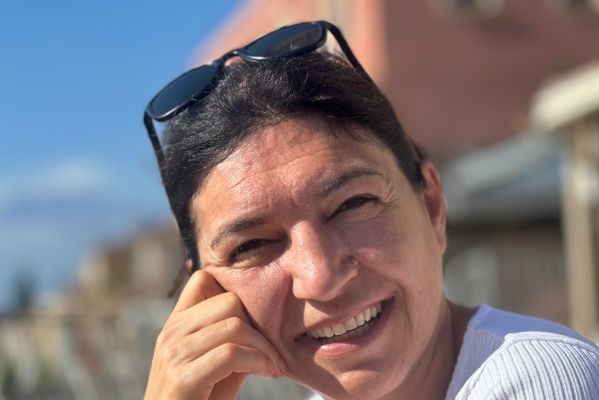
Traveling is like any new business - first you research, plan, set goals. Then you get to know every detail with small steps. But in fact, you realize that you have barely touched a small particle of the vast whole!
Introduce yourself in a few words…
My name is Yuliana Borisova - a traveler at heart, a marketer and entrepreneur by calling. I am a mother of two wonderful children, a happy wife, a devoted yogi, skier, mountaineer, lover of good food and fine beer….
For you, traveling around the world is?
A way of life.
Traveling is a passion, an emotion, a worldview.
How many different countries have you seen so far? Tell us an interesting story or highlights from your travels?
So far, I have been to 38 countries and I continue forward. But it’s not the quantity that matters, but the experiences gained, the unexpected encounters, the newly discovered opportunities. Each country, each trip carries its unique emotion and charge.
One of the most impressive experiences for me was upon our arrival in Japan. After almost 30 hours of travel, we arrived in Tokyo tired, hungry, and with wide-open eyes. We were dragging large suitcases and looking thirsty for experiences. Since it was already late, on the way to the hotel we decided to look for a place to eat, but of course, we had no idea what or where. I had read a lot about the politeness and attitude of the Japanese towards foreigners and decided to see for myself😊. I stopped a random young girl on the street and asked where we could have dinner. I explained that we had just arrived (which was obvious). Her reaction was so spontaneous – she quickly assessed the situation and offered to personally take us to a nearby street full of restaurants and bars. A small gesture that made us incredibly happy and taught us an important lesson in humanity.
Do you like to repeat destinations? Give examples and motivation “for” or “against”?
Yes. I enjoy repeating destinations and each time I see them differently, rediscover them and find a reason to return again. A good example of this is Italy. I return there several times a year - for the food, for the culture, the people, the nature…But not only Italy. There are so many reasons to keep returning to Norway, Denmark, South America, Japan, the Maldives…
The first time is surprising, searching, discovering. The charm is to discover a new route, a new attraction, to get to know every detail of a given city. My last discovery was the picturesque Agrigento on the island of Sicily – charming narrow winding streets, filled with the aroma of freshly bloomed oleander, a peaceful atmosphere, smiling people, culture and archaeology that has stood the test of time… We fell in love at first sight. And in the morning, before we left, we had an incredibly energizing conversation over a cup of coffee with an American couple who were touring Italy. The woman was a long-time teacher and exchanged valuable experience with my daughter, who at the same time was keenly interested in transferring to America…
There is no place, to which I would not return. If a place disappointed me for some reason, it was due to a lack of good planning, preparation or unrealistically high expectations. I take it as a lesson. I quickly analyze what I didn’t like and correct it. I give it a second chance.
It’s the same with
every new business - first you research, plan, set goals. Then you get to know every detail with small steps. But in fact, you realize that you have barely
touched a small particle of the vast whole. And you want to learn more. And more. That’s why you return - now more mature, more experienced, and more knowledgeable. You repeat positive experiences and build on them with new.
What was your first trip that truly changed you as a professional and can be said to have changed your thinking?
The trip that truly changed me as a person and strongly influenced me in every way was to Tibet. It completely changed my worldview, made me feel small, vulnerable, and humble in the face of nature's grandeur. A radically different culture, religion, way of life that changed my perceptions of happiness, success, height. Exceptional nature – at the foot of the 8000+ meter giants, you feel so small and insignificant. That’s when I realized how important the surrounding environment is and how everything is a matter of perspective. The people were the other factor that completely changed my perception of happiness. In Tibet, I saw some of the happiest people on earth. They possess almost no material possessions, but they are happy. They are content and appreciate what they have. There, I also made some of the most challenging treks at over 4000m altitude - the kora (as they call the circumambulation) around the sacred Mount Kailash, the trek to the base camp of Everest, and treks to high mountain lakes and monasteries, and views that take your breath away (in both the literal and figurative sense). Again in Tibet, for the first time, I crossed the 5000m altitude mark.
What do you learn about yourself and your professional skills when you are in a new cultural environment?
I learn that there are no impossible things (and places). Everything is a matter of proper planning and a positive attitude😊. I try to find the positive in every situation, both in business and during travel. It helps.
Have you met people or ideas during your travels that have influenced your career path?
Meetings and conversations with people from different backgrounds and cultures leave a lasting impression. I am always interested to understand what excites them, what motivates them, and what obstacles they face personally and professionally. I tell myself, “if they can, I can too.” Such meetings happen unexpectedly and make me “change my glasses” and look at life from a different perspective.
On the plane, on the way to Buenos Aires, I traveled with two Scandinavians who shared that they were going to Argentina to learn Spanish and to learn how to dance tango. They had taken a 3-month sabbatical and planned to spend it on another continent, learning new skills. About 10 years ago, it seemed like a very interesting and progressive idea to me.
Do you think that traveling helps you expand your professional network? How?
Yes, I love attending conferences and seminars abroad, where I can “check my watch” with colleagues from other countries and gain valuable experience. Often on the return flight (especially the late flights from Vienna and Munich, which gather passengers from all over Europe), I meet potential partners or colleagues from other industries with whom to exchange ideas. This way, the few hours of travel pass more pleasantly and imperceptibly.
What skills do you develop the most when you travel, and how do they reflect on your work?
I learned to research and plan. Before I set off on a journey, I research the place, the people, the environment – I want to be prepared and to be sure that I won’t miss an opportunity. It turns out to be useful in a professional sense as well. Especially when working in a team😊
I learned to prioritize and to “switch off,” to be “here and now” and to devote myself to the moment and to the people I am with on the road.
Another useful skill I acquired during my travels is to adapt quickly to an unfamiliar environment. I always try to learn some basic phrases in the local language – it turns out to be useful and often saves me in difficult situations, while at the same time showing respect to the locals. And they appreciate it. With a smile😊
Is there a city or country that has inspired you to start a new business or project?
In Copenhagen, I was extremely impressed by the cyclists. I had the feeling that life in this city was entirely subordinated to people on two wheels – small, big, parents with small children, young ladies in business attire, elderly people, everyone was riding a bike. This impressed me a lot and inspired me to start an active lifestyle. An absolute counterpoint to life in Sofia, where we are heavily dependent on cars, parking spaces, public transport, bad weather, polluted air… We have all sorts of excuses.
The Alps inspired me to dream of one day managing a mountain hut😊.
I love the mountains and spend a lot of time in nature, but here I have always avoided staying in huts, as they are generally old, dirty, and unattractive. There are exceptions, of course, but they are few. So, until we went on a tour around Mont Blanc and spent a week in different huts in the Alps. It turned out to be possible to manage a cozy, well-maintained hut, to offer delicious hot food and normal conditions for tourism, even in inaccessible places. I was served Belgian beer in a branded glass in a hut without car access and without constant electricity at an altitude of 2,800m. If they can, I can too😊.
When you are in an unfamiliar country, do you feel more motivated or more distracted? Why?
More motivated for sure. Because every trip for me is a new opportunity – to meet new people, to recharge with new ideas, to exchange experiences.
Are there destinations that act as a “restart” for your creativity and ambition?
For me, that is the mountain. The time spent in nature allows me to calm down, recharge my batteries, and outline new plans.
How do you manage the balance between work and pleasure when you travel?
Before I set off on a journey, I try to finish all ongoing tasks/projects and leave clear instructions for the team, so they can manage in my absence. This helps me switch to another mode, where creativity, freedom, and unlimited possibilities govern my daily life.
How have travels changed the way you perceive the value of money?
I don’t think they have fundamentally changed it. I have been taught to work hard and earn my own money, which makes me value them. Rather, the need to travel has taught me to be creative and resourceful to afford what I want. Money is just a means, not an end in itself.
Do you travel to find new ways to earn money?
Rather new ideas, knowledge, and experience that I can then apply in my work.
What lessons about financial independence have you learned from different economies and cultures?
I remember how impressed I was by the deposit system for packaging in Norway years ago. When I took a plastic bottle of water and had to pay a significant amount for the deposit… That’s when I understood why Western tourists fill their used bottles from public taps…
Do you think it is better to spend on experiences rather than material possessions?
Material things are transient. They quickly lose value. What remains are the experiences, the emotion, the shared moments, the spark in the eyes of the people in front of you. I try to convey a dose of this emotion and touch the hearts of consumers with the brands I work with and the communications I create.
How do you see the future of digital nomadic life?
As something normal for young people with a free spirit and an adventurous mindset. I think this is already the “new normal”.
Are there specific countries that are more favorable for work and investment?
There are countries where it is administratively easier to start or to fail a new business… But more importantly, in my opinion, is to have a vision and desire for it.
If you could choose one place in the world to develop your next big idea, what would it be and why?
With the development of digital media and artificial intelligence, geographical location is no longer decisive. I prefer not to limit myself to one location, but to have the freedom to work from any corner of the world and have unlimited sources of new ideas, inspirations, and experiences.
What are the destinations you would definitely recommend to be visited and why?
This is very individual for everyone. There is no universal solution. I usually recommend first the standard European destinations because they offer an abundance of history, culture, and art and can offer something for every taste. Definitely – Rome, Florence, Siena, Istanbul, Paris, London, Copenhagen. From more distant cultures, I would recommend Japan, Argentina, Chile (Patagonia, Atacama). Tibet is not for everyone, but I strongly recommend it to people with an adventurous spirit and those who want to challenge themselves.
What is the career advice you would give based on what you have seen around the world?
Be open and curious. From time to time, step out of your comfort zone in search of the unknown and the different, don’t stop challenging yourself and learning.