In the USA, I felt that everything was possible, that I could really achieve anything
· Elitsa Videnova
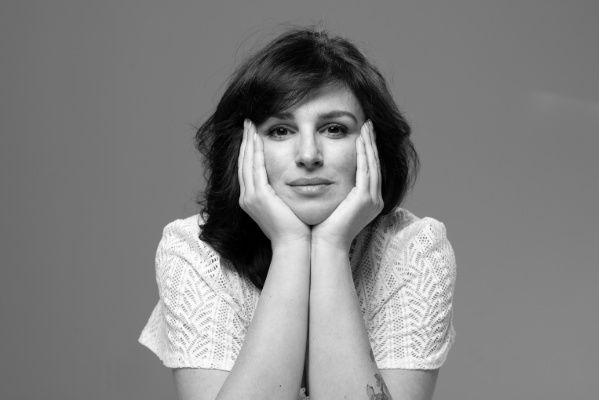
I always observe the way each country in all its forms communicates with its citizens. It is amazing what differences can be observed and how many connections can be made!
Introduce yourself
in a few words…
Elitsa
Videnova-Eva, PR for 26 years, founder of the PR agency The Brief since 2011, media advisor in three consecutive
governments, philologist by education and spirit, mother, firmly believing in
long-term strategies.
For you,
the journey around the world is?
Essential for
opening the mind, grounding or taking off in the right direction.
Before COVID-19,
the journey for me was largely an escape, a constant search for
something that I might not find here. I traveled so much – both for work and
family, including with two small children – that the pause caused by COVID
felt like a relief. Suddenly, I was illuminated by the beauty of Bulgaria, I saw it in
a different way and all the hidden niches and opportunities that
our country offers opened up before me. It was as if for the first time, since I became a conscious person, I understood
that I would stay to live in Bulgaria, that here is my path and it is not by chance that it is here, and that
I have a mission related to the people of Bulgaria. My life changed 360
degrees because I started to engage in public communications on behalf of
the state, not just for companies and organizations.
Since then, whenever
I travel, I observe the way the state in all its forms
communicates with its citizens. It is amazing what differences can be observed and how many
interconnections can be made with the way power communicates in
different countries, with economic development, climate, level of education
and the diversity of the population. Thus, even neighboring Greece is no longer just
beach and sun, but posters, billboards, markings, brochures and conversations about things
like social policy, the euro, road safety, education, church.
How many different countries have you seen so far? Share an interesting incident or highlights from your travels?
A little over
20, but in some countries, I have been multiple times. I often remember how once in
Vienna, where I was on a business trip, among the crowd at the end of the workday, I saw
a German lawyer whom I had met the previous year in Buenos Aires.
The next year we had coffee in Seville, but we knew we would see each other because we were
at a conference. The world is astonishingly small when you move only within a limited
community of people.
Another memory often
comes to my mind: 2007, again for work, a conference, thousands
of lawyers at the Symphony Center in Chicago. I could assume that our seats
were random because on one side of me was a lawyer from South Korea, and on
the other – an American. Both of them were humming the music that was being played, and
one even played it with his fingers on his knee. “Do you like it?” – I asked
one of them. “Oh, I know this piece very well!”. I was young, 28. I will never
forget the mix of amazement, admiration, and some vague disappointment that in
Bulgaria I am not surrounded by such people from whom I can learn a lot, a lot,
lot. Since then, I have had a crystal-clear understanding of how untapped our
human potential is here. At another similar conference, but in Singapore, already
after midnight, after a series of events, corporate parties, and everything that
accompanies such exhausting professional gatherings, in the hotel lobby,
one Spanish lawyer was playing the piano completely alone, with bare feet,
open shirt, but as if he had only done that his whole life.
I experienced similar emotions and
insights when I first visited the British Library. It was
2000. I am not an emigrant at heart; I am a person who returns. I always
observe and think about how to transfer something to Bulgaria; it is hard for me to just dive in without reflecting. The feeling of excitement and reverence immediately mixed with common sense – in what libraries did I study, and in what
libraries do they study here? What will my children learn, and what will the children learn here?
At the same time, it seemed completely possible and natural for me that this could be
my world, to be accessible whenever I want. And it is so; it is accessible
whenever I want. Life just has its own plans.
Do you like to repeat destinations? Give examples and motivation “for” or “against”?
I repeat, of course! I go where I want to go, not where someone has said I must
necessarily go. I have been to Vienna, London,
Istanbul, Rome, and many places in Germany more than ten times. I have been to
Chicago dozens of times. I love to connect with places and claim them as my own. I don’t care to travel the whole world and
discover it. I want to discover myself. Besides, I find peace in going to
places I know. My life here is too dynamic and sometimes
dramatic. I want at least when I travel for pleasure to feel calm.
I no longer count business trips, especially those for a day or two. That is just travel and
work; it doesn’t matter where it happens in the world. So I am “for”.
Do what your heart desires!
What was your first trip that truly changed you as a professional and can be said to have changed your thinking?
I am not sure
if it can be said that I was a real professional because I was still a student,
but my studies at the University of Surrey Roehampton in London on the scholarship of Prof.
Alexander Shurbanov once and for all unbolted my imagination for the ways in which
one can live. I am talking about the year 2000. I was the only Bulgarian at
the university; in some way, I was exotic. I was also a full honor student, which
was incomprehensible both to the British and to me. As I was getting straight
A’s, I had no idea about
the local customs, about truly polite communication, about the courteous distance between
people, about the order and social norms that keep such a diverse society from falling apart. I learned so many things back then that I still can’t fully comprehend them 25 years later. At that time, I saw students who worked three jobs to pay their tuition and live on the edge of possibility, even though they came from wealthy families. I encountered support, help, cooperation. It was light, fun, funny, not too serious, not dramatic. I felt young and good. No, I felt free to be good. That’s it! That’s the feeling I constantly pursue here. That was a watershed moment.
What do you learn about yourself and your professional skills when you are in a new cultural
environment?
I somehow always
feel good outside. While I was a media advisor to the social minister in
the last regular government before the current one, I traveled with Dr. Shalapatova for
high-level meetings in Brussels and beyond. We both felt completely at
home, with no difference between us and the others in the room, probably also due to
the lack of a language barrier. We were fully accepted, relied upon,
they listened to us. We felt trust in ourselves.
I spent a long time in the USA, in Chicago. There I had the feeling that everything is possible, that
I can truly achieve everything I decide. I didn’t feel overwhelmed by
the scale; on the contrary, I love the space, the large areas, and the vast horizons
in every sense. At the same time, I felt at home in the streets of
Marbella, Seville, Granada, and Barcelona, in the neighborhoods of Vienna and London.
The only place where I haven’t felt at home is Buenos Aires – there I simply
experienced physical fear.
I think the most important thing that travels have taught me is that all people in the world,
regardless of education, race, religion, and financial status, approach each other with the hope that the other is good and we can feel safe around them. Then comes the other – what we can do for each other and accordingly together.
The clients of
my agency are mainly European and American companies, with which we have been working for more than a decade. We do little work for Bulgarian clients. I have no doubt that the quality of our services is at the highest world level; otherwise,
these companies would not be with us year after year. Some of them haven’t even seen us in person; they only look at the results. Wherever I am in the world, I know that
if I need to work in my field, I will manage, and I will even feel very
good – with clear rules, good pace, stable building of skills and knowledge.
No drama.
Have you met people or ideas during your travels that
have influenced your career path?
One idea
has been constantly in my mind for almost 15 years – the way Vienna
advertises the calendar of its state opera. Humor, self-irony, and the full
awareness that we speak as equals.
I observe this in the UK, Sweden, and Germany. I do not observe it in Italy,
France, Spain, and Greece. I attribute it to a kind of Anglo-Saxon arrogance,
hidden behind self-irony, but I really like it. When in Bulgaria I manage to
convince a municipality or state institution to promote its cause or program
through humor, I will feel a true sense of victory.
Do you think that traveling helps you expand
your professional network? How?
Definitely. I
am tall, a Christian, and I speak English with a British accent. Let’s not kid ourselves; the first reaction I encounter from potential business partners or
clients is relief.
I have a few
clients who came to me after meetings abroad – I am currently thinking of
clients from Denmark, Austria, Portugal, and Australia. “Elitsa, we need
assistance in Bulgaria, and there we only know you. Here’s what we need…”. That’s
how things start. I may not be exactly what they need; they may need a completely
different service, but I am the trusted person they rely on to guide them
through our dark Balkan soul. These relationships are some of the most stable in
my career. We do not exalt ourselves – we are neither friends nor do we meet for a drink halfway between our two countries. We simply exist in each other’s lives
as islands of stability in an ocean of change. Lucky.
I am introverted.
I won’t start chatting with someone on a plane or in a museum. I live in my own
world and I am happy in it. It will be hard for random people I am not open to to enter it. Neither abroad nor in Bulgaria.
What skills do you develop the most when you travel, and how
do they reflect on your work path?
I think I will never
be as educated as my equivalent in England, for example,
because our educational system continues to be anchored in the middle of the 20th
century. But I can at least be as well-read or even more, to have traveled, to
have reflected, to be tolerant and curious. In general, I do not cross the
boundary of business and do not get too close to clients, but I want them to
feel strong trust in me, and I think that is the product I am selling.
And it is universally valuable everywhere in the world – to be reliable. Especially in today’s
world.
My travels and
my work with foreign clients have taught me to always maintain a portfolio.
Everything I have ever produced with this head and these fingers is
well organized and ready to be shown at any moment. America taught me that.
Sometimes I decide
to go somewhere because I feel stuck in the things I do in Bulgaria.
Here I have my models and templates that I exploit until they stop
working. Outside, I break free and open up to new things. I have had cases where I
was supposedly going to Vienna for two nights, but I didn’t leave the hotel room. For me,
that is still a journey, but towards myself and the divine within me – in Sofia, I cannot
stay closed at home for three days, completely anonymous, in my own inner
world. I cannot connect with myself the way I do when I am in the weightlessness
of the foreign. Just recently, I did this in Greece, during Easter – first, I slept for 20
hours, refreshed myself, and stayed alone with my books and notebook. A complete restart.
Is there a city or country that has inspired you to start a new business or project?
Chicago, America,
2006-2009. I started a business importing American goods and exporting Bulgarian
essential oils. It’s not my thing, but I learned a lot.
London, at any
time. I started my own publishing house. It works.
Austria and Sweden – I have observed them a lot in the way they communicate their public
policies. I know that my writing style is drawn from there. I do not give up,
I follow it to this day. There is something in these places that I feel is close to
our sensitivity, perhaps due to the similar size of the territory, but also in
some calmness and slight latent nature. For us, this is probably more laziness, while for them – contemplativeness. But my writing style has been influenced by
their communication schools. I continue to study them.
When you are in an unfamiliar country, do you feel
more motivated or more distracted? Why?
I think I never
feel distracted. I may seem that way from the outside to some, but that is
because I am not dealing with their topics, but with something that is specifically important to
me and is my focus. I wouldn’t say I feel more motivated. For what?
Whatever they have to offer me, I have at least as much to offer as well. I am not
worried about work.
Are there destinations that act as a “restart” for
your creativity and ambition?
Central and
Northern Europe. In the south, it’s warm, it’s too beautiful, I don’t want to work, I just wander. Up north, in those intermediate temperatures, I come alive. There, my colors seem brighter because they stand out against a grayer background. Everything somehow pops. I often think that in a previous life I was probably from the north; otherwise, I cannot explain this feeling of calmness and adequacy that I have there. I always return with many new things, and they become.
How do you manage the balance between work and pleasure
when you travel?
I do not manage.
I always get very tired when I travel. I don’t remember the last time I had a
trip where I didn’t work. I sincerely envy people who can afford such a division. Even when I have closed myself off and just slept and
read, I still considered it work on myself, like recharging my
batteries before a big leap. I have a strong connection with my body and brain; I maintain
them as tools and view this as work. I wake up very early and
work before I go out. I eat very lightly during the day, I don’t drink, I stop several
times a day to respond quickly to emails and return calls. There will always be a café or a bench where one can work. That’s how I am.
How have travels changed the way you perceive
the value of money?
I do not think about
money; they are simply not my topic. I see them as something secondary, as a natural
result of everything I do. Since most of our clients are not
Bulgarian companies and we have competed with agencies from around the world to win them,
for more than a decade we charge as an agency in Germany, Sweden, or France would.
On a personal level,
I am a Taurus – I love simple but quality things. What truly excites me
is not expensive – spirituality, curiosity, conversations with people different
from me or with people much more elevated than me. I have never in my life
saved money to buy something specific because I want to have it. I love to
be comfortable and to have the opportunity to shape my own world wherever I
go. I want to be able to afford some time to do nothing, absolutely
nothing, and for that not to harm my business. For me, that is the optimal luxury – to
be able to take complete breaks.
Do you travel to find new ways to make
money?
Not specifically, but actually, that’s exactly what happens. It could be just one product in a pharmacy or at a market somewhere, it could be a new type of communication or a different way of using the resources we have here.
According to you, is it better to spend on experiences than on
material possessions?
Yes, but not at the expense of the other. Material comfort is very important to me, and I think it is for
anyone with children, an office, colleagues. For people like us who work with our imagination,
the surrounding environment is key. Moreover, life flows in stages. I am currently
at a stage where it is important for me to be more in Bulgaria and not to deviate
from my focus here because I am useful for processes larger than myself or the
agency, and they are important to me as a citizen, mother, and person with a position. I also believe
that it is important for a person to have roots and to build and maintain them for their children – a home, environment, neighborhood, district, city, community. These are spiritual things, but not only, as any mother pushing a stroller on a broken sidewalk can confirm.
How do you see the future of digital nomadic life?
I am a digital
nomad since 2006, when I started spending a few months a year in the USA and
had to work from there. Since then, I have continuously been like this with small
episodes of closing in the office. I can't work from 9 to 5. I work continuously,
but for my brain, it is important to start the day in a certain way, at a certain
time, and with certain actions – God, a book, silence, coffee, sports. I want to
raise my children the way I feel, and I admire all the mothers who run from offices
to pick up and drop off their children. I tried to do this this year for seven
months, got sick, and totally disrupted my physical and mental balance. My work
never stops – it may seem that I am daydreaming and doing nothing, but I am
constantly observing, thinking, creating, so that it can later flow out of me
packaged, ready. I need both solitude and noise, I need both chaos and order. At
46, I already have an infallible radar for things that will take from me and not
give back. At the same time, I do not feel the desire to be in a hammock somewhere
and work. I can endure like this for exactly one week, then I need to return to
the city. I can't not work either. I can't stay in Greece for three months; I just
don't feel well. I have a painful need to be useful. Not to communicate frantically,
but to be useful, to know that here a little stone is placed because I have done
my job. Ego.
I think there is
a huge benefit from working in a corporate environment at the beginning of a
career, to build true, deep relationships with colleagues, to learn about
hierarchy, to understand the mechanisms that drive a company or organization. I see
the difference between my generation, who have grown in our work like this, and
the new people who do not have this foundation. I think they have missed many
useful and pleasant things.
Are there specific countries that are more favorable for
work and investments?
Bulgaria is a
magnificent country for work and investments, especially for our creative
industries. There are many unfilled niches here waiting for us. There are many
social problems waiting to be addressed. There is a fierce need for communicating
policies, programs, and initiatives on every topic – social policy, ecology,
sports, education, healthcare, local government. For me, this is endlessly
interesting and is fertile ground for development. Here, travel is extremely
important to observe the models and at least try to apply them here.
I will always be
an advocate for Bulgaria. Why should it be easy? Who, where, and when said that
something should happen easily? Here, things happen hard, slowly, and with a lot of
drama. Let's accept it, inject a little humor and calmness, realize that we cannot
overcome our pace and stage of development, and give our best. We all see that
things are changing, right?
If you could choose one place in the world to
develop your next big idea, where would it be and why?
It will be
Bulgaria again. I will stay to work in and for Bulgaria.
What are the
destinations you would definitely recommend visiting and why?
USA – America is
like a therapy with an ice bath. It scares you, shocks you, washes away everything
you think you know, and charges you with brand new energy. If you are young,
healthy, and upright, America is an endless universe of opportunities.
Scandinavian
countries – a completely different pace of life, but exceptional productivity.
Cleanliness of relationships and spaces. Minimalism, where everything stands out
very clearly – both ideas, colors, and shapes.
Singapore – if you
are involved in politics or policies, Singapore is a vivid example of how results
are achieved by the will of one person. I was lucky to meet Lee Kuan Yew personally
in 2008. "You may consider me a dictator, but you all want to live in Singapore,
right?". They called him a "velvet dictator". I do not evaluate his approaches,
because that is a completely different and very long topic, but yes, we all want
to live in Singapore or at least spend some time there.
Greece – to
remind us of the beauty of entire generations living together, gathering every
Sunday for church and family lunch, painting their houses and watering their
flowers, loving their land and sea to the point of pain, being both proud and
humble, serious and funny.
What is the
career advice you would give based on what you have seen around the world?
Read. Read a
lot, read the classics, keep learning and developing, do not stop for a single
moment. Bulgaria lulls with the nice life we manage to have with very little
effort compared to those in the West. The future, no, the present is in
global competition, where we compete with people from all over the world. Take care
of your body and health. Whenever I don't feel like going to the gym, I think of
the crowds exercising in the parks of Hamburg after work, of the perfectly
trimmed men, the impeccably clean clothes of everyone. Taking care of yourself
speaks volumes to those who depend on the decisions in your career. It sets your
own standards. I would like to see more of this in Bulgaria.
Do many
things at once – work, exercise, learn languages and musical instruments,
go to concerts and theater, feed your soul.
Always keep your
commitments, and do so on time. This is a universal rule, wherever you are.
If you are not sure, do not promise a deadline yourself. Be reliable and
predictable in your work. Let it be possible to count on you. This is the universal
currency – trust.