Pay and the Eurozone: Illusion, Hope or Realism?
· Career Daily News
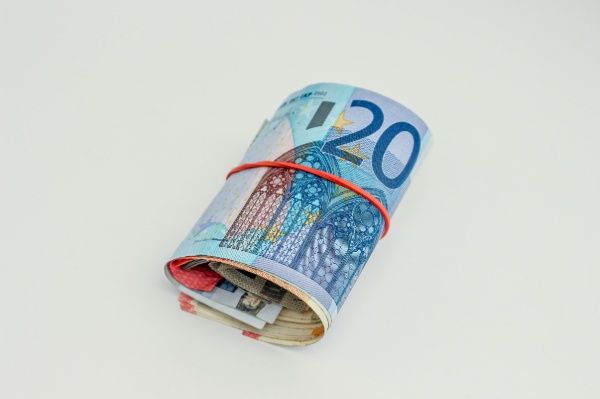
What does a vote in our survey about the attitudes of Bulgarians towards their financial future tell us!
In the public space, the topic of Bulgaria's entry into the Eurozone evokes both hope and a dose of anxiety. Our brief but highly indicative survey, conducted online, raised the question:
„Do you expect higher salaries after our entry into the Eurozone?“
The results of the voting outline a psychological portrait of the expectations and doubts of the modern Bulgarian employee:
- 32%
– Yes, a logical consequence
- 24%
– I hope so
- 35%
– No, but prices will rise
- 9%
– I am divided in my expectations
Rational Optimism (32%)
The largest group believes that the increase in salaries is a
logical consequence of entering the Eurozone. These are respondents with stronger
rational thinking and likely greater awareness of economic
processes. In labor psychology, this behavior is associated with internal
motivation and high economic literacy – people who believe that
systemic changes bring opportunities are often more adaptive and seek development,
and do not succumb to the fear of change.
Moderate Optimism Based on Hope (24%)
This group demonstrates an emotionally based attitude –
“I hope so”. These are people who do not have enough
information or lack high confidence in institutions, but still hope
for positive development. They tend to dream, but often remain passive
in the expectation that external factors will improve their personal working conditions and pay.
This psychological position speaks of trust mixed with hesitation, and a
lack of a full sense of control over the future.
Prevalence of Skepticism (35%)
The largest group turns out to be pessimists, who
expect only an increase in the cost of living, but not in salaries. This is a signal of deep
uncertainty, anxiety, and lack of trust in the system. Unfortunately, this
attitude is typical for societies that have experienced economic upheavals,
shortages, and disappointments. From a psychological perspective, this is a reaction of
defense mechanism – when a person does not expect anything good, they are less vulnerable
to disappointment. But this attitude often hinders career development,
because it leads to a refusal of activity and initiative.
Chronic Hesitation (9%)
Those divided in their expectations are those who most often
live in a state of internal conflict and information overload. They
find it difficult to form a definite opinion, which is due either to a lack
of a clear position or to high levels of anxiety. These are employees who
often seek external validation before making a choice, and may have
problems with decision-making and setting clear goals.
What conclusions can we draw: what does this survey show about professional and economic culture in our country?
- Optimism
is present, but is strongly limited by skepticism. Even those who
believe in the positive effect of the Eurozone often do so with a dose
of uncertainty.
- Trust
in institutions and the labor market is wavering. The high percentage
of pessimists is a worrying indicator of the level of economic anxiety in
society.
- A
better economic communication is needed. The information vacuum creates
uncertainty. Companies that want to retain their talents must be
transparent and explain how global changes will affect
the local level – including on topics such as salaries, inflation, bonuses, and
security.
What can we
conclude:
What can companies and employees do today?
For employees: It is important to seek information from
reliable sources and not to build their attitudes solely on rumors and past
negative experiences. Economic literacy is the key to personal stability and
correct professional choices.
For employers: In conditions of economic
uncertainty, companies must be communicative, honest, and transparent
about the future of compensation. Expectations must be managed
skillfully, so they do not become a source of disappointment and turnover.