Start, Restart, Rediscover: Career as an Open-Ended Project
· Svetla Mancheva
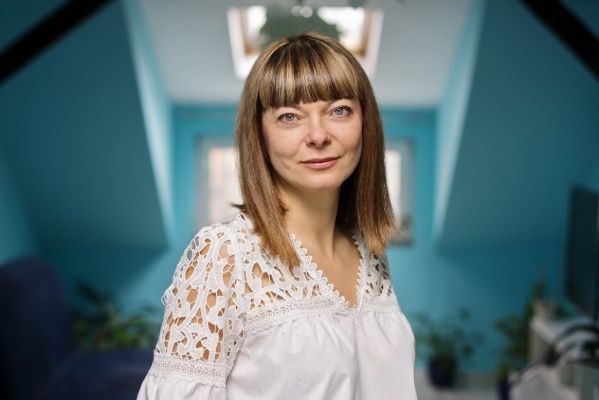
There are no unattainable dreams. Neither personal nor, even less, professional. Every goal can be achieved if a person is organized and invests their energy in a productive and purposeful way!
Introduce yourself
in a few words…
My name is Svetla
Mancheva, I work as Senior Project Manager at the technology company DXC. My career path in project
management started 13 years ago, building on my experience in corporate
banking. Since then, I have led projects in various fields – IT, digitalization of business operations, financial
institutions, GDPR and others, with experience in both a startup company and large
international organizations.
How would you
describe your career in a few words?
Diverse and
growing. I had and continue to have the opportunity to try different professional
paths and to focus on the one that is right for me at a specific
moment in my life. I am fortunate to feel valued in my work, I have had
opportunities for growth and professional development. At the same time, as a project
manager with each new project I am part
of different business areas and this constantly gives me new opportunities for learning,
new knowledge, and new challenges – from digitizing an analog
startup company, to preparing a financial institution for the introduction of a new
national currency, to developing a cloud solution for tracking the electoral
process at the state level.
What was the most important choice that shaped your path?
For me, it’s more
about a combination of choices that were guided by a common principle – to engage
in what I feel is right and interesting for me at a specific
moment and period; to change direction when I feel that the previous choice has
run its course.
As a starting student,
my father, an architect who experienced the transformations of the nineties, the lack of
stable work, and the collapse of savings, advised me to pursue business majors.
He believed that such an education would give me secure employment and protect me from the deprivations
he had experienced. Although I was more “listening” at that time, I did not
follow his advice and pursued my own understanding of interesting student years in studying
international relations and political science, and later also European studies. Along with
the satisfaction of having studied what I felt was right, I was also successful in
this choice. And although my work strictly related to my major was extremely
short-term, the stamp on my diploma “politologist” broadly prepared me for interesting and
challenging work in a corporate business environment, for developing my own business,
as well as for expanding my career in a field that is not based on my formal education.
The world today
is infinitely open to choices and opportunities, career paths have
many branches. No decision is fatal, and a person has options at every
moment and career stage to retrain and rediscover themselves in new roles and
careers.
What would you
like to have known at the beginning of your career, but no one told you?
There are no unattainable
dreams. Neither personal nor, even less, professional. Every goal can be
achieved if a person is organized and invests their energy in a productive and
purposeful way. It seems to me that I would have dreamed and planned bolder
solutions if I had known this simple truth earlier.
How can a person understand which profession is suitable for
them?
Primarily by trying
to work in the field of that profession. Any form of practical experience, internship, or
temporary or permanent position is extremely valuable for a person to feel whether
this is their path.
Which skills do you think will be key in the next 10 years?
The desire for
change, adaptability, and the willingness to learn at any age are extremely
important at the moment and will continue to be in the coming years. The changes that the implementation
of artificial intelligence initiates transform the way of working in many
professions. In the field of project management, for example, the readiness of professionals to integrate
task automation applications
and remote work with teams is already crucial for the effectiveness
of the work and consequently for the success or failure of the project
manager. The pace of integrating new changes is also accelerating – technologies
are developing so quickly that it is no longer enough to defend a certificate every couple of years and feel “in
step with the times.” Today, if you don’t learn something new every month – whether it’s a new
tool, AI application, or even just a new feature in familiar software –
you risk falling behind. Learning is no longer an event, but a continuous process. This
requires not only time but also a mindset – a willingness to learn, to experiment,
and not to be afraid of the new.
How to build a network of useful contacts without
appearing interested?
Such an intention can
be realized by executing a successful project – with thoughtful
planning, step by step, and with a focus on the set goal. Suitable directions for
action include proactively connecting with colleagues and other professionals;
participating in events, conferences, and working sessions where topics from
the area of interest are discussed; participating in professional groups online; as well as being proactive
in discussions and forums. Each such form of discussion provides grounds for connecting
with professionals with similar interests, leaders, and mentors, as well as for
expanding knowledge and opportunities.
What is the biggest mistake you have made in
your career, and what did you learn from it?
Everyone's career is a series of successes and mistakes. I wouldn’t define any of mine
as the “biggest,” as in the long run, each of them has been useful and
has directed me towards the path I needed to take.
How to recognize a toxic work environment and when is it time
to leave?
For me, a toxic work environment is one where there is no room for freedom of action and for expressing
opinions, for discussion. For an organization to work successfully, management and
those involved must contribute through their experience and voice. Highly hierarchical
structures that suppress the ability to provide constructive criticism and openly discuss
problems, to work on improving practices and processes, in the long run stifle growth and become uncompetitive,
and the people working in them become timid and passive. When caught in such an environment, a
capable and motivated employee may try to initiate changes, to turn
the wheel in a better direction. If successful, this is excellent for both the employee and
the organization. If unsuccessful, even with a well-thought-out and followed plan and
a series of attempts – it’s time to go.
What would you do differently if you could start
over?
I would reduce
internal dialogue and doubts and act even bolder, set even
higher goals, and believe more in myself from the very beginning. Experience has taught me
that worries rarely materialize, and even if they do – in reality,
the problems that one has stayed awake over at night are more easily digestible and quickly
pass under the pressure of good planning and preparation. Everyone should be the first
person to believe in themselves and their endeavors. Success comes
to those who declare that they deserve it.
How to maintain motivation during times of stagnation?
My recipe in
such cases is to change perspective – to take a break, to engage in
another task, to let my brain work passively on breaking through a wall
that I cannot break through actively. Often the answer to a difficult question appears
by itself when we have taken a short break from the feeling that we are in stagnation. Physical
activity is also a formula for eliminating stagnation – a walk in the mountains, fitness, or stopping by a
green meadow, the real “airing of the brain” often goes hand in hand with the metaphorical.
For me, it helps a lot to articulate a given topic with another person. In
describing the situation aloud, in formulating and arguing my thoughts, I often
discover what the right path is, and an open and well-meaning ear on the other side, even without
having to or wanting to give advice, helps me reach the sought-after
breakthrough.
How to achieve a balance between professional and personal
life?
For me, the solution
lies in combining my interest in what I work on with my love for my hobbies and
family, which occupy my personal life. Each of the two sides – personal and
professional – complements, balances, and diversifies the other. On many days of
the week, I intentionally and thoughtfully find time for both. One of my extracurricular
activities is singing – I sing in two folk song groups. In moments when
I am most overwhelmed with work, rehearsing folk songs is my meditation.
It is necessary to completely shut out everything else to be in harmony with the group
and to sing well. No matter how tired I am from work tasks when I go to rehearsal,
I come out feeling energized. Sometimes even ready to dive
back into some work task.
When is it time to change our career, not just
our job?
If we feel that
another direction strongly attracts us, and we are motivated to learn about it, to fight to enter a new
field, that is the moment to try. I say “to try” because without real experience in the new field, it is difficult to determine whether
this is our long-term direction, our new career. But if the experience is successful,
we can make a real comparison with our previous experience and assess where
to go.
If you had to give just one piece of advice to people who
are seeking success, what would it be?
Keep searching, keep trying. Set high goals and work towards them
step by step. Purposefulness is a recommendation in itself, and often the
path to success is more valuable and satisfying than the success itself.
What is your definition of a “successful career”?
A successful career is one that brings a long-term sense of satisfaction and peace with oneself, and
for which the years invested bring joy and meaning.