Why traveling around the world is key to our career development?
· Career Daily News
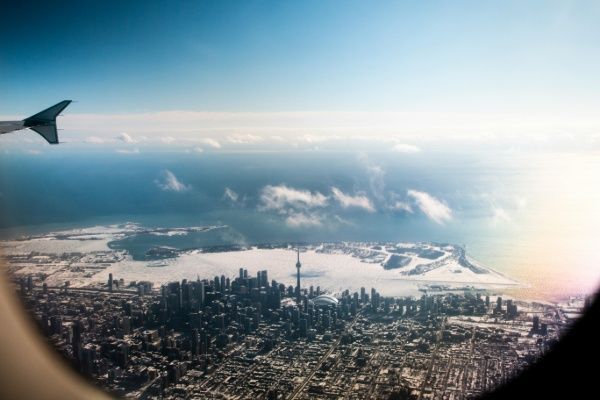
A month in another culture can give you more than a year in the same office!
Why
traveling around the world is key to our career development
In the modern
knowledge economy, where technologies are developing at lightning speed, and
companies are competing for talent, the boundaries between countries, markets, and
cultures are slowly blurring. But what we often overlook in our professional
growth is precisely what takes us out of routine and meets us with
"the other" – traveling.
Whether it’s a
short escape to a neighboring country or a long-term stay in a completely
unknown culture, traveling offers something that no diploma and even long
experience can provide: new perspectives, mental flexibility, and authentic
international understanding. This makes it not just a pleasant experience, but
a strategic tool for personal and professional development.
🌐 1. The world as a university without walls:
when you travel, you learn live
Traveling is
the most natural and exciting way to receive a global business education – without
a textbook, without PowerPoint, without mandatory homework. This is an education
that consists not of theories, but of real people, dynamic situations, and cultures
that think (and act) quite differently from ours.
Imagine this:
- In the morning you are in Berlin and see how
the team in a co-working space works with almost complete autonomy, without the need
for micromanagement.
- A week later you are in Seoul, where
you encounter a respectful regard for hierarchy and collective decision-making is
more important than individual ideas.
- In Morocco, you find a family
business where trust runs the business, through generations, without signed
contracts.
- In San Francisco, you observe how
start-up teams talk about failure not with blame, but with pride, because it is a
marker of experience.
Traveling shows you how:
- In Japan, silence during a meeting
is not awkwardness, but a supreme form of respect and reflection.
- In Brazil, "having coffee with
someone" is often more important than the content of the deal.
- In Scandinavia, employees leave
at 5:00 PM, but are more effective than others who work until 8:00 PM.
These are not
just cultural curiosities – these are lessons in leadership, team dynamics, and
strategic thinking.
When you have been in
more than one system, your brain starts to intuitively build more flexible
approaches. You realize that there is no single "correct" structure or process – there is one that is appropriate for the context.
💡 2. Bringing in innovations and ideas from outside
The strongest
professionals are not those who simply execute, but those who bring new ideas into the system. And how are ideas created?
When we see
how something works better somewhere else.
Examples:
- An architect, inspired by sustainable
urban solutions in Copenhagen, adapts green roofs in Sofia.
- An HR specialist introduces the Japanese
practice of “onboarding breakfast” after a trip to Tokyo.
- A team manager reorganizes
the workflow using principles from the Dutch model of self-organizing teams.
Ideas are not
born at the desk. They come when we encounter difference.
Traveling is
essentially innovation incubation – informal, but highly transformative.
🧠 3. Development of soft skills:
adaptability, empathy, cultural intelligence
Employers
around the world increasingly prioritize soft skills over technical ones. And traveling
trains precisely those:
- Adaptability – when you need to navigate in
an unfamiliar environment without speaking the language.
- Empathy – when you understand why people in
a given country act differently.
- Patience and tolerance – when faced with unexpected
cultural or organizational norms.
- Communication skills – when you need to communicate in
a limited or multicultural context.
These skills are
built naturally, without formal courses – through experience. And they prove to be crucial
in leadership, client work, or crisis management.
🚀 4. Traveling as a catalyst for
personal transformation
Professional
growth is not always linear. It is often accompanied by internal transformation,
which requires:
- Awareness of our strengths and weaknesses
- Making difficult decisions
- Overcoming fears
Traveling –
especially solo or long-term – is a form of psychological expansion. Encounters with the new and different make us rethink not only
our profession but also ourselves as people.
Many people
completely change their direction after inspiration from a foreign culture, professional
practice, or even a casual conversation with a stranger in another country.
🌍 5. Building a global mindset –
an asset that companies value
Working in
an international context requires a global mindset – the ability to
think beyond the local. Traveling trains precisely that:
- Not to take your own model of
work as universal
- To see business processes in a broader
context
- To discover connections between cultures,
markets, and practices
Even in roles,
that do not require frequent travel, global awareness makes you:
- A better communicator
- A more flexible negotiator
- A more innovative strategist
🔗 6. Global network: the invisible force
behind many careers
Contacts,
made during travel, often turn into:
- Future employers
- Business partners
- Mentors or like-minded individuals
Global
connectivity is not a luxury, but a valuable career resource. And the best way to build it – is through movement and presence.
📌 Conclusion: Travel to grow
– not only as a person but also as a professional
Traveling is
not an escape from reality. It is a meeting with another reality that returns us richer,
wiser, and more prepared for the challenges of the modern world.
In a world where
diplomas are standardized, and experience is automated, personal worldview experience becomes what distinguishes us.
The next time,
when you wonder whether to invest in new training or travel – remember:
sometimes one month in another culture can give you more than a year
in the same office.