A successful career is not a title, number of followers, or an impressive CV
· Diana Aladjova
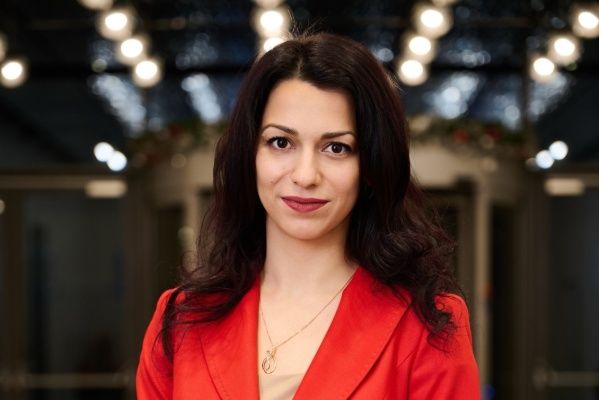
A successful career is a match between what you can do, what you love, and what brings value to others!
Introduce yourself in a few words..
My name is Diana Aladjova, partner in the investment
fund Silverline
Partners, founder of a company for outsourced financial directors CFO Insights, co-founder of
the social enterprise Box
to Remember in support of the deaf community in Bulgaria and a lecturer at
Sofia University “St. Kliment Ohridski”.
How would you describe your career in a few words?
A dynamic path
between investments, finance, and balancing with social causes.
What was
the most important choice that shaped your path In?
To make
decisions and act even with minimal chances of success – this has been
decisive for my professional path. I applied for a master's degree at LSE, despite 0.2% chance of
acceptance; I returned to
Bulgaria to practice a profession that was still not developed here; I founded a company during
maternity leave and developed a second one while expecting my second child. I am convinced
that there is no perfect moment for career
development, it happens when taking action.
What would you like to know at the beginning of your career,
but no one told you?
Careers
are not a line, but a network and you must be ready to untangle problems,
while building the foundations.
How can a
person understand which profession is suitable for them?
The right profession brings with it a sense of pride
and enthusiasm, a desire for improvement and meaning in efforts, even before there is recognition. This
is also the way for a person to become one of the best in a given profession.
Which skills
according to Inyou will be key in the next 10 years?
Communication – I believe that the key to good professional
realization is communication skills. To communicate well, first and foremost
we need to develop our emotional intelligence. It is the mechanism that allows us
to understand and interpret the emotions of the other person and thus to
lay the foundation for good professional relationships.
Discipline – Although luck, opportunities, and good
partnerships can significantly contribute to success, they do not guarantee
achieving the desired results. For success, we need persistence, focus, and
disciplined approach, and when they meet the opportunity, we reach the goal.
Adaptability – The ability to adapt to new
situations, information, and perspectives has been a tool for me to manage
problems and make informed decisions. This quality brings with it
the desire for continuous learning and improvement.
How to
build a network of useful contacts without appearing interested?
The main rule in my opinion is to build your network and
create contacts NOT with the idea of what you will take from them, but with the idea of what you will give them. A network that is built on mutual partnership and benefits is very
strong and starts to bear fruit faster.
What is
the biggest mistake you have made in your career, and what did you learn from
it?
To believe that
success comes only with results. In fact, success is resilience – and it comes with
well-built systems, people, and culture. Numbers are only half the picture.
How to
recognize a toxic work environment and when is it time to leave?
An environment where the culture
exhausts instead of energizing, there is no
dialogue, only directives, success
is individual, but failure is collective – this is a toxic environment.
What would you
have done differently if you could start over?
I would have invested earlier in developing personal qualities of the diploma.
How to
maintain our motivation in times of stagnation?
Stagnation is overcome through movement – literally and metaphorically. It is
necessary to take proactive action to change direction, develop a new idea, enter a
new network of people, develop a new skill. Motivation does not come on schedule – it requires
provocation and meaning.
How to
achieve a balance between professional and personal life?
The balance between
professional and personal life is not a static state, but a dynamic equation,
which changes with the phases of life and our priorities.
It is achieved not
through perfect time distribution, but through a clear awareness of its value.
It requires the ability to set boundaries, to delegate, to say
"no" to good opportunities in the name of better choices.
True
balance comes when you do not have to abandon one part of yourself to
develop the other – when your professional effort is in sync with your personal
values and life rhythm.
When is it time
to change our career, not just the job?
It is time to
change our career when the sense of meaning is systematically absent, not just
the motivation from a specific role.
If you have exhausted
not only the tasks but also the desire to improve, if you no longer recognize yourself in
the environment, in the topics, in the people – this is not fatigue, but a signal.
If you had to
give just one piece of advice to people seeking success, what would it be?
Do everything in the
best way you can, even when no one is watching. Success is not one bigstep, but
thousands of small steps that we take every day in the right
direction.
What is Inyour definition of “successful career”?
For me, asuccessful
career is not a title, number of followers, or an impressive CV.
It is a match
between what you can do, what you love, and what brings value to
others. Success is when you are useful without losing yourself, when you progress without
burning out, and when you leave a mark – not only in results but also in people.