Adventures and challenges in forgotten or unknown territories
· Miglena Gerasimova
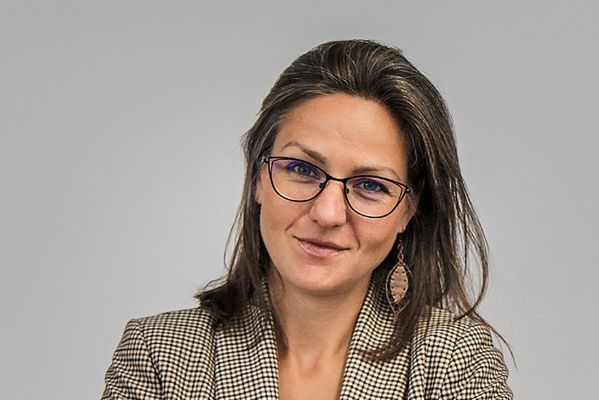
Have fun. Challenge yourself. Don't be afraid. And if you are afraid – it's okay, it's normal. It will pass. But let this fear not stop you from taking action!
Introduce yourself in a few sentences..
I am Miglena Gerasimova – an urbanist, doctor of
sociology, mediator, a person who believes in the impossible and sees cities as
living. I lead KOMPONENTA – a consulting company for urban policies,
sustainable development, and socially engaged investments, which we created to
help municipalities, institutions, and investors implement projects on complex
topics such as climate adaptation, social sustainability, and stakeholder
inclusion. We assist them with in-depth analyses of the environment, so they can make economically
effective, yet beneficial for the environment and people decisions.
For me, good planning is like good climbing; it requires
clear direction, a strong grip, and the ability to find stability even when
everything seems on the edge. Or like sailing – you need to catch the wind at
the right moment without losing orientation. I strive to approach my
work in the same way – with attention to context, respect for people, and persistence in
finding workable solutions.
What did you dream of becoming in your childhood?
As a child, I dreamed of becoming a researcher – and recently I
realized that I have largely achieved that. I imagined that I would
travel to unknown lands and discover treasures in the style of Indiana Jones, but what I
am doing today is not so far from that idea. Although not exactly in
the jungle with a hat and whip, my work is often adventurously challenging
and takes me to territories, sometimes unknown, sometimes forgotten, and allows me
to discover treasures. Mostly those that have value for the people for whom
we work.
At what age did you earn your first money? Tell us
some curious incident?
If we don't count the competition between my grandmothers and grandfathers,
which I skillfully nurtured in every possible way to give me more money for
things I wanted, I think I was 13 when I first started working.
I spent a few summers as a helper-barman in the pastry shop of friends of my mother.
They had a daughter my age who also helped there.
My responsibility was to prepare sundaes and fruit
salads, as well as to decorate pancakes and cakes. Sometimes they allowed me to
make coffee, but apparently this task was too important – my coffees often didn’t
turn out well, and I regularly “ate” some complaints from the duty barman. The daughter
of the owners, although my age, was an absolute virtuoso in decorations.
I, despite my efforts, never managed to reach her level. We often argued,
competed even more often, and years later, when we became very
close friends (and still are), these stories are a source of laughter and sweet memories.
What are the main factors and examples that shape us
as individuals at an early age and form our interests? What is your
recipe for curiosity, sources of information, and inspiration at
this stage of our human development?
I believe that in our earliest age, the environment we grow up in plays a key role,
and most importantly – the example of significant people in our daily lives: mother, father, grandparents,
who care for us and whom we love; some important aunt or uncle, a close friend, a parent of a friend... Through their
behavior, their reactions, their way of communicating, and their attitude towards life, we
– as children – form our first ideas about the world. We understand what is “good” and
what is “bad,” what it means to have values and what they are.
Through the natural tendency of a child to imitate,
we begin to touch on topics and interests that these people – consciously or
unconsciously – reveal to us. Later, when we grow up, the sources of inspiration
become many – literature, cinema, peers, music... But everything new that
enters our lives builds upon the foundation laid in the narrower family and
friend circle from our earliest years.
And my personal recipe for curiosity: Play and freedom.
Music and nature. And, most importantly – the practical exploration of the question: “What
will happen if…?”
Has there been any significant change in your perceptions
in more mature age regarding what motivates you to do or not do something?
I am not sure that there has been a significant change in what motivates me – rather, I have deepened my understanding of it.
Since childhood, I have adored adventures. My father has a great
contribution to this lasting love. On one hand, through the adventure novels we
read together, and on the other – because of the way we spent our vacations:
mountains, rocks, sea, diving, tents, bungalows, secret paths, culture,
history… and always some story about the secrets of the world. This approach to life –
as a great and living adventure – has stayed with me to this day.
My mother, being very socially and publicly engaged,
always set clear boundaries around what is important and what is not. From her,
I learned that a significant profession is one that has meaning for society. I think that
with such a clear statement, laid down in my childhood, I will always have a compass – and
wherever I find myself, I will find the way to the tasks that make the world a little
better. Especially if they involve difficulties, uncertainty… and a sense of adventure.
Yes, over time I have gained a deeper understanding of
the complexity of the world, but the child in me remains awake – and does not miss to remind
me when it needs its share. And when it doesn’t get it on time, it becomes quite sour ;)
Whose decision was it where to pursue higher education and
what to study? Was this decision correct, viewed from today’s perspective?
Haha, this question is really something… Well, my father “pushed” me
into UASG (formerly VIAS) – there was no moving away. One of my great-grandfathers was an
architect, the other – a water supply engineer, and so, with few exceptions, almost everyone in
my family is in this field. Even my maternal grandfather, who was a philologist
and worked his whole life as a teacher and school principal, later in life
started collecting old techniques for building fireplaces and became a sought-after
master.
So... VIAS was somehow… predetermined. But everyone
quickly realized that I would not become an engineer. Soon after, my father
came to terms with the fact that I would move to the Faculty of Architecture – and so, without knowing exactly
where I was going, I found myself in the newly opened specialization “Urbanism”.
I started from the middle of the program, switched to an independent
plan, and in two years managed to complete the four years to a bachelor’s degree. For me, this was
a new life, a new adventure. I was truly happy, not even knowing at first
what exactly this specialization was – but I quickly realized that I had landed exactly where I needed to be. The master’s program, already regular with the other colleagues, was a song against the backdrop of everything that came before it.
Thus began my love for everything related to
the sustainable development of cities and communities. Then, unexpectedly, came
the doctorate in sociology, which literally “hit me on the head” and opened a new
field in which I began to build my profession in a rather unusual direction for
our region.
With a lot of travels around the world and just as many coincidences,
I am now in Bulgaria and doing something that here until recently was almost non-existent – and in the world
it exists in few places, but is increasingly needed and significant.
Share with us more about your interests, knowledge, skills, and
hobbies?
I may have already revealed quite a bit on this line, but still - here
is a bit more organized:
I love to have fun, but somehow I always find myself in
situations that are difficult. Often I have chosen them myself. I now see it
as a hobby. Otherwise, I wouldn’t survive :)
Regarding knowledge: no matter how much I know, there is always
more to learn. Even on topics I am convinced I am well prepared for, a new angle or perspective always pops up. My curiosity is
the engine, and one of the things I have learned is that sometimes the answers to important
questions are found in the most unexpected places. I love to make analogies between
different systems. This helps me not only in work (for example, when writing a
report for evaluating a strategic plan), but also in life (like choosing the right
educational technique for my mischievous son, for example).
As for skills, whatever I can do at the moment,
I am usually in the process of learning something new. But one skill serves me well
in all situations: I am inventive and combinative. Thanks to my
curiosity and broad interest in various topics, I easily make connections between
things that others often do not notice. Or at least not immediately.
I have many hobbies, as one might expect. But
my strongest ones are sailing, which gives me a sense of freedom and lightness, and
movement in nature – rocks, forests, seas. My greatest passion, however, is adventuring
– in any environment, including urban. The feeling of discovery, even in
the familiar, energizes me.
Would you change your profession today and which fields of
activity capture your interest?
I have thought a lot about this question. No matter how much I sometimes wish
to have a small bar by the sea, I know that I wouldn’t last long without
the meaning and depth of my work.
The fact that I can be useful – to my country, to
the cities, to the people who inhabit and develop them is something I cannot
replace. Helping institutions and investors think and act
more sustainably, to protect nature, to make more meaningful choices. Creating
spaces for dialogue between different participants in urban renewal, so that they
understand each other better and work together, rather than against each other.
This is not just a profession – it is a commitment. And even
the romance of a bar by the sea would be hard to separate me from it.
They say that personal branding is everything that people say
about you when you are not in the same room with them. What would you like to hear
today?
Oh, now you caught me… :) Sometimes I really wish to overhear what people are saying about me when I’m not around.
I would be happy if they say that I am a cool person, someone they
trust and can rely on. That I am a person they enjoy working with – not
only because we do good work, but because we enjoy being together and there is both laughter and
meaning. Just such things… human. :)
Emotional intelligence, adaptability, and flexibility,
as well as our soft skills are key conditions for success in the last
few years. How do you cope with the daily challenges of life to
stay in good shape and mood?
Honestly, sometimes I am not in a good mood – but I
accept it and know that it will pass. Lately, I am learning (as much as possible) to
inform the people around me when I am not in shape – that today is not my day or
it’s just not my moment, and I need a little time to gather myself and be
adequate. It turns out that this is quite a difficult task :)
Sometimes, especially in more formal situations, there is no way to say it
directly. Then I try to get inspired by small things – like rubbing the back side of my phone case (it’s very soft and pleasant to
touch) or noticing a color, shape, or scent that makes me feel good. This brings me
back to my body and helps me stay clear-minded in difficult moments.
Otherwise – for good mood and mental freshness, nothing
works better than getting enough sleep, eating something healthy and delicious,
moving around, and being among people you love and who love you. Everything
else is temporary ;)
What are the most important conclusions you have drawn so far about
maintaining proper communication considering the different characters of the people
you meet daily – colleagues,
friends, close ones?
I believe that when a person is honest with themselves, it is much
easier for them to be honest with others. My communication tactic is openness.
Sometimes this is not the most convenient approach, especially in a business context, but I feel
that the environment is already changing and becoming more open to authenticity.
I always try to listen first. When people
feel that they are truly heard, even if I present them with a different opinion, they accept it
with more willingness – as long as they feel respect for their point of view.
The combination of listening, authenticity, and openness without pretense is, in my
opinion, the foundation of good communication.
And one more thing: it helps a lot when there is a clear
sequence in presenting information, especially if it is complex or
conflictual. Orderliness in words is sometimes like a map in a difficult conversation.
But… whatever skills, strength, or magic wand a person may have,
when talking to their parents, there is always a risk that nothing will work and
the balance of spirit will go for a walk :)
What do you think about money? What is their influence on
your life? What is your advice to people who often ask themselves questions
related to money and how sufficient they are?
Hmm… a difficult topic, and quite spicy for everyone.
What do I think about money? They are important – we cannot claim
the opposite. But no matter how many times I have tried to motivate my actions
for the sake of money, I have always crashed. On the other hand, when I have had
motivation beyond money – things happen. And somehow… money finds its way.
Maybe I am not the most suitable person to give advice on
this topic :) But what I have noticed in my life is that whenever I
really need them – they come. And when they are not a goal, but just a means to other,
more meaningful goals, the whole topic around them becomes calmer and somehow… more successful.
At least for me. Of course, other people may have a completely different experience.
And regarding "sufficiency"... it depends on how you look at life and
how you live. I, as a person with a spending nature (not to say directly –
wasteful), always feel that there is a need for more. But still, when I really need it,
it is found.
That is why my advice to people who often ask themselves whether
they have enough is: do not think so much about this question. Live as meaningfully
and fully as you can. And the money will come. Exactly as much as you need.
What is the most valuable career advice you would give to
people?
Have fun. Challenge yourself. Do not be afraid. And
if you are still afraid – it’s okay, it’s normal. It will pass. But let this fear
not stop you from acting.
Do what you love. And if you still don’t know what
you love – take the time to find out. This will help you develop, without
actually "working", to be useful without overburdening yourself, to make the world
more beautiful, and the people around you – happier.
And all of this – while having fun.